Introduction: The Industrial Evolution of the Buenos Aires Metropolitan Area
The industrial landscape of Buenos Aires, particularly within the northern and southern corridors of the metropolitan area, is currently undergoing a significant technological transition. As infrastructure demands in South America increase, local fabricators are moving away from traditional mechanical sawing and drilling toward integrated automation. Central to this shift is the deployment of the H-Beam Plasma Cutter, a multi-axis CNC system designed to handle complex structural profiles. In the industrial parks of Pilar, Zárate, and Campana, where heavy manufacturing and logistics dominate, the adoption of robotic plasma profiling has moved from a competitive advantage to a baseline requirement for operational viability. This article examines the technical specifications and the documented Return on Investment (ROI) associated with these systems in the context of the Argentinian industrial sector.
Technical Specifications of 3D Profiling in Structural Steel
Traditional structural steel fabrication involves a fragmented workflow: measuring, marking, sawing, drilling, and coping, often performed on separate machines or manually. The modern H-Beam Plasma Cutter consolidates these processes into a single-pass operation. Utilizing 5-axis robotic profiling, these systems can execute complex geometries, including bolt holes, notches, miter cuts, and weld preparations (bevels), across the entire surface of an H-beam, I-beam, or channel.
The precision of these cuts is governed by high-definition plasma power sources that maintain a narrow arc. This technology significantly reduces the Heat-Affected Zone (HAZ), ensuring that the metallurgical integrity of the structural steel is preserved. For industrial parks in Buenos Aires that supply the oil and gas sector in Vaca Muerta or the expansion of the Port of Buenos Aires, maintaining these material properties is critical for compliance with international safety standards such as AISC and Eurocode 3.
Quantifying ROI: Labor Reduction and Throughput Acceleration
The primary driver for ROI in the Buenos Aires industrial sector is the reduction of man-hours per ton of fabricated steel. In a conventional Argentinian workshop, a complex H-beam profile might require four to six hours of manual labor to complete all cuts and holes. An automated plasma system reduces this time to under twenty minutes.
Data from local industrial parks indicates that the implementation of robotic profiling leads to a 70% to 85% reduction in direct labor costs for the fabrication phase. Furthermore, because the system operates with CNC precision, the need for secondary operations—such as grinding or manual deburring—is virtually eliminated. This allows facilities to reallocate skilled labor to high-value tasks like specialized welding and assembly, effectively increasing the total plant capacity without expanding the workforce.
Material Efficiency and Kerf Compensation
Material costs represent a significant portion of project overhead in Argentina, exacerbated by fluctuating commodity prices and import logistics. Automated plasma systems utilize advanced nesting software to optimize the placement of cuts across a raw beam. By implementing precise Kerf compensation, the software accounts for the width of the plasma cut, ensuring that dimensions remain accurate to within fractions of a millimeter.
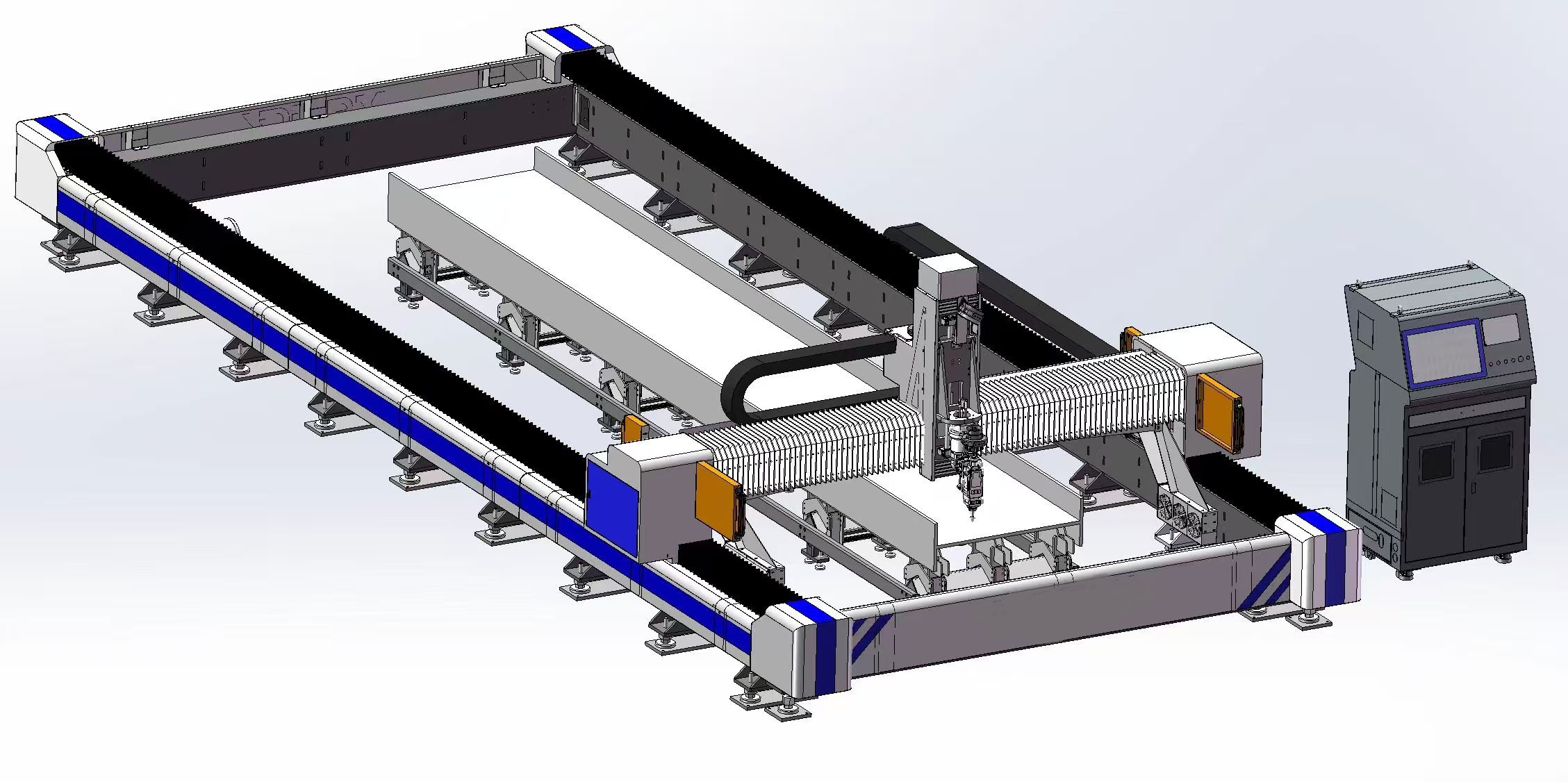
Industrial Application of H-Beam Plasma Cutter
In high-volume environments like the Industrial Park of Pilar, nesting optimization has demonstrated material waste reductions of up to 15%. When calculated over an annual production cycle of several thousand tons, the savings in raw steel alone can offset the initial capital expenditure of the machinery within 18 to 24 months. Additionally, the ability to process “short” remnants that would otherwise be scrapped adds another layer of fiscal recovery.
Integration with Digital Workflows: CAD/CAM and BIM
The efficacy of the H-Beam Plasma Cutter is maximized when integrated into a digital ecosystem. Local engineering firms in Buenos Aires are increasingly adopting Building Information Modeling (BIM). Modern plasma cutters interface directly with Tekla, AutoCAD, and SolidWorks through specialized CAD/CAM integration.
This digital thread eliminates the risk of human error during the transcription of measurements from paper blueprints to the steel. The XML or DSTV files generated by the engineering department are fed directly into the machine’s controller. This ensures that every bolt hole aligns perfectly during on-site erection, reducing the need for costly field fixes or “re-work,” which is often the most expensive component of structural steel projects. For large-scale infrastructure projects in the Buenos Aires province, this level of precision is mandatory for meeting tight contractual deadlines.
Energy Consumption and Operational Sustainability
Operational costs in Argentinian industrial parks must also account for energy efficiency. Modern high-definition plasma systems are engineered to draw power only during the arc-on time, unlike older laser or mechanical systems that may require constant cooling or idling power. Furthermore, the speed of the plasma cut reduces the total kilowatt-hours consumed per meter of cut compared to oxy-fuel processes. As energy tariffs in Argentina undergo adjustment, the move toward high-efficiency inverter-based plasma power sources provides a hedge against rising operational overhead.
Local Maintenance and Technical Support in Argentina
A critical factor in the ROI equation for Buenos Aires-based companies is the availability of local technical support. The proximity of specialized technicians within the metropolitan area ensures that downtime is minimized. Many industrial parks now utilize remote diagnostics, where the machine’s performance is monitored via the cloud, allowing for predictive maintenance. This proactive approach prevents catastrophic component failure and ensures that the machine maintains its duty cycle during peak production periods.
Concluding Industry Insight
The industrial sector in Buenos Aires is at a crossroads where traditional manufacturing methods are no longer sufficient to meet the speed and precision required by global supply chains. The transition to automated H-beam profiling represents more than just a mechanical upgrade; it is a fundamental shift toward data-driven fabrication. As the “Corredor Industrial del Norte” continues to expand, the integration of multi-axis plasma technology will be the defining factor for firms looking to scale operations. The proven ROI—evidenced by reduced labor overhead, minimized material waste, and seamless BIM integration—positions robotic plasma cutting as the essential investment for the next decade of South American structural engineering. Fabricators who adopt these systems today are not merely purchasing a tool; they are securing a place in the future of automated infrastructure development.
Industrial Expertise & Support
Are you looking for high-performance H-Beam Plasma Cutter tailored for the Global market? Our engineering team provides comprehensive solutions for modern manufacturing.





