Engineering Resilience: Adapting H-Beam Plasma Cutters for the Buenos Aires Industrial Climate
The industrial landscape of Buenos Aires, Argentina, is characterized by its strategic proximity to the Rio de la Plata, a geographic factor that facilitates logistics but introduces significant environmental variables for heavy machinery. For structural steel fabricators utilizing an H-Beam Plasma Cutter, the local climate—defined by high relative humidity (often exceeding 80%) and saline air from the Atlantic influence—presents a specific set of technical challenges. To maintain operational uptime and precision, hardware must transition from standard configurations to specialized IP54+ climate-adapted systems. This article examines the technical requirements for deploying high-precision plasma cutting technology in high-humidity zones and the engineering modifications necessary to prevent dielectric breakdown and mechanical oxidation.
The Impact of High Humidity on Plasma Cutting Systems
In Buenos Aires, the dew point often fluctuates rapidly, leading to condensation on cold metallic surfaces. In the context of an H-Beam Plasma Cutter, this moisture is not merely a surface-level concern; it is a catalyst for catastrophic component failure. High-voltage components, such as the plasma power source and the high-frequency (HF) starting circuit, are particularly vulnerable. Moisture ingress into the power supply can lead to arcing across internal components, resulting in permanent damage to the IGBT (Insulated-Gate Bipolar Transistor) modules.
Furthermore, the structural integrity of the H-beam itself is affected. When cutting heavy profiles, moisture on the workpiece can interfere with the plasma arc stability, leading to increased dross formation and a wider heat-affected zone (HAZ). To mitigate these risks, the integration of IP54-rated enclosures is mandatory. These enclosures ensure that the internal electronics are protected against dust ingress and, more importantly, splashes of water and high-density atmospheric moisture from any direction.
Technical Specifications of IP54+ Adaptation
The “IP” (Ingress Protection) rating is a critical metric for equipment deployed in the Argentinian industrial corridors of Avellaneda or Campana. An IP54 rating signifies that the equipment is protected against dust limited ingress and protection from water spray. However, for “IP54+” or “Climate Adapted” variants, manufacturers implement additional layers of protection specifically designed for the Buenos Aires humidity profile.
Advanced Thermal Management and Dehumidification
Standard cooling fans often pull humid, salt-laden air directly across sensitive circuit boards. Climate-adapted systems utilize closed-loop heat exchangers. By isolating the internal cabinet air from the external environment, the system prevents electrolytic corrosion on the PCB traces. These systems often incorporate thermoelectric coolers or internal dehumidifiers that maintain the cabinet’s internal relative humidity below 45%, regardless of external conditions. This prevents the formation of “micro-condensation” during the cooling phase after a high-duty-cycle shift.
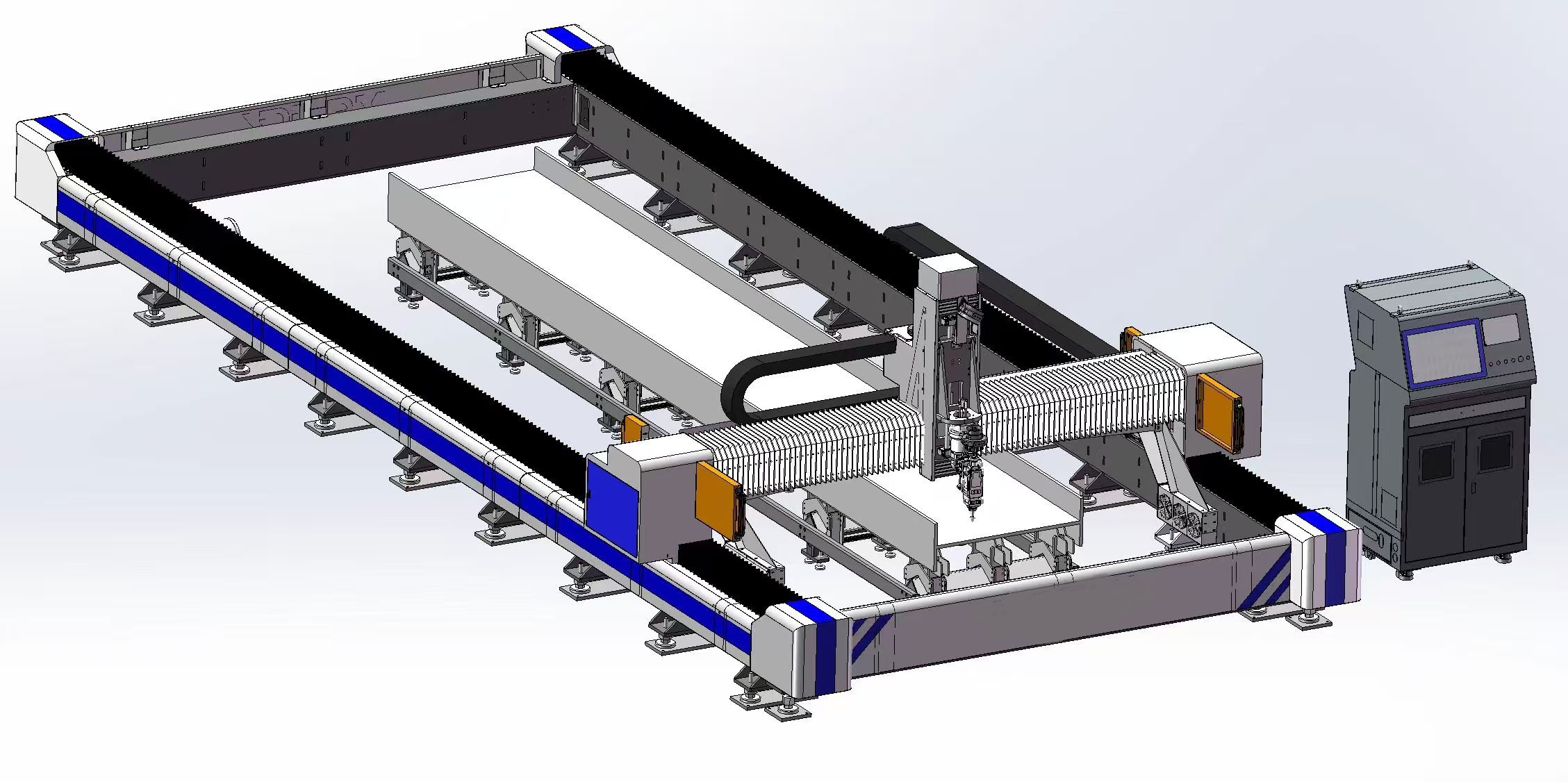
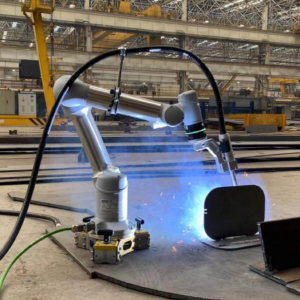
Industrial Application of H-Beam Plasma Cutter
Corrosion-Resistant Motion Control Systems
The multi-axis CNC robotics responsible for positioning the plasma torch around the H-beam flanges and web require high-precision linear guides and rack-and-pinion drives. In high-humidity zones, standard carbon steel components undergo rapid oxidation. Adaptation involves the use of chromium-plated rails or specialized stainless steel alloys for the bearing surfaces. Furthermore, the lubrication systems are upgraded to automatic centralized units that use high-viscosity, moisture-displacing lubricants, ensuring that a protective film is constantly maintained over all moving parts.
Gas Quality and Moisture Filtration Protocols
The precision of a plasma cut is heavily dependent on the purity of the plasma gas (typically compressed air, nitrogen, or oxygen). In the humid environment of Buenos Aires, compressed air systems generate significant amounts of condensate. If this moisture reaches the plasma torch, it causes electrode sputtering, shortened nozzle life, and erratic arc behavior.
A climate-adapted H-Beam Plasma Cutter installation must include a multi-stage air treatment line. This typically consists of a refrigerated air dryer capable of reaching a pressure dew point of +3°C, followed by a series of coalescing filters and a final desiccant stage. By ensuring the gas entering the torch has a relative humidity of near 0%, the system maintains the integrity of the plasma stream, allowing for the clean, square cuts required for structural steel connections in high-rise construction and bridge building.
Mechanical Shielding and Bellows Integration
To further protect the machine from the localized environment, specialized protective bellows are employed. These are not standard fabric covers but are often aluminized or silicone-coated materials designed to resist both the intense UV radiation from the plasma arc and the corrosive humidity. These bellows encapsulate the lead screws and encoders, preventing the “sludge” that forms when ambient dust mixes with atmospheric moisture, which can otherwise act as an abrasive paste, accelerating mechanical wear.
Operational Efficiency and ROI in the Argentinian Market
For B2B stakeholders in Argentina, the initial capital expenditure for an IP54+ adapted machine is offset by the drastic reduction in Maintenance, Repair, and Operations (MRO) costs. In a standard machine, the failure rate of electronic sensors and limit switches in high-humidity zones can be up to 40% higher than in arid climates. By investing in climate adaptation, firms ensure that their H-Beam Plasma Cutter maintains its precision over a 10-to-15-year lifecycle.
Moreover, the ability to process steel without weather-related downtime is a competitive advantage. In the construction of logistics centers and port infrastructure around the Greater Buenos Aires area, project timelines are stringent. A machine that can operate reliably during the humid summer months or the damp, foggy winters of the Rio de la Plata region ensures that fabrication schedules remain on track.
Industry Insight: The Future of Localized Industrial Engineering
The deployment of climate-adapted H-beam plasma cutting technology in Buenos Aires reflects a broader shift in the global manufacturing sector: the move toward “environmental localization.” As industrial hubs expand into diverse geographical zones—from the humid basins of South America to the high-salinity coastal regions of Southeast Asia—the “one-size-fits-all” approach to machinery design is becoming obsolete.
The future of heavy-duty CNC fabrication lies in the integration of real-time environmental monitoring. We anticipate the next generation of plasma cutters will feature integrated sensors that automatically adjust cutting parameters (such as arc voltage and gas flow) based on ambient humidity and barometric pressure. For the Argentinian market, this means not only protecting the hardware via IP54+ standards but also optimizing the software to account for the physical changes in plasma physics caused by the local atmosphere. In conclusion, technical adaptation is no longer an optional upgrade; it is a foundational requirement for industrial viability in the world’s most challenging climatic zones.
Industrial Expertise & Support
Are you looking for high-performance H-Beam Plasma Cutter tailored for the Global market? Our engineering team provides comprehensive solutions for modern manufacturing.