Introduction: The Strategic Importance of Structural Automation in the Andean Hub
Bogotá, Colombia, serves as a critical nexus for South American infrastructure development. As the demand for complex structural steel increases in the mining, energy, and civil engineering sectors, the integration of high-precision CNC machinery has become a logistical necessity. The H-Beam Plasma Cutter represents the pinnacle of this technological shift, allowing for the automated processing of heavy profiles with tolerances that manual methods cannot replicate. However, the geographical isolation of certain industrial zones within the Bogotá savanna and the broader Andean region presents a unique challenge: maintaining equipment uptime in areas where specialized technician transit is hindered by topography. This article examines the technical architecture of remote cloud diagnostics and how these systems ensure operational continuity for structural steel fabricators in Colombia.
Technical Specifications of the H-Beam Plasma Cutter
The modern H-Beam Plasma Cutter is engineered to handle massive structural members, utilizing 8-axis robotic kinematics to execute complex cuts including copes, miters, and bolt holes across all faces of the beam. Unlike traditional 2D plasma tables, these systems employ a multi-axis gantry or a robotic arm that rotates around the stationary or moving workpiece. The precision of these cuts is governed by a high-definition plasma power supply, which modulates the arc density to minimize the Heat Affected Zone (HAZ) and ensure weld-ready surfaces.
In the context of Bogotá’s high-altitude environment—approximately 2,640 meters above sea level—the physics of plasma cutting requires specific calibration. Lower atmospheric pressure affects the ionization of the plasma gas and the cooling efficiency of the torch. Modern CNC controllers integrated into these cutters automatically compensate for these variables by adjusting gas flow rates and arc voltage, ensuring consistent kerf width and dross-free results regardless of the elevation.
Remote Cloud Diagnostics: Architecture and Implementation
The integration of IIoT (Industrial Internet of Things) gateways into the H-Beam Plasma Cutter allows for a persistent data stream between the factory floor in Bogotá and the manufacturer’s global support center. This architecture is built upon several technical layers:
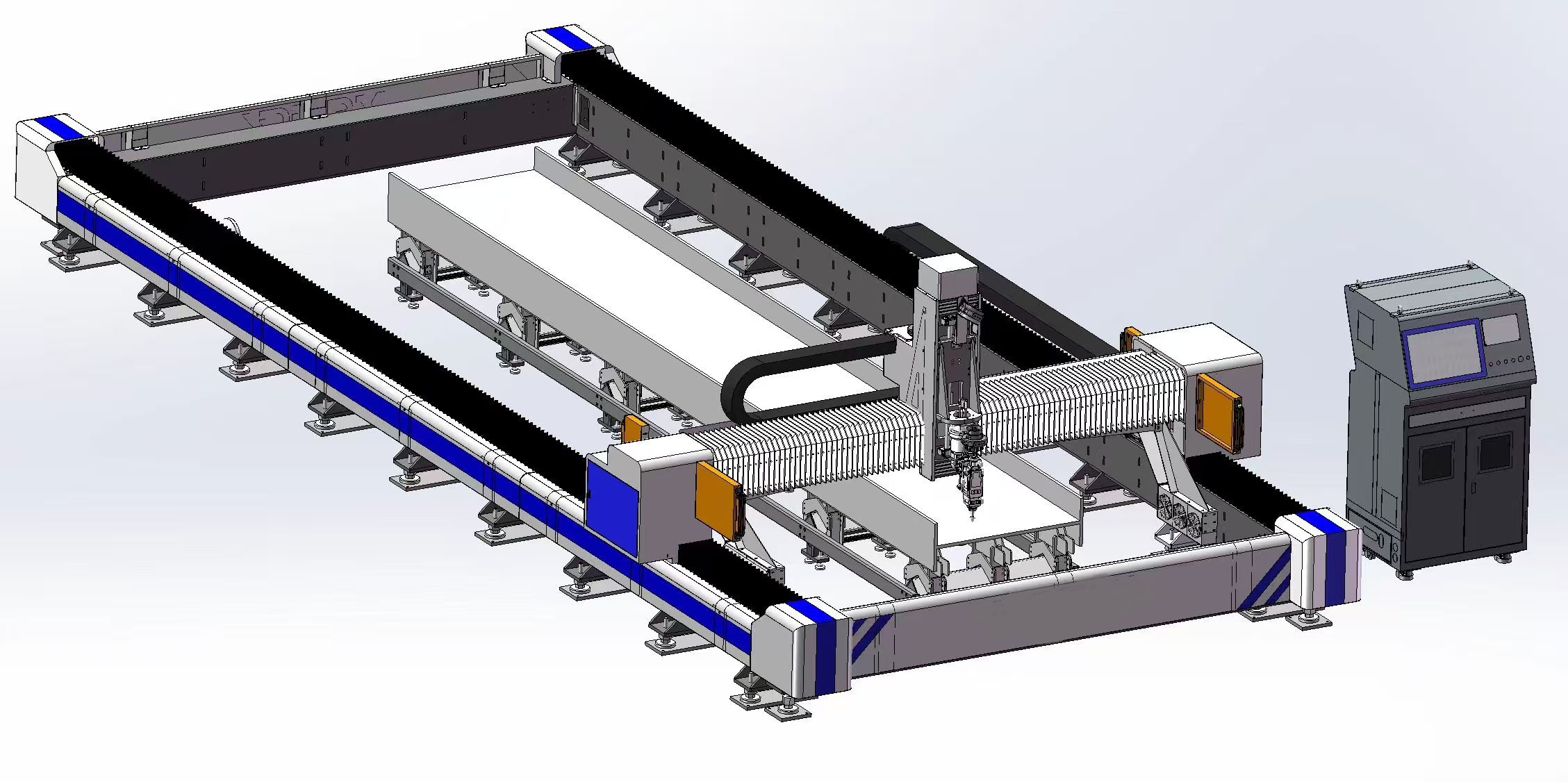
Industrial Application of H-Beam Plasma Cutter
Data Acquisition Layer: Sensors embedded within the plasma power source, servo drives, and pneumatic systems monitor real-time variables such as current fluctuations, vibration frequencies, and gas pressure stability.
Transmission Layer: Using secure MQTT or OPC UA protocols, the machine transmits encrypted data packets to a centralized cloud server. This allows for real-time monitoring of machine health without requiring a dedicated on-site IT infrastructure.
Analysis Layer: Cloud-based algorithms compare incoming data against “digital twin” models. Any deviation from standard operating parameters triggers an automated alert, often before a mechanical failure occurs.
Overcoming Geographical Constraints in the Colombian Market
Colombia’s industrial landscape is characterized by its “vast regions,” where a fabrication shop in the outskirts of Bogotá might be several hours away from the nearest service hub. Traditional maintenance models rely on reactive service calls, which result in significant downtime while waiting for a technician to arrive. Remote cloud diagnostics transform this paradigm by enabling “Tele-presence” support.
Through a remote interface, engineers located in North America, Europe, or Asia can access the CNC’s internal logic. They can perform software updates, recalibrate the 8-axis robotic kinematics, and troubleshoot PLC (Programmable Logic Controller) errors remotely. This capability is particularly vital for Colombian firms involved in large-scale projects like the Bogotá Metro or bridge construction in the Antioquia department, where project timelines are rigid and equipment failure can lead to massive liquidated damages.
Optimizing Consumable Life and Predictive Maintenance
One of the most significant operational costs for an H-Beam Plasma Cutter is the consumption of electrodes, nozzles, and shields. In many cases, operators in remote regions may over-use consumables to the point of torch damage or replace them prematurely, wasting capital. Cloud diagnostics provide a granular view of consumable wear cycles based on arc-on time and piercing counts.
By analyzing the High-definition plasma power supply telemetry, the system can notify the workshop manager in Bogotá when a nozzle is approaching its end-of-life. This data-driven approach ensures that the machine always operates at peak efficiency, maintaining the structural integrity of the H-beams being processed. Furthermore, predictive maintenance schedules can be synchronized with project lulls, ensuring that the machine is serviced during planned downtime rather than during a critical production run.
Data Security and Connectivity in Remote Regions
A common concern for B2B stakeholders regarding cloud diagnostics is data security and the stability of local internet connections. Modern systems address these concerns through edge computing. The machine’s controller can store diagnostic data locally if the internet connection is interrupted, uploading the buffered data once connectivity is restored. This ensures no gaps in the maintenance log.
Regarding security, the use of VPN tunnels and end-to-end encryption ensures that proprietary cutting files and production statistics remain confidential. For the Colombian fabricator, this means they can leverage global expertise without exposing their intellectual property to the public internet. The result is a robust, secure link that bridges the gap between local operation and international technical standards.
Concluding Industry Insight: The Future of Distributed Manufacturing
The deployment of H-Beam Plasma Cutter technology with integrated cloud diagnostics in Bogotá is indicative of a broader trend in global manufacturing: the decoupling of physical location from technical expertise. As structural steel designs become more complex, the reliance on advanced CNC systems will only increase. For vast and geographically challenging regions like Colombia, the ability to maintain these systems via the cloud is not merely a convenience but a fundamental requirement for industrial competitiveness.
The industry is moving toward a model where the “serviceable life” of a machine is no longer dictated by the proximity of a local technician, but by the robustness of its digital diagnostic framework. Fabricators who invest in cloud-connected infrastructure today are positioning themselves to dominate the infrastructure projects of tomorrow, ensuring that their production lines remain active, precise, and profitable, regardless of their distance from the manufacturer. The synchronization of high-altitude physics calibration with real-time global monitoring marks the new standard for heavy industry in South America.
Industrial Expertise & Support
Are you looking for high-performance H-Beam Plasma Cutter tailored for the Global market? Our engineering team provides comprehensive solutions for modern manufacturing.





