Accelerating Structural Steel Throughput: The Impact of AI-Driven HMI on H-Beam Fabrication in Bogotá
The industrial landscape of Bogotá, Colombia, has undergone a significant transition toward automated structural steel processing. As the primary hub for construction and infrastructure development in the Andean region, Bogotá’s fabrication facilities face increasing pressure to reduce lead times while maintaining strict adherence to international building codes. The introduction of the H-Beam Plasma Cutter equipped with an Artificial Intelligence Human-Machine Interface (AI HMI) represents a shift from manual, multi-stage processing to integrated, single-pass production. This transition is not merely mechanical; it addresses the critical bottleneck of operator proficiency and technical overhead.
Traditionally, the operation of multi-axis robotic plasma systems required months of specialized training in G-code, robotic kinematics, and manual layout calculations. However, the deployment of AI-enhanced control systems has reduced the operator learning curve to approximately 48 hours. This efficiency gain is vital for Bogotá’s industrial sector, where the demand for complex steel geometries in seismic-resistant structures requires high precision and rapid deployment of skilled labor.
Technical Architecture of the AI-Driven HMI
The core of the modern H-Beam Plasma Cutter lies in its control architecture. Traditional interfaces required the operator to manually input coordinates and verify torch paths against physical blueprints. The AI-driven HMI utilizes a direct-to-machine workflow that ingests BIM (Building Information Modeling) data, typically in the form of DSTV or STEP files, and translates these into robotic kinematics without intermediary programming steps.
The AI component functions as a real-time optimization engine. It analyzes the geometry of the H-beam, identifies the optimal sequence of cuts to minimize heat-affected zones (HAZ), and automatically adjusts the torch angle to compensate for beam deviations. In Bogotá’s high-altitude environment, where cooling rates and atmospheric pressure can subtly influence plasma arc stability, the AI HMI monitors voltage and gas flow parameters, making micro-adjustments that previously required a senior technician’s intuition.
The 2-Day Learning Curve: A Quantitative Breakdown
The reduction of the learning curve to two days is achieved through a hierarchical interface design that prioritizes visual confirmation over manual data entry. The training protocol is divided into two distinct phases of 10 to 12 hours each.
Day One: Digital Twin Synchronization and Safety Protocols. Operators are trained on the digital twin interface, which provides a 1:1 visual representation of the machine’s workspace. The training focuses on file ingestion and the verification of the structural steel fabrication parameters. Because the AI handles the complex path planning, the operator focuses on material positioning and the selection of consumables based on the thickness of the beam flanges and webs. The interface uses predictive modeling to show the operator exactly where the cuts will occur, allowing for error detection before the first arc is struck.
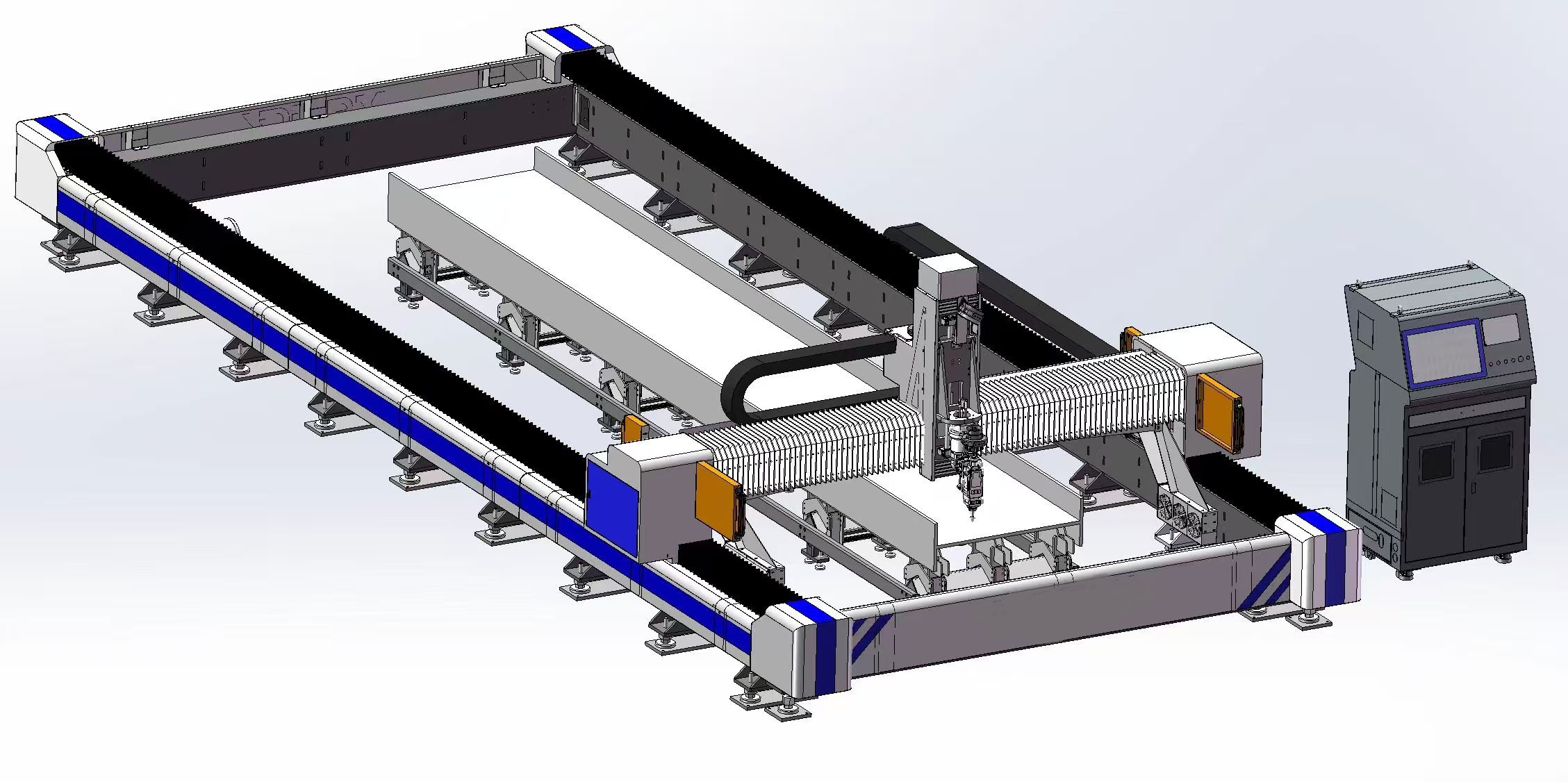
Industrial Application of H-Beam Plasma Cutter
Day Two: Production Optimization and Maintenance. The second day transitions from theoretical simulation to active cutting. Operators learn to utilize the AI’s nesting algorithms to minimize material waste. The HMI provides real-time feedback on kerf width and consumable wear, alerting the operator when a nozzle or electrode requires replacement to maintain tolerance thresholds. By the end of the second day, an operator with basic computer literacy can execute complex copes, miters, and bolt hole patterns that meet ISO 9013 standards for thermal cutting quality.
Mechanical Precision and Multi-Axis Versatility
The H-Beam Plasma Cutter utilized in these settings typically features a 6-axis to 8-axis robotic arm. This allows the plasma torch to reach all four sides of the beam, including the interior of the flanges, in a single loading cycle. In the context of Bogotá’s infrastructure projects, such as the Bogotá Metro or new high-rise commercial sectors, the ability to process beams with variable cross-sections is essential.
The integration of the AI-driven HMI ensures that the mechanical capabilities of the robot are fully utilized. The software automatically calculates the tilt and rotation required for beveling edges for weld preparation. This eliminates the need for secondary grinding operations, which are a major source of labor costs in traditional Colombian workshops. The precision of the AI-controlled arc ensures that bolt holes are perfectly cylindrical and perpendicular, even when cutting through high-tensile steel alloys.
Economic Implications for the Bogotá Industrial Hub
The adoption of this technology provides a measurable ROI (Return on Investment) for regional fabricators. By reducing the training period from weeks to days, companies can scale their workforce rapidly in response to large contract wins without the traditional downtime associated with skill acquisition. Furthermore, the AI HMI reduces the “human error” variable, which is the primary cause of material scrap in structural steel processing.
In Bogotá, where electricity costs and material transport logistics are significant factors in project bidding, the efficiency of the H-Beam Plasma Cutter offers a competitive edge. The machine’s ability to perform the work of a saw line, a drill line, and a manual layout station within a smaller footprint allows for higher output per square meter of factory space.
Concluding Industry Insight: The Future of Autonomous Fabrication
The implementation of AI-driven interfaces in Bogotá’s steel sector is a precursor to fully autonomous fabrication environments. As we look toward the next decade of industrial development, the role of the operator is shifting from a manual laborer to a systems manager. The 2-day learning curve is not just a convenience; it is a fundamental requirement for an industry that must remain agile in a volatile global economy.
The successful integration of the H-Beam Plasma Cutter in Colombia demonstrates that high-technology solutions are not exclusive to the most developed economies. Instead, they are the very tools that allow emerging industrial hubs to bypass traditional development stages and achieve global standards of precision and efficiency. The focus will continue to move toward “dark” factories where AI-driven HMIs coordinate with automated material handling systems, further reducing the margin of error and maximizing the structural integrity of the built environment. Fabricators who fail to adopt these AI-enhanced workflows will likely find themselves unable to compete on price or precision as the global supply chain continues to prioritize data-driven manufacturing.
Industrial Expertise & Support
Are you looking for high-performance H-Beam Plasma Cutter tailored for the Global market? Our engineering team provides comprehensive solutions for modern manufacturing.





