Industrial Infrastructure and Structural Steel Processing in Belo Horizonte
Belo Horizonte, the capital of Minas Gerais, stands as a critical nexus for Brazil’s metallurgical and mining sectors. As the region continues to expand its industrial footprint, the demand for precision-engineered structural steel has necessitated the adoption of advanced fabrication technologies. Central to this evolution is the H-Beam Plasma Cutter, a specialized CNC system designed to execute complex geometries on heavy structural profiles. In the context of the South American power grid, particularly within heavy industrial zones, equipment reliability is often compromised by voltage transients and frequency instability. To mitigate these risks, modern plasma systems deployed in this region now integrate sophisticated internal regulation hardware to ensure consistent output during high-capacity fabrication cycles.
The Technical Necessity of Built-in Voltage Regulation
In high-amperage industrial applications, the stability of the input power supply directly correlates with the quality of the thermal kerf. In Belo Horizonte’s industrial outskirts, the electrical grid often experiences fluctuations due to the simultaneous operation of heavy machinery, such as electric arc furnaces and large-scale induction motors. An Automatic Voltage Regulation (AVR) system integrated into the plasma power source serves as a critical buffer. This technology employs a series of capacitors and high-speed switching transistors to normalize incoming voltage variances, which can often deviate by as much as 15 percent from the nominal rating.
Without internal regulation, voltage drops lead to arc instability, resulting in dross accumulation and irregular edge bevels. Conversely, voltage spikes can overwhelm the sensitive control electronics of the CNC unit. By stabilizing the internal DC bus, the machine maintains a constant current output, which is essential for penetrating thick-walled H-beams without stalling the plasma stream or damaging the internal inverter components.
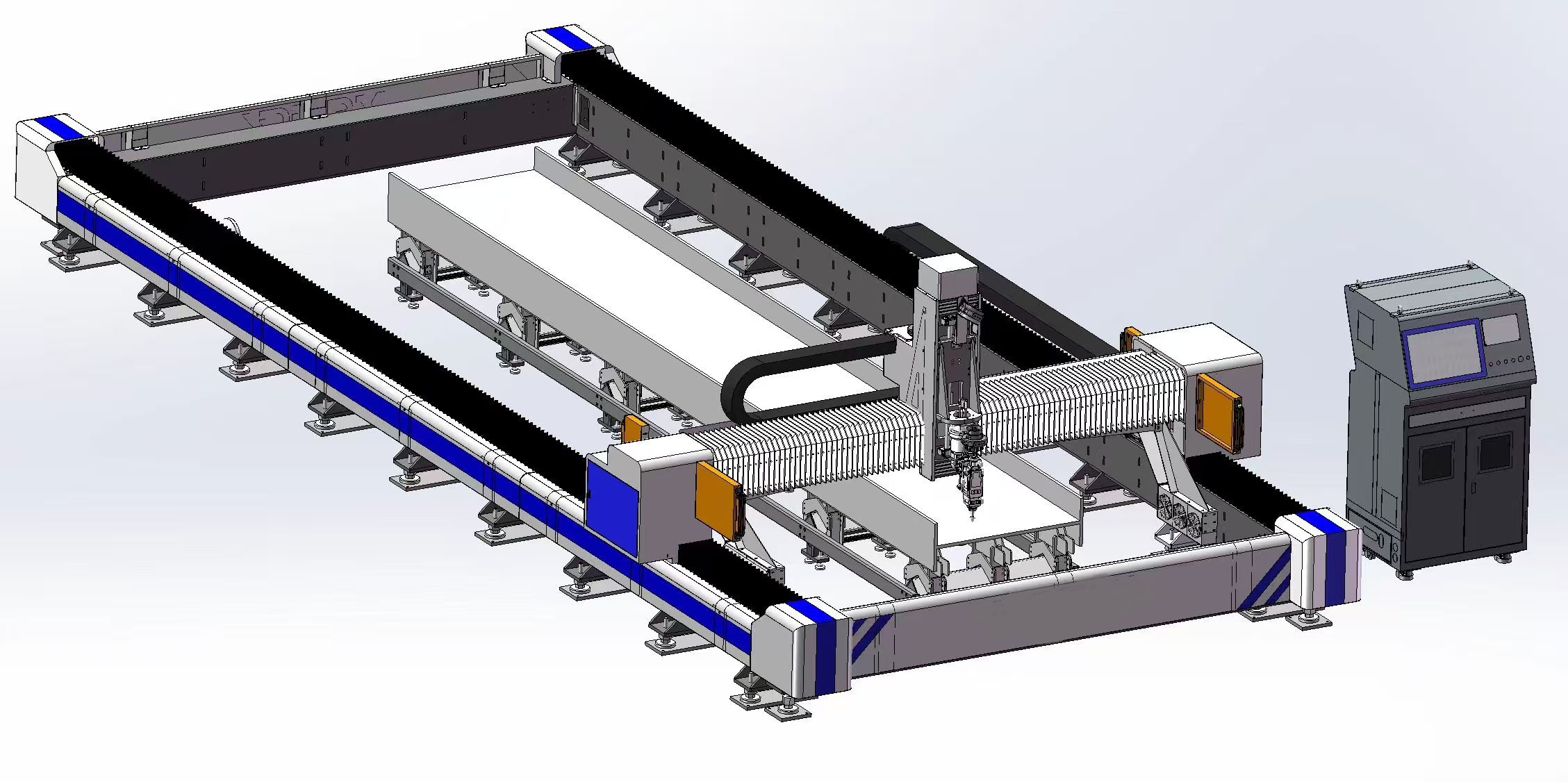
Industrial Application of H-Beam Plasma Cutter
Advanced Inverter Technology and Power Factor Correction
The efficiency of an H-Beam Plasma Cutter is largely defined by its power conversion architecture. Modern units utilized in the Brazilian market utilize IGBT Inverter Technology (Insulated Gate Bipolar Transistor). This allows for a high switching frequency, which significantly reduces the footprint of the transformer while increasing the response time to load changes. Furthermore, the integration of Power Factor Correction (PFC) circuitry ensures that the machine draws current in a sinusoidal manner, minimizing harmonic distortion returned to the local grid.
For B2B operations in Belo Horizonte, this technical configuration offers two primary advantages. First, it reduces the total kVA requirement for the facility, allowing for more machinery to operate on the same electrical service. Second, it ensures that the plasma arc remains stiff and focused, even when the primary supply experiences the “sag” typical of peak industrial hours. This level of electrical resilience is a prerequisite for facilities aiming to achieve ISO-certified structural tolerances in heavy-duty steel construction.
Multi-Axis Kinematics for Structural Profiling
Processing H-beams requires more than a standard 2D cutting motion. The machines deployed in Belo Horizonte typically feature a 5-axis or 6-axis robotic arm or a specialized gantry with a tilting torch head. This allows the system to perform cope cuts, bolt holes, and weld preparations on the flanges and webs of the beam in a single pass. The precision of these movements is governed by high-resolution servomotors that must remain synchronized with the plasma power supply.
When the voltage regulation system is active, the synchronization between the CNC controller and the THC (Torch Height Control) is maintained with millisecond accuracy. THC is vital when dealing with H-beams, as structural steel profiles often possess slight dimensional irregularities or “bowing” from the rolling mill. The system compensates for these deviations by dynamically adjusting the torch height based on arc voltage feedback. If the input power is unstable, the feedback loop provides inaccurate data, leading to torch collisions or excessive standoff distances. Integrated stabilization ensures the feedback signal remains “clean,” preserving the integrity of the mechanical components and the torch consumables.
Operational Efficiency and Consumable Longevity
In the B2B procurement cycle, the Total Cost of Ownership (TCO) is a primary metric. For plasma cutting operations, the highest recurring costs are electrodes and nozzles. Arc starts and stops are the periods of highest stress for these components. In environments with unstable grids, “misfires” or “stuttering” arcs caused by voltage dips significantly accelerate the erosion of the hafnium insert in the electrode.
By utilizing a regulated power supply, the H-Beam Plasma Cutter ensures a smooth pilot arc ignition and a controlled transition to the transferred arc. This precision reduces the frequency of consumable replacement by up to 30 percent compared to non-regulated systems. In a high-volume facility in Minas Gerais, where machines may run for three shifts, this translates to substantial annual savings and reduced downtime for maintenance.
Impact on Weld Preparation and Secondary Operations
The metallurgical quality of the cut edge is another technical factor influenced by power stability. A stabilized arc produces a narrower Heat Affected Zone (HAZ). For structural engineers in the global market, minimizing the HAZ is vital to maintaining the mechanical properties of the S355 or A36 steel grades commonly used in H-beams. A clean, dross-free cut eliminates the need for secondary grinding, allowing the beams to move directly from the plasma cell to the welding station. This streamlined workflow is essential for Belo Horizonte-based fabricators competing for international infrastructure contracts, where throughput speed and precision are non-negotiable.
Concluding Industry Insight: The Shift Toward Power-Resilient Fabrication
As global manufacturing shifts toward more decentralized industrial hubs, the reliance on perfectly stable municipal power grids is becoming a liability. The case of Belo Horizonte illustrates a broader trend in the B2B sector: the “ruggedization” of high-precision CNC machinery. The future of structural steel processing lies not just in faster cutting speeds or more axes of motion, but in the internal intelligence of the machine to compensate for external environmental variables.
Integrated voltage regulation is no longer an optional feature for emerging markets; it is a foundational requirement for any facility seeking to maintain a competitive edge in the global supply chain. Companies that invest in power-resilient H-Beam Plasma Cutter technology are effectively de-risking their production schedules against grid volatility. As digital twin technology and IoT monitoring become standard, the ability of a machine to self-stabilize its power intake will be the primary determinant of its uptime and its ability to deliver the high-tolerance components required for modern skyscrapers, bridges, and industrial complexes.
Industrial Expertise & Support
Are you looking for high-performance H-Beam Plasma Cutter tailored for the Global market? Our engineering team provides comprehensive solutions for modern manufacturing.





