Accelerating Structural Steel Fabrication: The 48-Hour Learning Curve in Belo Horizonte
The industrial corridor of Belo Horizonte, Brazil, serves as a critical hub for the nation’s mining and infrastructure sectors. As structural steel demands increase for large-scale projects, the pressure on local fabrication facilities to modernize has intensified. Central to this modernization is the deployment of the H-Beam Plasma Cutter, a system designed to automate the processing of structural profiles including I-beams, H-beams, channels, and angles. Historically, the barrier to adopting such advanced CNC machinery was the steep learning curve associated with complex G-code programming and robotic trajectory planning. However, the integration of Artificial Intelligence (AI) into the Human-Machine Interface (HMI) has fundamentally altered this timeline, reducing operator training from months to a mere two days.
In the context of Belo Horizonte’s industrial landscape, where skilled labor shortages can bottleneck production, the ability to transition a manual welder or a general technician into a proficient CNC operator in 48 hours is a significant operational advantage. This article examines the technical architecture of AI-driven HMIs and the specific mechanisms that allow for rapid competency in high-precision plasma cutting.
Technical Architecture of the AI-Driven HMI
The core of the modern H-Beam Plasma Cutter is no longer just the plasma power source or the mechanical gantry; it is the software layer that bridges the gap between raw CAD data and physical execution. Traditional systems required operators to manually input coordinates or troubleshoot complex kinematic errors. The AI HMI utilizes a neural network-based processing layer that interprets 3D files (typically in STEP or DSTV formats) and automatically generates the optimal cutting path.
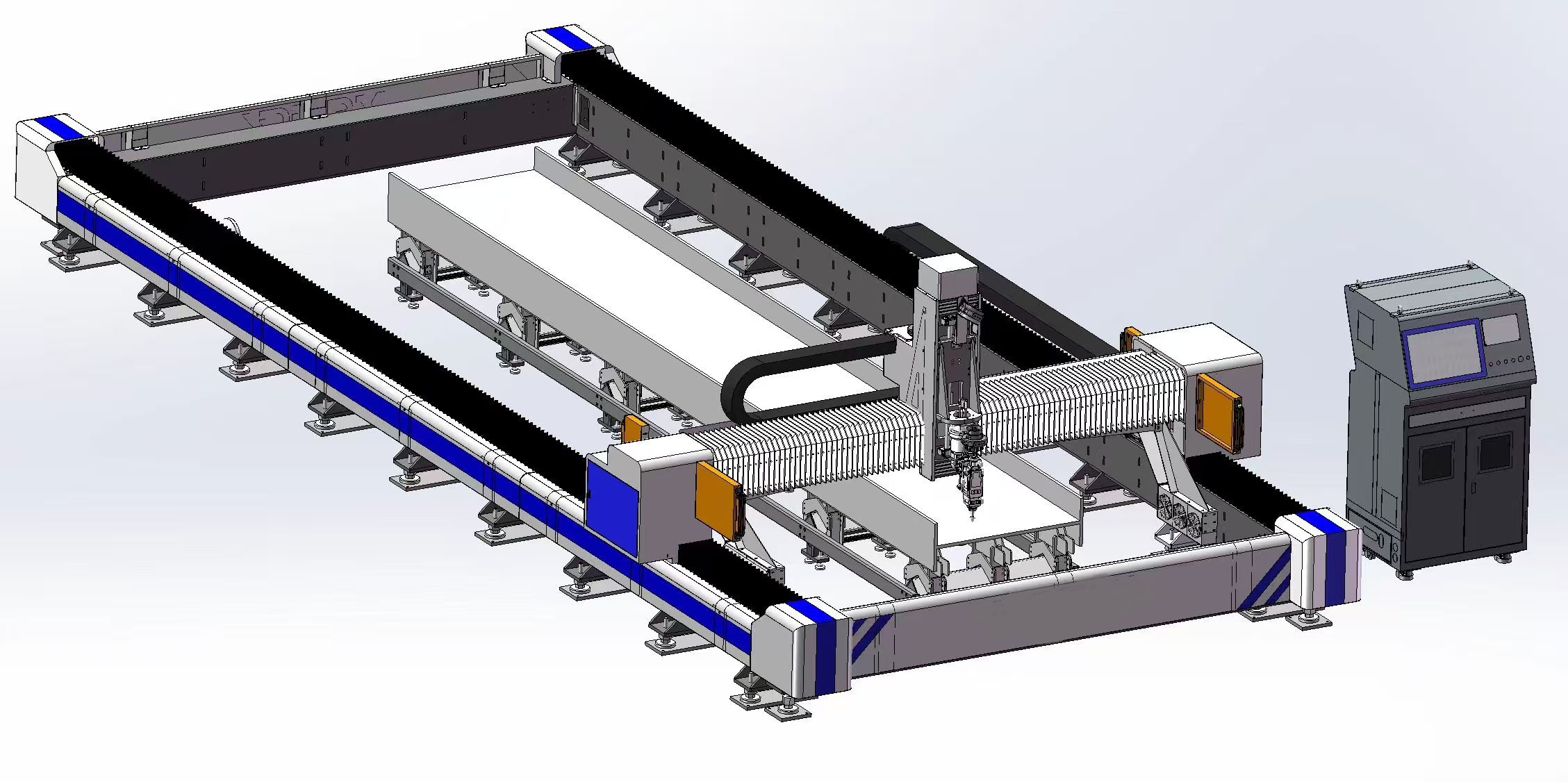
Industrial Application of H-Beam Plasma Cutter
This system employs 6-Axis Robotic Kinematics to handle the torch movement. The AI component specifically addresses the challenges of “out-of-square” beams—a common issue in structural steel where the physical material does not perfectly match the theoretical CAD model. Through integrated laser scanning sensors, the HMI captures the actual dimensions of the beam in real-time. The AI then recalibrates the cutting path on the fly, ensuring that bolt holes and cope cuts are positioned with sub-millimeter accuracy despite material deviations.
Day 1: Interface Familiarization and Automated Path Generation
The first 24 hours of the learning curve are dedicated to the transition from digital design to machine instruction. In a typical Belo Horizonte facility, the operator begins by importing a 3D model into the HMI. Unlike legacy systems, the AI interface utilizes a “What You See Is What You Get” (WYSIWYG) visualizer. This eliminates the need for the operator to read or write raw G-code.
Key training milestones on Day 1 include:
- Library Integration: Selecting material grades and thicknesses from a pre-configured database that automatically sets plasma gas pressures and arc voltages.
- Intelligent Path Planning: Observing how the AI suggests the sequence of cuts to minimize heat deformation and optimize torch travel time.
- Safety Protocol Interfacing: Understanding the light curtain and emergency stop redundancies integrated into the software’s logic.
By the end of the first day, the operator is capable of loading a standard H-beam and initiating a sequence that includes flange thinning, web penetrations, and marking for assembly. The AI handles the “heavy lifting” of calculating the complex angles required for miter cuts, which previously required advanced trigonometry knowledge from the operator.
Day 2: Real-Time Optimization and Troubleshooting
The second day focuses on the nuances of high-definition plasma cutting and system maintenance. The operator learns to interact with the AI’s diagnostic dashboard, which monitors consumable wear and gas flow consistency. In Belo Horizonte’s high-output environments, minimizing downtime is essential. The AI HMI provides predictive maintenance alerts, notifying the operator when the nozzle or electrode is nearing the end of its functional life based on actual arc time and pierce counts.
Advanced features covered on Day 2 include:
- Nesting Optimization: Using the AI to arrange multiple parts on a single beam length to minimize scrap rates.
- Bevel Angle Calibration: Adjusting the 6-axis head for weld preparation cuts, ensuring the V-groove or K-groove angles meet AWS (American Welding Society) standards.
- Error Recovery: Learning how to resume a cut after a power fluctuation or an emergency stop without scrapping the entire workpiece.
By the conclusion of the 48-hour window, the operator is not merely a button-pusher but a supervisor of an autonomous process. The AI has effectively abstracted the complexities of robotic motion, allowing the human worker to focus on material flow and quality assurance.
Impact on the Belo Horizonte Structural Steel Market
The implementation of the H-Beam Plasma Cutter with an AI-enhanced HMI has direct economic implications for the Minas Gerais region. Local fabricators can now bid on complex infrastructure projects—such as bridges or multi-story industrial complexes—that were previously outsourced to larger international firms. The reduction in the learning curve means that a facility can become operational with new technology in a fraction of the time, providing a faster Return on Investment (ROI).
Furthermore, the precision of AI-calculated cuts reduces the need for secondary grinding and fit-up adjustments in the field. When an H-beam is processed through a 6-axis plasma system, the tolerances are so tight that assembly becomes a “bolt-together” process, significantly reducing onsite labor costs and project timelines.
Concluding Industry Insight: The Shift Toward Autonomous Fabrication
The success of the 2-day learning curve in Belo Horizonte is a microcosm of a larger global trend: the de-skilling of machine operation through the “intelligence” of the interface. As we look toward the future of structural steel fabrication, the role of the operator is evolving from a manual technician to a digital workflow manager. The integration of AI does not replace the need for human oversight; rather, it elevates the human element to focus on high-level process optimization.
In the coming decade, we expect to see even deeper integration between the H-Beam Plasma Cutter and the broader Building Information Modeling (BIM) ecosystem. HMIs will soon be capable of communicating directly with site management software, automatically adjusting production schedules based on real-time construction progress. For industrial hubs like Belo Horizonte, staying at the forefront of this AI-driven shift is not just an efficiency gain—it is a requirement for remaining competitive in an increasingly automated global supply chain. The 48-hour learning curve is the new benchmark, and those who can master this rapid deployment will lead the next generation of industrial fabrication.
Industrial Expertise & Support
Are you looking for high-performance H-Beam Plasma Cutter tailored for the Global market? Our engineering team provides comprehensive solutions for modern manufacturing.





