Strategic Integration of H-Beam Plasma Cutting Systems in the Barranquilla Industrial Corridor
The industrial landscape of Barranquilla, Colombia, has undergone a significant transformation, positioning itself as a primary maritime and manufacturing hub for the Caribbean basin. As structural steel requirements for infrastructure, shipbuilding, and large-scale civil engineering projects increase, the demand for high-precision thermal cutting solutions has intensified. The implementation of the H-Beam Plasma Cutter represents a shift from traditional manual layout and mechanical drilling to automated, high-speed thermal processing. This transition is not merely a hardware upgrade but a systemic shift toward integrated fabrication environments where precision and uptime are non-negotiable parameters.
Barranquilla’s geographic position provides logistical advantages, yet it also presents challenges regarding technical support and specialized maintenance for high-tech machinery. In a region where the proximity to specialized field engineers may vary, the integration of remote cloud diagnostics becomes a critical component of the operational framework. This article examines the technical architecture of H-beam processing and the deployment of cloud-based monitoring to ensure continuous production cycles in vast, developing industrial regions.
Technical Specifications and Kinematics of H-Beam Processing
The modern H-Beam Plasma Cutter utilizes sophisticated Multi-Axis CNC Motion Control to execute complex geometries across all faces of a structural profile. Unlike plate cutting systems, H-beam processors must manage the physical dimensions of the flange and web simultaneously. This requires a robotic arm or a multi-torch gantry system capable of 360-degree rotation and precise torch height control. The plasma power source, typically ranging from 130 to 400 amps, must maintain a consistent arc through varying thicknesses and surface conditions common in structural steel.
The precision of these systems is governed by high-resolution encoders and rack-and-pinion drives that ensure repeatability within tolerances of +/- 0.5mm. In the context of Barranquilla’s heavy industry, this accuracy is vital for the “bolt-up” readiness of steel members. When beams are processed with high-definition plasma, the need for secondary grinding or re-drilling is virtually eliminated, directly impacting the throughput of the fabrication shop. The software interface translates Building Information Modeling (BIM) data—usually in DSTV or STEP formats—directly into machine code, bridging the gap between structural design and physical execution.
Remote Cloud Diagnostics: Architecture and Connectivity
For operations in the Magdalena Department and the wider Caribbean region, equipment downtime is the most significant threat to profitability. The Industrial Internet of Things (IIoT) serves as the backbone for remote cloud diagnostics, allowing the H-beam plasma system to transmit real-time telemetry data to centralized monitoring stations. The architecture involves a secure gateway at the machine level that collects data from the Programmable Logic Controller (PLC), the plasma power supply, and individual servo drives.
Key performance indicators (KPIs) such as gas pressure, arc voltage, consumable wear, and motor torque are streamed via encrypted protocols to a cloud-based server. When a deviation from the baseline operational parameters occurs, the system generates an automated alert. In Barranquilla, this allows a technician located in a different hemisphere to access the machine’s diagnostic log, identify the root cause of a fault, and push software patches or configuration adjustments without the need for physical transit. This capability is essential for managing the vast distances between industrial zones in South America and the technical headquarters of equipment manufacturers.
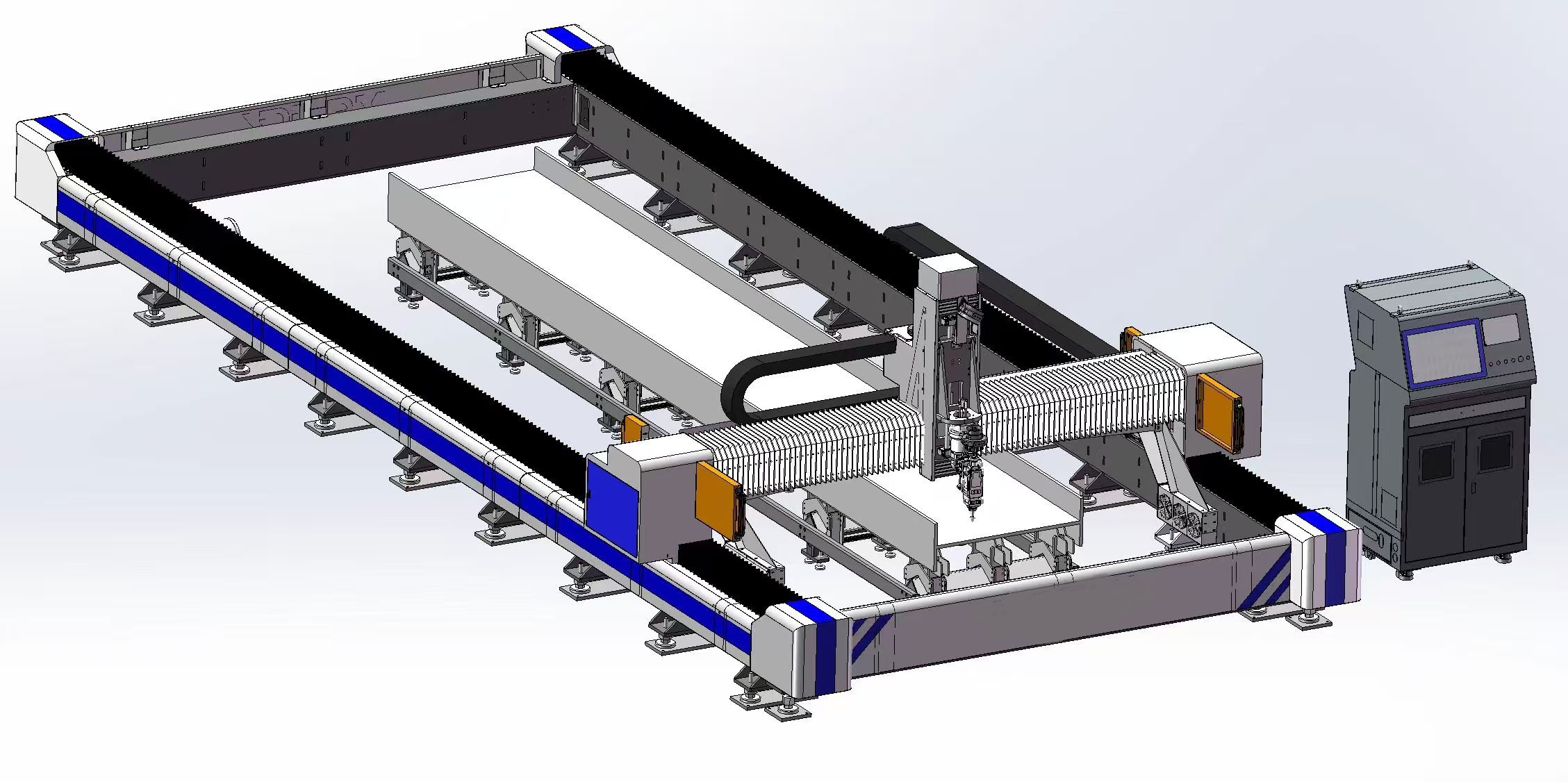
Industrial Application of H-Beam Plasma Cutter
Optimizing Mean Time To Repair (MTTR) in Remote Regions
The primary metric for evaluating the success of cloud diagnostics is the reduction of Mean Time To Repair (MTTR). In traditional service models, a machine failure in a location like Barranquilla would require a multi-day delay involving visa processing, travel logistics, and onsite troubleshooting. With cloud-integrated systems, the diagnostic phase is reduced from days to minutes. Technical teams can perform “virtual ride-alongs” with onsite operators, viewing the HMI (Human Machine Interface) in real-time to guide them through hardware replacements or sensor calibrations.
Furthermore, predictive maintenance algorithms analyze the accumulated data to forecast component failure. For instance, if the cooling system’s flow rate shows a marginal but steady decline over 500 operating hours, the system can flag a potential pump failure before it causes a catastrophic shutdown. For Colombian fabricators, this means spare parts can be ordered and cleared through customs in advance, aligning maintenance windows with production lulls rather than reacting to unexpected breakdowns.
Environmental and Operational Considerations for the Caribbean Coast
The environmental conditions in Barranquilla—characterized by high humidity and salinity—necessitate specific technical adaptations for plasma cutting hardware. The H-beam systems must be equipped with robust filtration for the compressed air supply to prevent moisture from contaminating the plasma arc, which would otherwise lead to poor cut quality and rapid consumable failure. Electronic cabinets require high-grade sealing and climate control to protect sensitive CNC components from the corrosive maritime atmosphere.
Cloud diagnostics also extend to monitoring these environmental variables. Sensors can track internal cabinet temperatures and humidity levels, alerting management if the cooling systems are underperforming. This holistic approach to machine health ensures that the H-Beam Plasma Cutter maintains its precision even under the rigorous climate conditions of the Colombian coast. The data collected also provides insights into energy consumption, allowing firms to optimize their power usage during peak demand periods, which is a significant factor in the regional operational cost structure.
Conclusion: Industry Insight and the Future of Distributed Manufacturing
The deployment of H-beam plasma technology in Barranquilla, supported by robust cloud-based diagnostic frameworks, signifies a broader trend in global manufacturing: the decoupling of physical location from technical expertise. As the structural steel industry continues to move toward more complex, data-driven fabrication, the ability to maintain high-precision assets in remote regions will be the defining factor in regional competitiveness. The integration of IIoT and advanced thermal cutting does not just improve local production; it integrates the local facility into a global network of smart manufacturing.
Industry Insight: The next phase of evolution for structural steel fabrication in South America will likely involve the transition from remote diagnostics to autonomous optimization. As cloud platforms accumulate vast datasets from machines operating in diverse environments, machine learning models will begin to autonomously adjust cutting parameters—such as feed rates and gas mixtures—in real-time to compensate for material variations or atmospheric changes. For fabricators in Barranquilla, this means that the equipment will essentially “learn” to optimize itself for the specific local conditions, further driving down costs and elevating the quality of the built environment across the continent.
Industrial Expertise & Support
Are you looking for high-performance H-Beam Plasma Cutter tailored for the Global market? Our engineering team provides comprehensive solutions for modern manufacturing.





