Industrial Modernization: The Role of H-Beam Plasma Cutters in Barranquilla’s Steel Sector
Barranquilla, Colombia, has emerged as a critical industrial and logistical hub within the Andean region and the broader Caribbean basin. As the city expands its infrastructure and manufacturing capabilities, the demand for high-precision structural steel fabrication has escalated. Central to this evolution is the implementation of advanced thermal cutting systems. The integration of the H-Beam Plasma Cutter into local fabrication workflows represents a significant shift from traditional mechanical processing to automated, high-tolerance production. This transition is not merely about speed; it is about meeting rigorous international benchmarks for quality and safety. For global stakeholders and local enterprises, understanding the technical intersection of machinery performance and regulatory compliance is essential for maintaining competitive parity in the global supply chain.
Technical Specifications and Multi-Axis Robotic Kinematics
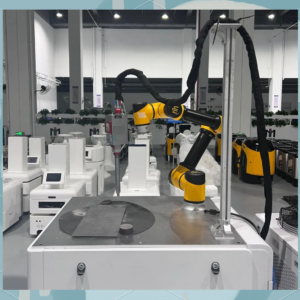
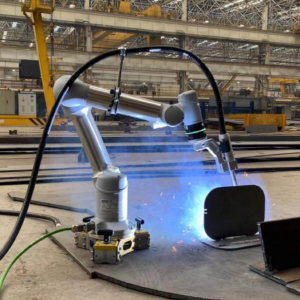
The modern H-Beam Plasma Cutter utilized in heavy industry is defined by its ability to process complex geometries across multiple planes. Unlike standard 2D plasma tables, these systems utilize multi-axis robotic kinematics to navigate the flanges and webs of structural profiles. These machines typically feature six to eight axes of motion, allowing for precise beveling, hole cutting, and marking in a single pass. This eliminates the need for secondary processes such as drilling or manual grinding, which are prone to human error and inconsistent tolerances.
From a technical standpoint, these systems integrate high-definition plasma power sources capable of maintaining arc stability through varying material thicknesses. In Barranquilla’s industrial zones, where humidity and ambient temperature can affect electronic components, these cutters are engineered with sealed cabinets and industrial-grade cooling systems. The CNC (Computer Numerical Control) interface allows for the direct import of TEKLA or DSTV files, ensuring that the physical output matches the digital twin precisely. This level of structural steel fabrication accuracy is mandatory for projects involving large-scale bridges, high-rise skeletons, and offshore platforms where structural integrity is non-negotiable.
CE Certification: Ensuring Global Export Capability
For manufacturers in Barranquilla looking to export fabricated steel components to the European Union or other international markets, CE (Conformité Européenne) certification of their machinery is a fundamental requirement. CE marking indicates that the plasma cutting system meets stringent health, safety, and environmental protection standards. This involves rigorous testing of electromagnetic compatibility (EMC), ensuring that the high-frequency start of the plasma torch does not interfere with other industrial electronics on the shop floor.
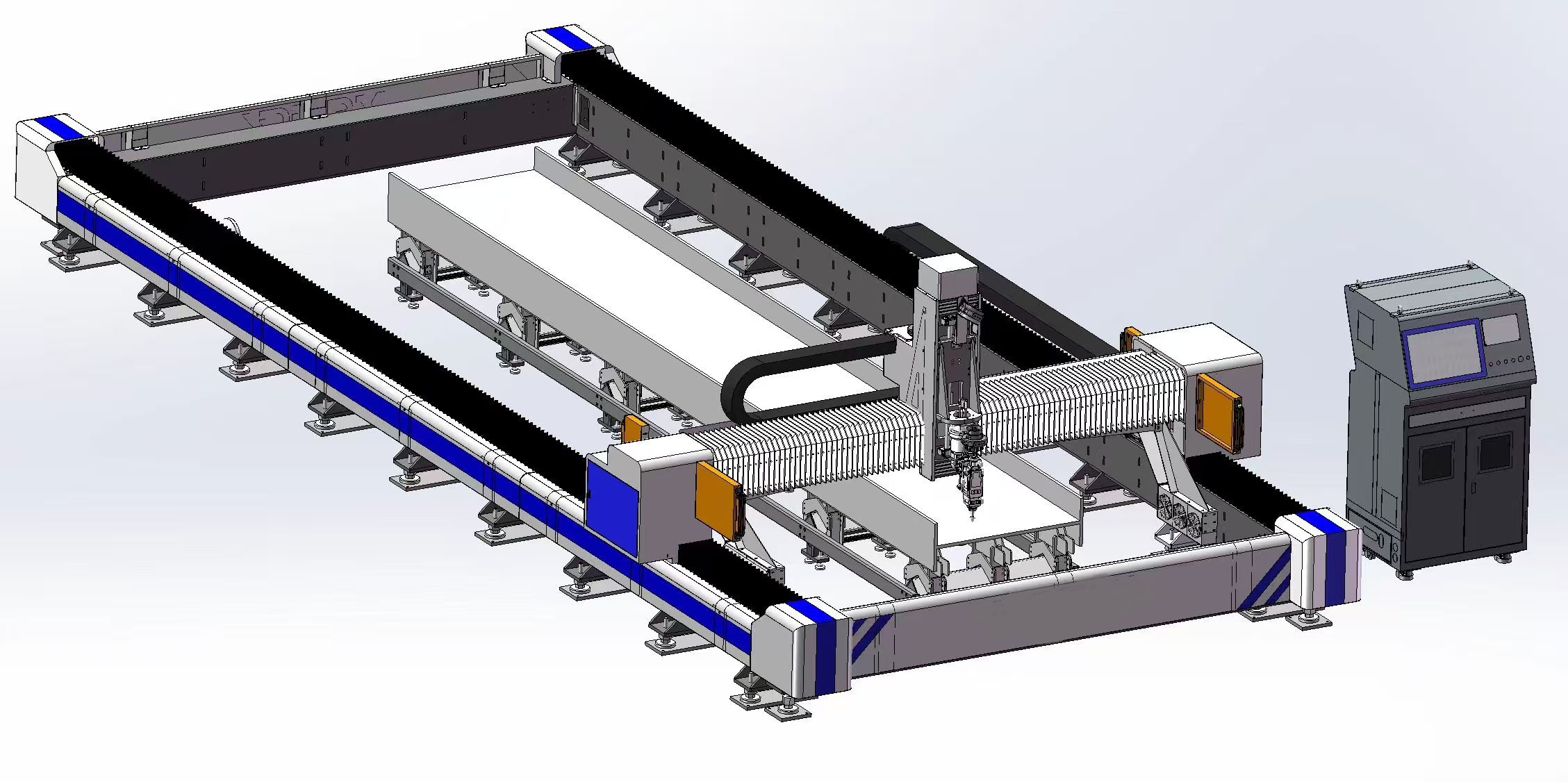
Industrial Application of H-Beam Plasma Cutter
Furthermore, CE compliance covers the Machinery Directive 2006/42/EC, which dictates the design and construction of the equipment to prevent accidents. This includes the implementation of fail-safe software protocols and hardware redundancy. When a facility in Barranquilla operates a CE-compliant H-Beam Plasma Cutter, it signals to global partners that the production environment adheres to a recognized safety framework, thereby reducing liability and enhancing the bankability of large-scale infrastructure projects.
NR-12 Compliance: Safety Standards for the Latin American Market
While CE is a global benchmark, NR-12 (Norma Regulamentadora 12) is specifically critical for operations within Latin America, particularly those with ties to Brazilian engineering standards or those seeking the highest level of regional safety certification. NR-12 focuses on the “Safety of Machinery and Equipment” and is one of the most demanding safety standards in the world. Compliance requires a comprehensive risk assessment of the entire lifecycle of the plasma cutter, from installation to decommissioning.
Key components of NR-12 compliance for an H-Beam Plasma Cutter include:
1. Physical Barriers and Interlocking: The cutting zone must be enclosed or protected by light curtains. If a barrier is breached during operation, the system must execute an immediate Category 0 or Category 1 stop.
2. Emergency Stop Circuits: Multiple emergency stop buttons must be strategically placed around the machine, wired through safety relays that ensure the machine cannot restart unexpectedly.
3. Ergonomics and Maintenance: The standard dictates that the machine must be designed to minimize physical strain on the operator and provide safe access points for routine maintenance without the risk of crushing or electrical shock.
4. Documentation and Training: Operators in Barranquilla must receive specific technical training, and the machine must be accompanied by detailed manuals in the local language, outlining all safety protocols and residual risks.
Strategic Advantages of Deployment in Barranquilla
The geographical positioning of Barranquilla offers unique advantages for the deployment of high-end CNC machinery. Located near the mouth of the Magdalena River and hosting major maritime ports, the city facilitates the efficient import of heavy components and the subsequent export of finished structural steel. The presence of Free Trade Zones (Zonas Francas) provides a fiscal environment conducive to capital-intensive investments in CNC integration and automated cutting technologies.
By adopting equipment that meets both CE and NR-12 standards, local fabricators mitigate the risk of operational downtime caused by regulatory audits or workplace injuries. In a region where labor laws are becoming increasingly stringent, the proactive adoption of international safety standards is a strategic move to future-proof industrial operations. Moreover, the high-speed processing capabilities of these machines allow Barranquilla-based firms to compete on lead times with North American and Asian fabricators, leveraging their proximity to major shipping lanes.
Conclusion: Industry Insight and the Future of Automated Fabrication
The industrial landscape in Barranquilla is undergoing a fundamental shift toward technical sophistication. The adoption of the H-Beam Plasma Cutter, backed by CE and NR-12 compliance, is a clear indicator of this trend. As the global construction industry moves toward modular and prefabricated steel structures, the ability to produce high-tolerance components becomes the primary differentiator between regional workshops and global tier-one suppliers.
The industry insight for the coming decade suggests that safety compliance will no longer be viewed as a regulatory burden but as a prerequisite for digital integration. Machines that adhere to NR-12 and CE standards are inherently more reliable because they utilize higher-quality components and more robust control logic. For the steel sector in Colombia, the focus must remain on the convergence of automated precision and uncompromising safety. This synergy is what will allow Barranquilla to solidify its position as a premier destination for structural engineering excellence, capable of meeting the rigorous demands of the global energy, infrastructure, and commercial construction sectors.
Industrial Expertise & Support
Are you looking for high-performance H-Beam Plasma Cutter tailored for the Global market? Our engineering team provides comprehensive solutions for modern manufacturing.