Advanced Structural Fabrication: The Rise of H-Beam Plasma Cutting in Asunción
The industrial landscape of South America is undergoing a significant transformation, with Asunción, Paraguay, emerging as a strategic hub for high-precision structural steel fabrication. As infrastructure projects across the Southern Cone demand higher throughput and tighter tolerances, the deployment of the H-Beam Plasma Cutter has become a critical factor in maintaining competitive advantages. This transition is not merely about speed; it involves the integration of sophisticated control systems designed to handle the complexities of multi-axis cutting on heavy structural profiles. In the context of Asunción’s growing manufacturing sector, the ability to process not just carbon steel, but also highly conductive and reflective alloys, sets a new benchmark for regional production capabilities.
Technical Challenges in Processing Non-Ferrous Structural Components
While the primary application of structural machinery involves mild steel, the increasing demand for specialized architectural and industrial components requires the processing of copper and aluminum alloys. These materials present unique challenges for conventional plasma systems. Aluminum’s high thermal conductivity and copper’s inherent reflectivity toward electromagnetic energy can lead to arc instability and premature consumable failure. In a high-volume production environment like those currently being established in Paraguay, these inefficiencies result in significant downtime and material waste.
The core of the issue lies in the plasma arc’s interaction with the material’s surface tension and heat dissipation rates. Copper, in particular, dissipates heat so rapidly that a standard plasma arc may fail to maintain a consistent kerf, leading to excessive dross and secondary finishing requirements. Furthermore, the “reflective” nature of these metals in an electromagnetic sense can interfere with the high-frequency start sequences of older plasma power sources, necessitating a more robust technological approach.
Anti-Reflection Technology and Arc Stability Systems
The latest generation of H-Beam Plasma Cutter units deployed in Asunción incorporates Anti-Reflection Tech for Copper & Aluminum. This technology is not an optical solution, but rather an advanced electronic feedback loop designed to mitigate the risks associated with high-conductivity materials. By utilizing High-Frequency Arc Ignition and real-time voltage regulation, the system can sense changes in the material’s resistance and adjust the power output at millisecond intervals.
This anti-reflection capability specifically addresses the “blowback” effect. When cutting reflective non-ferrous metals, the ionized gas stream can experience turbulence if the arc is not perfectly perpendicular or if the pilot arc fails to transition smoothly to the transferred arc. The specialized power supplies now found in Paraguay’s leading fabrication facilities utilize digital signal processing (DSP) to modulate the current waveform. This ensures that the energy density remains concentrated enough to liquefy the metal instantly, preventing the “reflection” of energy back into the torch head, which would otherwise destroy the electrode and nozzle.
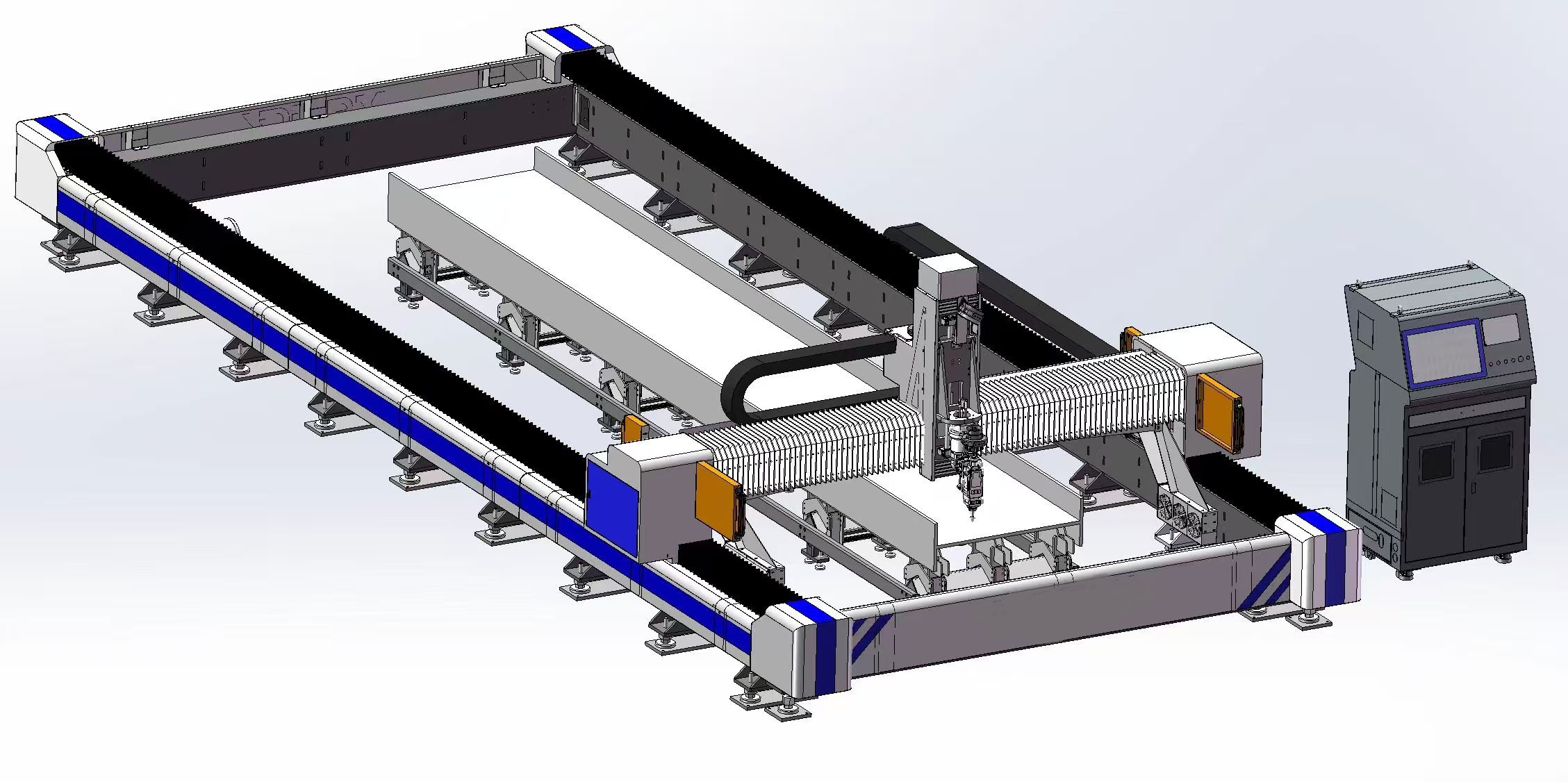
Industrial Application of H-Beam Plasma Cutter
Multi-Axis Robotic Integration for H-Beam Geometries
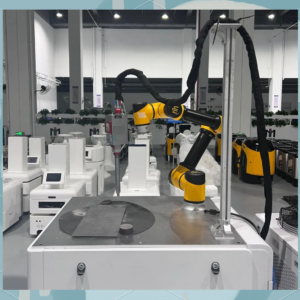
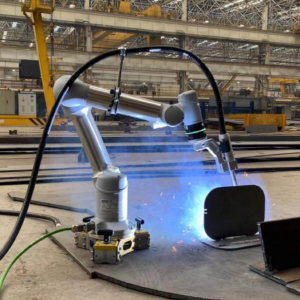
Processing an H-beam involves more than simple X and Y axis movement. It requires a 6-axis robotic arm or a specialized multi-axis gantry that can maneuver the plasma torch around the flanges and web of the beam. In the industrial zones of Asunción, these machines are being programmed to perform complex bolt hole patterns, coping cuts, and miter joints in a single pass. The integration of Thermal Conductivity Management software allows the machine to adjust its travel speed dynamically as it moves from the thick web to the thinner edges of the flanges.
This precision is vital when working with aluminum structural members. Since aluminum has a lower melting point than steel but requires more energy to initiate the cut due to its conductivity, the robotic pathing must be optimized to prevent over-melting or “edge rounding.” The anti-reflection sensors work in tandem with the robotic controller to ensure that the torch height is maintained with sub-millimeter accuracy, even when the material exhibits slight thermal warping during the process.
Gas Chemistry and Kerf Optimization
To achieve clean cuts on copper and aluminum, the choice of plasma gas is paramount. Standard compressed air is often insufficient for high-quality non-ferrous work. Advanced systems in the Paraguayan market utilize multi-gas consoles that mix Argon, Hydrogen, and Nitrogen. For copper, an Ar-H2 mixture provides a higher energy density, which is necessary to overcome the material’s thermal sink properties. The anti-reflection technology monitors the arc’s spectral emission to ensure the gas mixture is providing the optimal shield, preventing oxidation and ensuring the kerf remains narrow and clean.
Operational Efficiency and Local Impact in Asunción
The adoption of these high-end plasma systems in Asunción is driven by the need for regional self-sufficiency. Previously, complex structural components often had to be imported from larger industrial centers in Brazil or Argentina. By localizing the H-Beam Plasma Cutter with anti-reflection capabilities, Paraguayan firms can now handle specialized contracts for electrical infrastructure (utilizing copper busbars and structural supports) and aerospace or marine applications (utilizing high-grade aluminum profiles).
The economic impact is measured in the reduction of “cost per cut.” By eliminating the need for pre-drilling and manual coping, and by reducing the scrap rate of expensive non-ferrous materials through better arc stability, local manufacturers are seeing a return on investment (ROI) within 18 to 24 months. Furthermore, the reduction in secondary grinding—thanks to the dross-free cuts provided by the advanced gas consoles—lowers labor costs and improves shop floor throughput.
Industry Insight: The Convergence of Material Science and Automation
The evolution of plasma cutting technology in Asunción represents a broader global trend: the convergence of material science and intelligent automation. We are moving past the era where a machine is “set and forget.” The modern H-Beam Plasma Cutter acts as an intelligent sensor platform. In the structural steel industry, the ability to pivot between carbon steel and highly reflective alloys like copper or aluminum without a significant loss in precision is the new requirement for Tier 1 suppliers.
The “Anti-Reflection” logic is a precursor to fully autonomous cutting systems that will eventually use AI to predict consumable wear and adjust parameters based on real-time metallurgical analysis of the spark stream. For the B2B sector in South America, investing in this level of technology is no longer optional for those looking to participate in large-scale infrastructure and energy projects. Asunción is proving that geographical location is no barrier to adopting the most sophisticated Thermal Conductivity Management tools available in the global market, effectively closing the gap between regional fabrication and international standards.
Industrial Expertise & Support
Are you looking for high-performance H-Beam Plasma Cutter tailored for the Global market? Our engineering team provides comprehensive solutions for modern manufacturing.