The Strategic Implementation of H-Beam Plasma Cutter Technology in Arequipa’s Industrial Sector
Arequipa, recognized as the primary industrial and mining hub of Southern Peru, serves as a critical nexus for structural steel fabrication. The region’s proximity to major mining operations, such as Cerro Verde, necessitates high-precision components that meet rigorous international engineering standards. Central to this fabrication capacity is the H-Beam Plasma Cutter, a multi-axis CNC system designed to automate the profiling of structural profiles, including I-beams, H-beams, channels, and angles. As the demand for infrastructure and mineral processing facilities grows, the transition from manual layout and mechanical drilling to automated plasma profiling has become a technical necessity for firms seeking to maintain competitive throughput and precision.
The integration of advanced thermal cutting systems in Arequipa is not merely an upgrade in speed; it is a fundamental shift in how structural integrity is managed. The deployment of these machines requires a deep understanding of thermal dynamics, motion control, and, most importantly, compliance with international safety mandates. For global stakeholders and local contractors, the focus has shifted toward systems that carry both CE (Conformité Européenne) and NR-12 (Norma Regulamentadora) certifications, ensuring that high-output production does not compromise operator safety or equipment reliability.
Technical Architecture of Multi-Axis Robotic Profiling
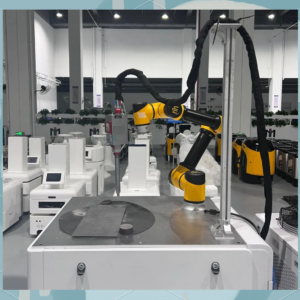
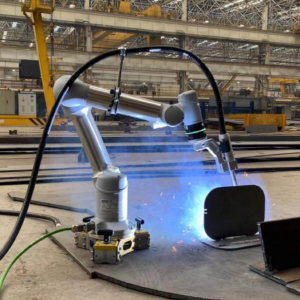
The modern H-Beam Plasma Cutter utilized in Arequipa’s fabrication shops typically employs a 6-axis or 8-axis robotic arm configuration. This allows the plasma torch to reach all four sides of a structural member, including the interior of the flanges and the web, in a single pass. Unlike traditional 2D cutting tables, these 3D profiling systems utilize sophisticated CNC robotic profiling software to interpret TEKLA or AutoCAD files directly, converting BIM (Building Information Modeling) data into machine code without manual intervention.
Key technical specifications of these systems include high-definition plasma power sources, often ranging from 130 to 400 amps. These power units utilize oxygen, nitrogen, or H35 (a hydrogen-argon mix) as plasma gases to achieve a narrow heat-affected zone (HAZ). Minimizing the HAZ is critical in structural applications to prevent the embrittlement of the steel, ensuring that the metallurgical properties of the H-beam remain within the tolerances specified by the American Institute of Steel Construction (AISC) or equivalent ISO standards. The precision of the robotic arm, often within ±0.1mm, ensures that bolt holes, cope cuts, and weld preparations (such as K-cuts and V-cuts) are executed with repeatable accuracy.
CE Certification: Ensuring Global Quality and Electronic Integrity
For industrial equipment exported to or operating within international markets, CE certification serves as a mandatory benchmark for health, safety, and environmental protection. In the context of an H-Beam Plasma Cutter, CE compliance covers several critical directives. The Machinery Directive (2006/42/EC) ensures that the machine is designed to eliminate risks throughout its lifecycle, from installation to decommissioning. Furthermore, the Electromagnetic Compatibility (EMC) Directive is vital for plasma systems, as high-frequency arc starting can generate significant electrical noise that might interfere with other sensitive electronic equipment in a fabrication facility.
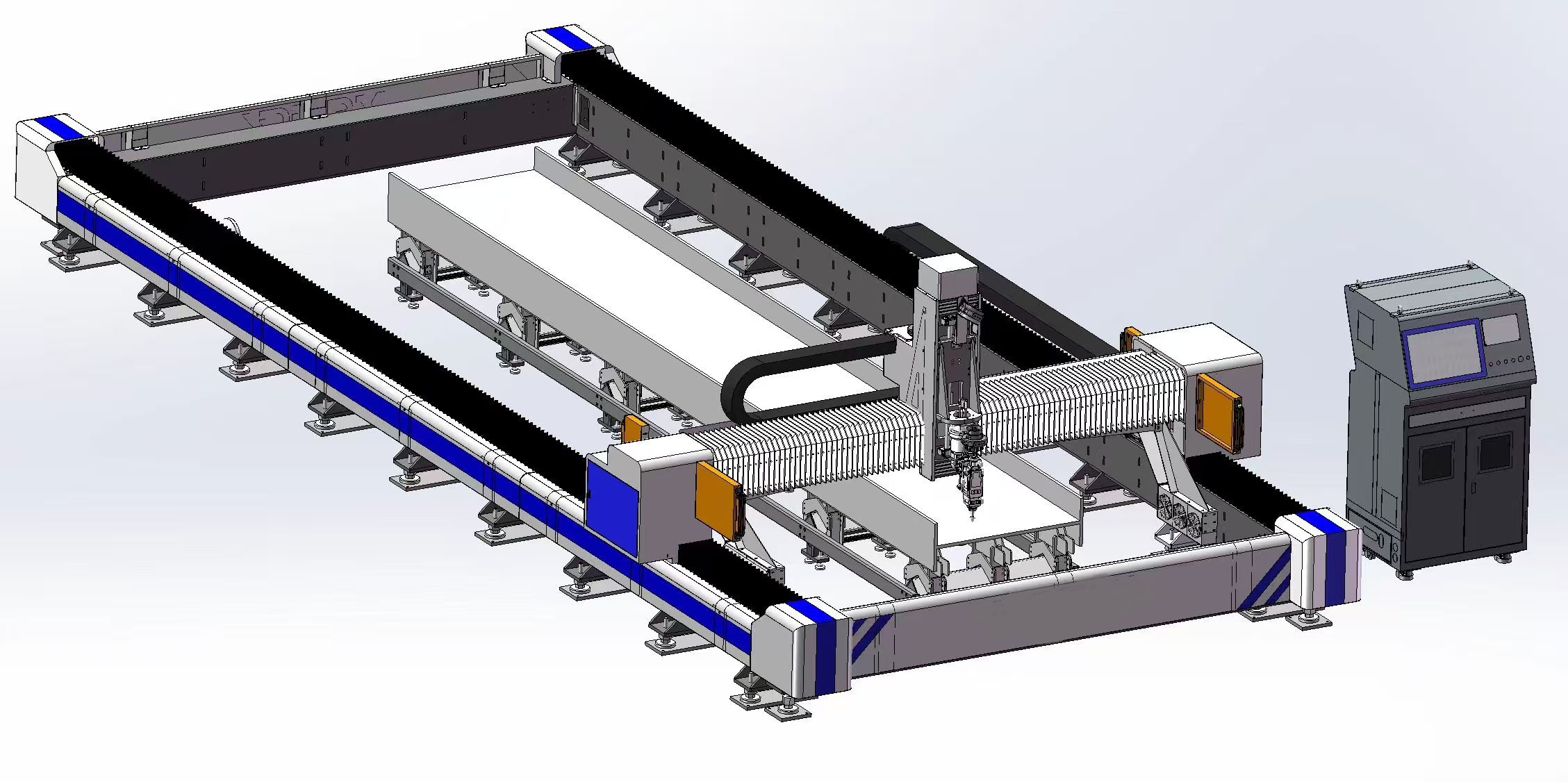
Industrial Application of H-Beam Plasma Cutter
In Arequipa, where industrial grids may experience fluctuations, CE-certified machines provide a level of electronic robustness. These systems include filtered power supplies and shielded communication cables to ensure that the CNC controller maintains its logic integrity during high-amperage cutting cycles. This certification also guarantees that the pressure vessels (gas cylinders and regulators) and electrical components meet European safety standards, providing a layer of risk mitigation for insurers and project stakeholders involved in large-scale Peruvian infrastructure projects.
NR-12 Compliance: The Standard for Machinery Safety in South America
While CE is a global baseline, NR-12 (Norma Regulamentadora 12) is a specific and stringent safety standard originally developed in Brazil but increasingly adopted as a best practice across South American industrial sectors, including Peru. NR-12 focuses on the physical and operational safety of the worker. For an H-Beam Plasma Cutter to be NR-12 compliant, it must incorporate a comprehensive suite of safety features designed to prevent workplace accidents.
NR-12 requirements include the installation of physical barriers, light curtains, and safety sensors that immediately halt machine motion if a human enters the working envelope. Emergency stop (E-stop) buttons must be strategically placed and monitored by safety relays that ensure a “fail-safe” state. In Arequipa’s heavy industry, where labor safety is under increasing scrutiny from regulatory bodies like SUNAFIL (Superintendencia Nacional de Fiscalización Laboral), NR-12 compliance is not optional for major contractors. It necessitates documented risk assessments and rigorous operator training, ensuring that the high-speed robotics and high-voltage plasma arcs do not pose a threat to the workforce.
Optimizing Throughput in Structural Steel Fabrication
The primary economic driver for adopting automated structural steel fabrication technology in Arequipa is the reduction of “man-hours per ton.” Traditional methods involve manual marking, magnetic drilling, and oxy-fuel cutting, which are prone to human error and require significant secondary grinding. An automated plasma system can process a 12-meter H-beam with multiple bolt holes and complex miters in under 10 minutes, a task that would take hours manually.
Furthermore, the integration of nesting software allows fabricators to optimize material usage. By analyzing the project’s cut list, the software determines the most efficient sequence and placement of cuts on a single beam, significantly reducing scrap rates. In a region where the cost of imported high-grade steel can be volatile, the ability to maximize material yield directly impacts the profitability of mining and construction contracts. The precision of plasma cutting also eliminates the need for fit-up corrections at the job site, ensuring that large-scale structures are bolted together with zero-tolerance errors, thereby accelerating the overall project timeline.
Environmental and Operational Considerations in the Peruvian Highlands
Operating high-precision plasma equipment in Arequipa requires consideration of the local environment, specifically the altitude (approximately 2,335 meters above sea level). Atmospheric pressure affects the density of the plasma gas and the cooling efficiency of the system. Advanced H-beam cutters are equipped with sensors that allow the CNC to compensate for these variables, adjusting the arc voltage and gas flow rates to maintain cut quality.
Additionally, the management of fumes and particulates is a critical component of both CE and NR-12 compliance. High-capacity dust extraction and filtration systems are integrated into the cutting zone to capture hazardous metallic dust and ozone generated during the plasma process. This not only protects the health of the operators but also prevents the accumulation of conductive dust on the machine’s electronic components, extending the mean time between failures (MTBF) for the equipment.
Concluding Industry Insight: The Future of Autonomous Fabrication
The shift toward CE and NR-12 compliant H-beam plasma cutting in Arequipa represents a broader trend in the global B2B industrial landscape: the convergence of high-output automation with stringent safety governance. As the mining and energy sectors in Peru continue to modernize, the reliance on “smart” fabrication will only intensify. The future of this industry lies in the integration of Artificial Intelligence (AI) for real-time toolpath optimization and predictive maintenance, where the machine can alert operators to consumable wear before cut quality degrades.
For global manufacturers and local service centers, the investment in compliant, high-precision technology is no longer a luxury but a prerequisite for participation in high-value supply chains. By adhering to international safety standards while leveraging the speed of robotic plasma profiling, Arequipa’s industrial sector is positioning itself as a leader in the South American structural steel market, capable of meeting the rigorous demands of 21st-century infrastructure development.
Industrial Expertise & Support
Are you looking for high-performance H-Beam Plasma Cutter tailored for the Global market? Our engineering team provides comprehensive solutions for modern manufacturing.