Integrating H-Beam Plasma Cutting Systems in Arequipa: The Engineering Necessity of Integrated Voltage Regulation
The industrial landscape of Arequipa, Peru, represents a critical hub for South American mining and structural steel fabrication. As infrastructure projects expand across the Andes, the demand for precision-cut structural members, specifically H-beams, has increased significantly. However, the geographic and infrastructural realities of operating high-precision CNC machinery in this region present unique electrical challenges. For a H-Beam Plasma Cutter to maintain operational integrity in such environments, the integration of advanced voltage regulation systems is not merely a feature but a fundamental requirement for industrial viability.
Arequipa’s industrial zones often experience fluctuations in power quality due to heavy inductive loads from neighboring mining operations and the inherent limitations of long-distance transmission lines. When deploying automated cutting solutions, these fluctuations can lead to arc instability, electronic component failure, and inconsistent kerf quality. This technical analysis explores the convergence of plasma cutting technology and grid stabilization within the context of the Peruvian industrial sector.
The Impact of Grid Instability on Plasma Arc Physics
The plasma cutting process relies on the ionization of gas to create a high-temperature plasma stream capable of melting structural steel. This process requires a constant, high-velocity DC current. In a standard H-Beam Plasma Cutter, the power supply unit (PSU) converts three-phase AC input into a regulated DC output. In regions like Arequipa, where the grid may experience voltage sags (undervoltage) or transient surges (overvoltage), the internal inverter circuits are placed under extreme thermal and electrical stress.
When the input voltage drops below the nominal threshold, the system attempts to compensate by increasing the current draw to maintain the programmed wattage. This leads to overheating of the IGBT Inverter Technology modules and can cause the pilot arc to fail during the critical piercing phase. Conversely, voltage spikes can puncture the insulation of high-frequency transformers. By integrating built-in voltage regulation, the machine utilizes a buffer system—typically a combination of heavy-duty capacitors and high-speed switching regulators—to normalize the input before it reaches the sensitive inverter stages.
Technical Specifications of Integrated Voltage Regulation
The implementation of Automatic Voltage Regulation (AVR) within the plasma power source provides a stabilized window of operation, typically accommodating input variations of plus or minus 15 percent. This is achieved through several key mechanical and electronic components:
1. Active Power Factor Correction (PFC)
Active PFC circuits ensure that the current waveform follows the voltage waveform, reducing harmonic distortion. This is particularly vital in Arequipa’s industrial parks, where multiple heavy machines operate on the same feeder line. PFC improves the efficiency of the power draw, reducing the total KVA requirement and lowering the heat generated within the internal circuitry.
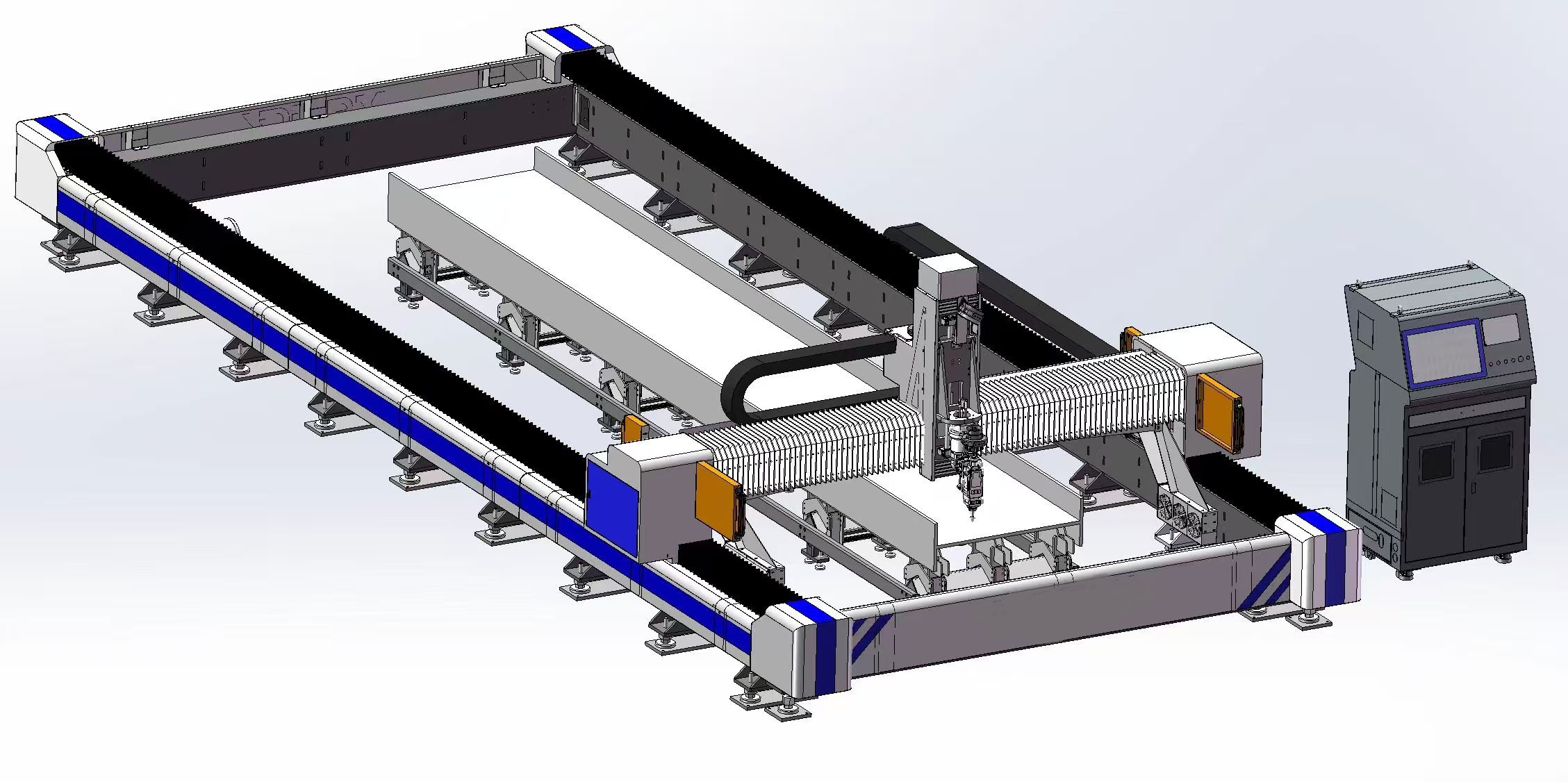
Industrial Application of H-Beam Plasma Cutter
2. High-Speed Pulse Width Modulation (PWM)
The Pulse Width Modulation system responds in microseconds to input fluctuations. If the grid voltage fluctuates during a flange cut on a heavy H-beam, the PWM controller adjusts the duty cycle of the switching transistors to keep the output current constant. This ensures that the arc pressure remains uniform, preventing dross accumulation and ensuring a square cut edge that meets AISC (American Institute of Steel Construction) standards.
Structural Steel Fabrication Challenges in High-Altitude Environments
Arequipa sits at an elevation of approximately 2,335 meters. At this altitude, the air density is lower than at sea level, which affects the cooling efficiency of the plasma torch and the dielectric strength of the air. When combined with inconsistent grid power, the risk of “arc-over” or internal component arcing increases. A specialized H-Beam Plasma Cutter designed for this region must account for these environmental variables.
The built-in voltage regulation acts as a secondary protective layer for the CNC controller and the multi-axis robotic arms used to maneuver the torch around the H-beam’s web and flanges. While the plasma arc itself is the primary consumer of power, the precision servo motors that drive the X, Y, and Z axes are equally sensitive. A voltage drop during a simultaneous five-axis movement can cause a synchronization error, leading to a mechanical collision or a ruined workpiece. Integrated regulation ensures that the logic gates and motor drivers receive a clean 24V DC signal regardless of the primary AC state.
Economic Advantages of Localized Grid Stability
From a B2B perspective, the Total Cost of Ownership (TCO) of a plasma system in Peru is heavily influenced by consumable life and downtime. Unstable voltage is a primary cause of premature electrode and nozzle wear. When the arc fluctuates, the “swirl” of the plasma gas is disrupted, leading to an off-center arc that erodes the nozzle orifice. By stabilizing the voltage, the system maintains a constricted, coherent arc, extending the life of consumables by up to 30 percent compared to non-regulated systems.
Furthermore, the reduction in electronic failures translates to higher machine uptime. In the competitive mining supply chain of Arequipa, the ability to deliver structural components on a predictable schedule is a significant market advantage. Facilities that invest in machines with built-in regulation avoid the secondary costs associated with large-scale external industrial stabilizers, which require additional floor space and maintenance.
Concluding Industry Insight: The Shift Toward Resilient Infrastructure
The deployment of a H-Beam Plasma Cutter in Arequipa highlights a broader trend in global industrial engineering: the shift from “standardized” machinery to “regionally resilient” hardware. As manufacturing continues to decentralize and move closer to raw material sources—such as the copper and iron mines of the Peruvian highlands—the machinery must be engineered to withstand the local infrastructure’s inconsistencies.
The future of structural steel fabrication lies in the integration of “smart” power electronics that can diagnose and adapt to grid anomalies in real-time. For the B2B sector, the focus is moving away from raw cutting speed and toward “reliable throughput.” In high-altitude, high-growth regions, the most valuable asset is not the fastest machine, but the one that maintains precision through the volatility of the local environment. Integrated voltage regulation is the bridge between sophisticated CNC software and the rugged reality of global industrial grids, ensuring that the structural integrity of the final H-beam is never compromised by the instability of the power that created it.
Industrial Expertise & Support
Are you looking for high-performance H-Beam Plasma Cutter tailored for the Global market? Our engineering team provides comprehensive solutions for modern manufacturing.





