Introduction: The Industrial Landscape of Antofagasta
The Antofagasta region of Chile represents one of the most demanding industrial environments globally. As a primary hub for international copper mining and lithium extraction, the local infrastructure requires continuous structural steel fabrication to support expansive processing plants and transport networks. Central to this fabrication process is the H-Beam Plasma Cutter, a specialized CNC system designed to execute complex 3D profiles, bolt holes, and coping cuts on heavy structural sections. However, the geographical isolation of the Atacama Desert presents a significant logistical barrier: the high cost of downtime. When a machine fails in a region located hundreds of kilometers from the nearest specialized service center, the resulting operational paralysis can cost tens of thousands of dollars per hour. To mitigate this risk, the integration of remote cloud diagnostics has transitioned from an optional feature to a technical necessity for heavy industry in Northern Chile.
Structural Steel Fabrication via Multi-Axis Plasma Profiling
The H-Beam Plasma Cutter operates through a sophisticated interplay of multi-axis motion control and high-definition plasma power sources. Unlike traditional plate cutting, H-beam processing requires the torch to navigate around the flanges and webs of the beam, often employing a 6-axis robotic arm or a specialized gantry system to maintain the necessary torch-to-workpiece distance. The precision of these cuts is governed by IoT-integrated CNC controllers that manage real-time parameters such as arc voltage, gas flow rates, and feed speeds. In the context of Antofagasta’s mining sector, these machines are frequently utilized to produce customized support structures that must meet stringent seismic and load-bearing standards. The complexity of these systems means that mechanical or software deviations require immediate expert intervention to maintain the structural integrity of the output.
The Architecture of Remote Cloud Diagnostics
The implementation of remote cloud diagnostics in vast regions like Northern Chile relies on a robust data architecture. The system begins at the edge, where sensors embedded within the plasma power supply, the gas console, and the servo drives collect high-frequency operational data. This data is aggregated by an industrial gateway and transmitted via secure protocols—such as MQTT or OPC UA—to a centralized cloud platform. This Real-time Telemetry allows engineers located anywhere in the world to visualize the machine’s state as if they were standing on the factory floor in Antofagasta. The diagnostic suite covers several critical domains: thermal monitoring of the power electronics, pressure fluctuations in the shielding gas lines, and positional accuracy of the drive motors. By utilizing cloud-based dashboards, maintenance teams can identify the root cause of an alarm—whether it is a hardware failure, a software glitch, or operator error—without the need for physical travel.
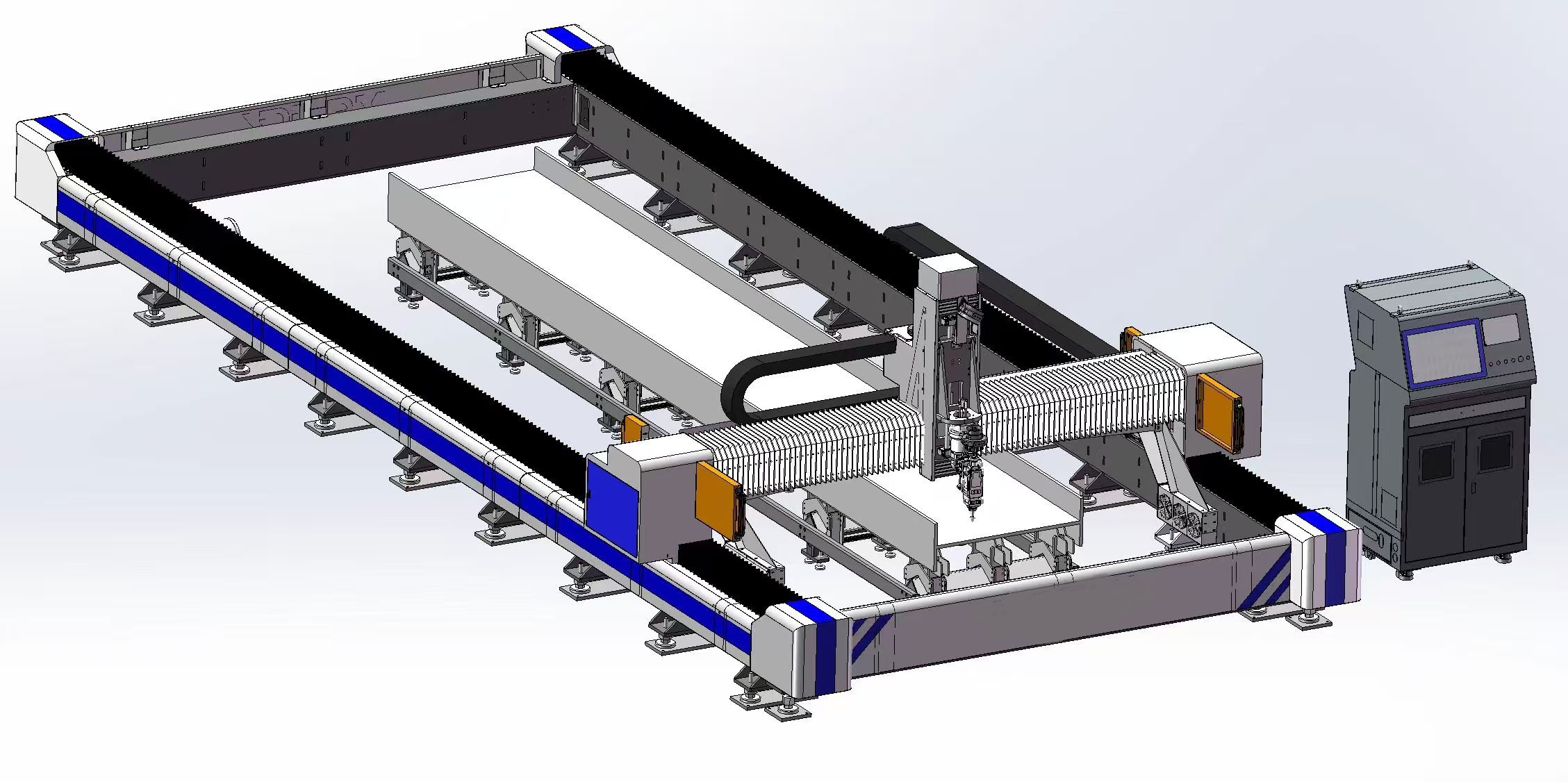
Industrial Application of H-Beam Plasma Cutter
Overcoming Latency and Connectivity Challenges in the Atacama
Connectivity in remote Chilean industrial sites often relies on a combination of fiber optics and high-throughput satellite links. Remote diagnostics for an H-Beam Plasma Cutter must be engineered to handle potential latency or intermittent bandwidth. Modern diagnostic systems utilize “edge computing” to buffer critical event logs locally, ensuring that no data is lost during a connection drop. Once the link is re-established, the system synchronizes the local cache with the cloud database. Furthermore, remote access protocols allow for “Tele-service” sessions, where a remote technician can take control of the CNC interface to update firmware, recalibrate the torch height control (THC), or adjust the kerf compensation parameters. This capability effectively eliminates the “geographic tax” typically associated with operating high-tech machinery in the Atacama.
Predictive Maintenance and Consumable Optimization
Beyond reactive troubleshooting, the accumulation of cloud data enables the application of Predictive Maintenance Algorithms. In the harsh, dusty environment of Antofagasta, mechanical components such as linear bearings and gear racks are subject to accelerated wear. By analyzing the current draw of the servo motors over time, the diagnostic system can detect increased friction levels that indicate a need for lubrication or alignment. Similarly, the system monitors the degradation of the plasma electrode and nozzle by tracking arc start characteristics and voltage stability. Instead of replacing consumables on a rigid schedule, which is inefficient, or waiting for a failure, which ruins the workpiece, the cloud system alerts the procurement team to order replacements based on actual wear patterns. This data-driven approach ensures that the supply chain is synchronized with the actual production tempo of the Chilean facility.
Security Protocols in Remote Industrial Access
A primary concern for B2B operations in the global market is the cybersecurity of industrial assets. Providing a remote gateway into a facility’s internal network requires multi-layered security. Technical implementations in the Antofagasta region typically utilize hardware-based VPNs with end-to-end encryption and multi-factor authentication (MFA). Access is restricted to specific IP addresses, and all remote actions are logged for auditing purposes. This ensures that while the H-Beam Plasma Cutter is accessible for diagnostics, it remains isolated from unauthorized external interference. The separation of the machine control network from the corporate office network further prevents lateral movement of any potential cyber threats, maintaining the operational continuity of the mining or construction enterprise.
Economic Impact on Regional Fabrication Throughput
The economic justification for cloud-enabled H-Beam Plasma Cutter systems in Chile is found in the reduction of Mean Time To Repair (MTTR). In a traditional service model, a machine failure might result in a 3-to-5-day delay while a technician is dispatched from Santiago or abroad. With remote diagnostics, over 85 percent of software and configuration issues are resolved within hours. For the remaining hardware issues, the remote diagnostic report ensures that the technician arrives on-site with the correct replacement parts, eliminating the need for a secondary “diagnostic” trip. This efficiency directly correlates to higher annual tonnage of processed steel and more competitive bidding for large-scale mining infrastructure projects.
Concluding Industry Insight
The deployment of H-Beam Plasma Cutter technology in Antofagasta serves as a blueprint for the future of global industrial service. The shift from localized maintenance to a decentralized, cloud-based diagnostic model is no longer a luxury but a fundamental requirement for operating in the world’s “vast regions.” As we move forward, the integration of digital twin technology—where a virtual model of the Chilean cutter is synchronized with the physical machine—will further enhance diagnostic accuracy. The industry is moving toward a state where the physical location of the machinery is irrelevant to the quality of technical support it receives. For manufacturers and service providers, the ability to provide high-level technical oversight across vast distances is the new benchmark for operational excellence in the structural steel sector. Companies that embrace this connectivity will achieve superior uptime and lower total cost of ownership, regardless of how remote their operations may be.
Industrial Expertise & Support
Are you looking for high-performance H-Beam Plasma Cutter tailored for the Global market? Our engineering team provides comprehensive solutions for modern manufacturing.





