Precision Manufacturing Evolution: Fiber Tube Laser Cutter Integration in Montevideo
The industrial landscape of Montevideo, Uruguay, is currently undergoing a significant technological transition. As a strategic logistics hub for the Southern Cone, the region’s metalworking sectors are shifting from traditional mechanical sawing and CO2 laser systems to advanced fiber-optic technologies. The adoption of the Fiber Tube Laser Cutter represents a pivotal advancement in how local manufacturers approach structural steel, stainless steel, and aluminum profile fabrication. This transition is not merely driven by speed or throughput requirements but by a rigorous adherence to modern Environment, Health, and Safety (EHS) standards, which prioritize air quality and operational cleanliness.
In the context of global manufacturing, the ability to maintain a dust-free environment during thermal cutting processes is a critical differentiator. Modern fiber laser systems operating in Montevideo are now equipped with sophisticated filtration units that mitigate the risks associated with metallic particulates. This technical analysis explores the mechanical and environmental synergy of fiber tube processing within the Uruguayan industrial framework.
Technical Architecture of the Fiber Tube Laser Cutter
The core of the Fiber Tube Laser Cutter lies in its solid-state laser source. Utilizing an ytterbium-doped Fiber Laser Resonator, these machines generate a high-intensity beam at a wavelength of approximately 1.06 microns. This specific wavelength allows for superior absorption rates in metallic materials compared to the 10.6 microns of traditional CO2 lasers. The result is a narrower heat-affected zone (HAZ) and significant Kerf Width Optimization, which reduces the volume of material vaporized during the cutting process.
The mechanical configuration typically involves a four-chuck or three-chuck system designed to rotate and feed tubular profiles—ranging from round and square to complex elliptical shapes—through the cutting head’s focal point. Because the process is entirely automated via CNC (Computer Numerical Control), the precision is maintained within tolerances of ±0.05mm. However, the high-speed sublimation of metal generates fine-grained dust and fumes that require immediate containment to meet international EHS protocols.
Advanced Dust Extraction and Filtration Mechanisms
To achieve a dust-free operation, manufacturers in Montevideo are deploying systems integrated with multi-stage extraction units. Unlike flatbed lasers, tube cutters present a unique challenge: the dust is often generated inside the tube itself. To counteract this, modern systems utilize a synchronized internal suction mechanism. As the laser pierces the material, a high-vacuum blower activates at the tailstock or through a specialized extraction manifold located directly beneath the cutting zone.
The filtration process follows a specific technical sequence:

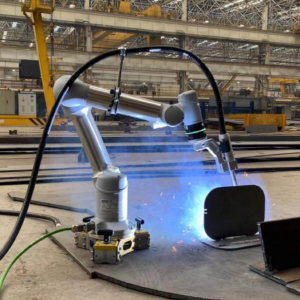
Industrial Application of Fiber Tube Laser Cutter
1. Primary Cyclone Separation: Large sparks and heavy slag are separated from the airflow through centrifugal force, preventing damage to the filter media.
2. Nano-Fiber Cartridge Filtration: Fine particulates are captured by high-efficiency cartridges. These cartridges often feature a PTFE (Polytetrafluoroethylene) coating to ensure that sub-micron particles do not penetrate the substrate.
3. Pulse-Jet Cleaning: To maintain constant static pressure, the system uses compressed air pulses to automatically clean the filters during operation, ensuring the extraction volume remains consistent.
4. High-Efficiency Particulate Air (HEPA) Filtration: In facilities requiring the highest EHS compliance, a secondary HEPA stage is added to ensure that the air recirculated into the factory floor is 99.97% free of contaminants.
EHS Standards and Occupational Health in Uruguay
The implementation of these dust-free systems in Montevideo aligns with the growing stringent regulations regarding occupational health. Metallic dust, particularly from stainless steel (containing chromium and nickel) or galvanized steel (containing zinc), poses severe respiratory risks if not managed. By utilizing a fully enclosed Fiber Tube Laser Cutter with an Integrated Dust Extraction System, companies eliminate the “blue haze” often seen in older fabrication shops.
Furthermore, the reduction of ambient dust has a direct impact on the longevity of the machinery itself. Metallic dust is conductive and abrasive. If allowed to settle on linear guides, rack-and-pinion drives, or electronic components, it can cause premature wear or electrical short circuits. Therefore, a dust-free operation is as much a requirement for machine uptime as it is for worker safety.
Operational Efficiency and Material Versatility
The versatility of fiber technology allows Montevideo-based firms to process a wide array of materials that were previously difficult to handle. Highly reflective metals such as brass and copper can be cut efficiently without the risk of back-reflection damaging the laser source, thanks to the isolators built into modern fiber resonators. When combined with nitrogen as an assist gas, the resulting cut is oxide-free, requiring no secondary finishing or grinding.
This “ready-to-weld” output is essential for industries such as automotive assembly, agricultural machinery, and architectural structures. By eliminating the cleaning and deburring stages, the total cycle time per part is reduced by 30% to 50% compared to plasma or mechanical cutting methods. This efficiency is critical for Uruguayan exporters looking to remain competitive in the global supply chain.
Economic Impact on the Montevideo Industrial Sector
Investing in high-end fiber laser technology provides a significant return on investment (ROI) through reduced power consumption. Fiber lasers operate at wall-plug efficiencies of 30% to 40%, whereas CO2 systems typically hover around 10%. In a region where energy costs are a primary concern for industrial scaling, the lower kilowatt-per-hour requirement of the fiber source is a decisive factor. Additionally, the lack of moving parts in the laser generator (no turbines or glass tubes) reduces maintenance overhead, allowing local technicians to focus on optimizing production schedules rather than hardware repairs.
Concluding Industry Insight: The Future of Laser Processing
As the manufacturing sector moves toward Industry 4.0, the role of the Fiber Tube Laser Cutter will expand beyond simple fabrication. The integration of real-time monitoring sensors and automated loading/unloading systems is becoming the standard. In Montevideo, the focus is shifting toward “Green Manufacturing”—a philosophy where environmental impact is quantified alongside profit margins. The transition to dust-free, energy-efficient laser cutting is not a temporary trend but a fundamental shift in industrial logic.
The ultimate insight for the global B2B market is that technical superiority is now inextricably linked to EHS compliance. Companies that fail to adopt enclosed, filtered, and high-efficiency systems will find themselves marginalized by both international labor standards and the economic realities of material waste. Montevideo’s adoption of these systems serves as a blueprint for mid-sized industrial hubs: leveraging precision technology to meet global quality standards while safeguarding the local environment and workforce. The future of tube processing lies in the invisible—where the absence of dust and the minimization of kerf signify the highest level of engineering maturity.
Industrial Expertise & Support
Are you looking for high-performance Fiber Tube Laser Cutter tailored for the Global market? Our engineering team provides comprehensive solutions for modern manufacturing.