The Industrial Evolution of Joinville: Integrating Advanced Photonic Solutions
Joinville, located in the state of Santa Catarina, stands as Brazil’s premier industrial powerhouse, often referred to as the Manchester of Brazil. With a dense concentration of metal-mechanic, automotive, and white goods manufacturers, the region serves as a critical node in the global supply chain. As international competition intensifies, local enterprises are transitioning from traditional Gas Tungsten Arc Welding (GTAW) and Gas Metal Arc Welding (GMAW) toward high-density energy beam processes. Central to this transition is the Fiber Laser Welder, a technology that has redefined throughput and precision in the region’s industrial parks, such as the Perini Business Park and the Joinville Industrial District.
The adoption of fiber laser technology in Joinville is not merely a trend but a strategic response to the demand for tighter tolerances and lower operational expenditures. By leveraging a ytterbium-doped active fiber as the gain medium, these systems deliver a high-intensity beam with a wavelength typically around 1064 nm. This wavelength is highly absorbable by common industrial metals including stainless steel, aluminum alloys, and carbon steel, facilitating deep penetration welding with minimal energy waste.
Technical Specifications and Thermal Dynamics
The primary technical advantage of the fiber laser over conventional methods lies in its power density and the resulting Heat-Affected Zone (HAZ). In traditional arc welding, the broad application of heat leads to significant thermal expansion and subsequent contraction, causing structural distortion and metallurgical degradation. In contrast, the fiber laser provides a concentrated energy source that enables keyhole welding modes, where the aspect ratio (depth-to-width) is significantly higher.
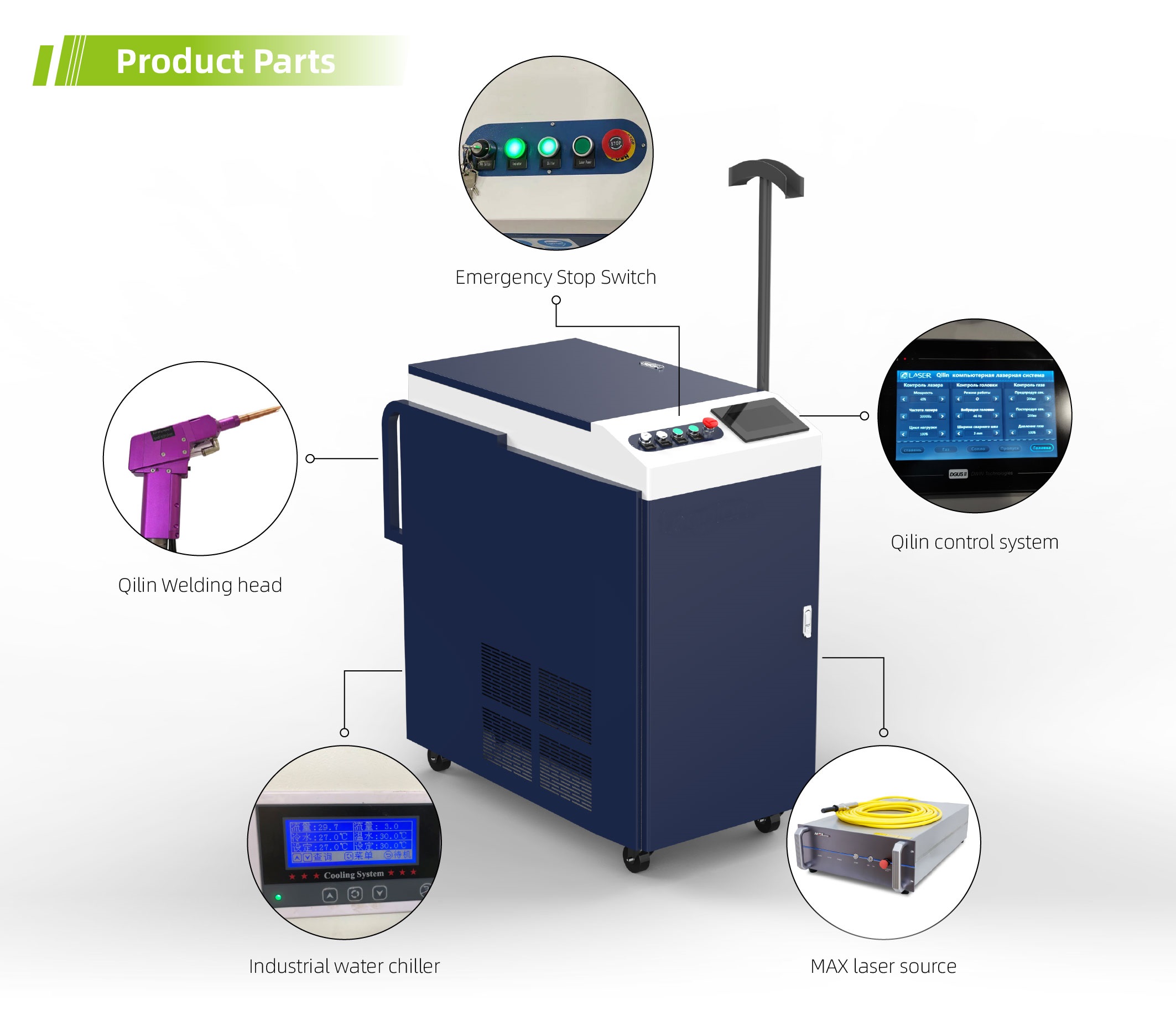
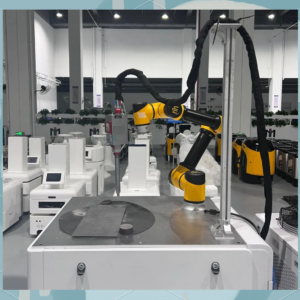
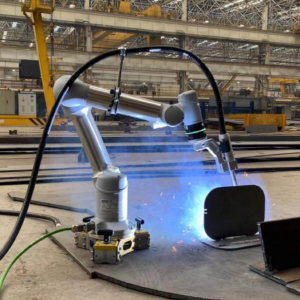
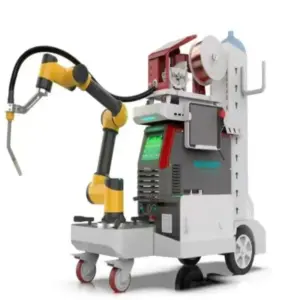
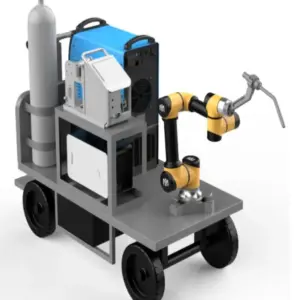
Industrial Application of Fiber Laser Welder
For the precision-heavy sectors in Joinville, such as the production of compressor components or automotive chassis parts, the reduction of the Heat-Affected Zone (HAZ) is critical. A smaller zone ensures that the mechanical properties of the base metal—such as tensile strength and corrosion resistance—remain largely uncompromised. Furthermore, the Beam Parameter Product (BPP) of modern fiber lasers allows for long focal lengths while maintaining a small spot size, providing manufacturers with the flexibility to weld complex geometries without sacrificing energy intensity.
Quantifying ROI: Operational Efficiency in Joinville’s Parks
Return on Investment (ROI) for industrial equipment in the Brazilian market is often scrutinized through the lens of labor costs, energy consumption, and post-processing requirements. The Fiber Laser Welder presents a compelling fiscal case across three primary vectors:
1. Throughput and Linear Speed
Data from local implementations indicate that fiber laser systems can operate at speeds 4 to 10 times faster than manual TIG welding. In a high-volume production environment, such as the appliance manufacturing plants in Joinville, this increase in linear speed translates directly to a lower cost-per-unit. The high processing speed also reduces the cycle time for individual assemblies, allowing for higher inventory turnover and better utilization of floor space within industrial parks.
2. Elimination of Post-Processing
Traditional welding often requires significant secondary operations, including grinding, polishing, and straightening due to thermal warping. Because fiber laser welding produces aesthetically superior and structurally sound beads with minimal spatter, many Joinville-based manufacturers report a 70% reduction in post-processing labor. This redirection of human resources toward higher-value tasks is a significant driver of the technology’s rapid payback period, often realized within 12 to 18 months of commissioning.
3. Consumable and Energy Optimization
The wall-plug efficiency of fiber lasers is approximately 30-35%, compared to the 5-10% efficiency of older CO2 laser systems or the high energy loss in arc-based processes. Additionally, the move toward Autogenous Welding—where no filler material is required—eliminates the recurring costs of welding wires and specialized shielding gas mixtures. For large-scale operations in Santa Catarina, these marginal savings aggregate into substantial annual OPEX reductions.
Integration with Automation and Industry 4.0
Joinville’s industrial parks are increasingly moving toward fully automated production lines. The digital nature of the Fiber Laser Welder makes it inherently compatible with robotic integration. By utilizing a Galvanometer Scanning System, the laser beam can be directed with micro-millimeter precision at high frequencies, enabling “welding-on-the-fly.”
This compatibility allows local firms to implement real-time monitoring and data logging. Parameters such as laser power, pulse frequency, and travel speed are captured and analyzed, ensuring traceability that meets international ISO standards. For Joinville exporters, this level of quality assurance is vital for maintaining contracts with European and North American Tier-1 automotive suppliers.
Material Versatility and Local Application
The diversity of Joinville’s industrial base requires equipment that can handle a wide array of materials. Fiber lasers excel in joining dissimilar metals, a task that is notoriously difficult with traditional methods. Whether it is joining copper to aluminum for electrical components or welding high-strength galvanized steel without destroying the zinc coating, the precision of the fiber laser’s pulse modulation allows for exact control over the melt pool.
Case Study Context: Automotive and HVAC
In the HVAC sector, specifically in the production of heat exchangers, the ability to produce hermetic seals with zero porosity is non-negotiable. Local manufacturers in Joinville have found that the stability of the fiber laser source minimizes the risk of leakages, thereby reducing warranty claims and improving brand reputation. In the automotive sector, the shift toward lighter materials to meet fuel efficiency standards has made the fiber laser’s ability to weld thin-gauge aluminum indispensable.
Conclusion: Industry Insight
The industrial landscape of Joinville is currently at a critical juncture where the adoption of photonic manufacturing is no longer an optional upgrade but a requirement for global solvency. The transition to the Fiber Laser Welder represents a shift from “brute force” thermal processing to precision energy management. As the Brazilian Real fluctuates and global supply chains demand higher agility, the ability to produce high-precision, low-distortion components with minimal labor intervention is the only viable path forward.
Future Outlook
The next phase of growth for Joinville’s industrial parks will likely involve the convergence of laser welding with additive manufacturing and AI-driven defect detection. Companies that have already integrated fiber laser technology are positioned to lead this wave, utilizing their existing digital infrastructure to incorporate machine learning algorithms that can predict weld failures before they occur. For the global B2B market, Joinville serves as a blueprint for how regional industrial hubs can successfully modernize by focusing on high-ROI, technically superior manufacturing assets.
Industrial Expertise & Support
Are you looking for high-performance Fiber Laser Welder tailored for the Global market? Our engineering team provides comprehensive solutions for modern manufacturing.