The Evolution of Precision Joining in the Caxias do Sul Industrial Hub
Caxias do Sul, located in the Rio Grande do Sul state of Brazil, stands as the second-largest metal-mechanic hub in the country. Historically recognized for its robust production of transport equipment, automotive components, and heavy machinery, the region is currently undergoing a significant technological transition. As global manufacturing demands shift toward lightweight materials and high-conductivity components, the integration of the Fiber Laser Welder has become a critical focal point for local Tier 1 and Tier 2 suppliers. The primary technical challenge addressed in this transition is the efficient processing of non-ferrous metals, specifically copper and aluminum alloys, which are notorious for their high reflectivity and thermal conductivity.
In the context of global B2B supply chains, the ability to weld these materials without compromising the integrity of the laser source or the structural quality of the joint is a competitive necessity. The adoption of advanced anti-reflection technology within fiber laser systems has enabled Caxias do Sul’s manufacturing base to meet international standards for electronic vehicle (EV) components, heat exchangers, and aerospace assemblies.
Technical Challenges: Reflectivity and Thermal Conductivity in Cu and Al
Copper and aluminum present unique metallurgical and optical hurdles during laser processing. At the standard 1064 nm wavelength of most fiber lasers, copper reflects approximately 95 percent of incident energy at room temperature. Aluminum, while slightly more absorbent than copper, still poses a significant risk of back-reflection. This reflected energy can travel back through the delivery fiber, potentially damaging the optical components or the laser resonator itself.
Furthermore, the high thermal conductivity of these materials necessitates a high power density to initiate the “keyhole” welding mode. Once the material transitions from a solid to a liquid state, its absorptivity increases sharply. This non-linear absorption profile often leads to process instability, resulting in porosity, spatter, and inconsistent penetration depth. To mitigate these issues, technical specifications for systems deployed in the Caxias do Sul region now prioritize Back-reflection protection mechanisms and advanced beam shaping capabilities.
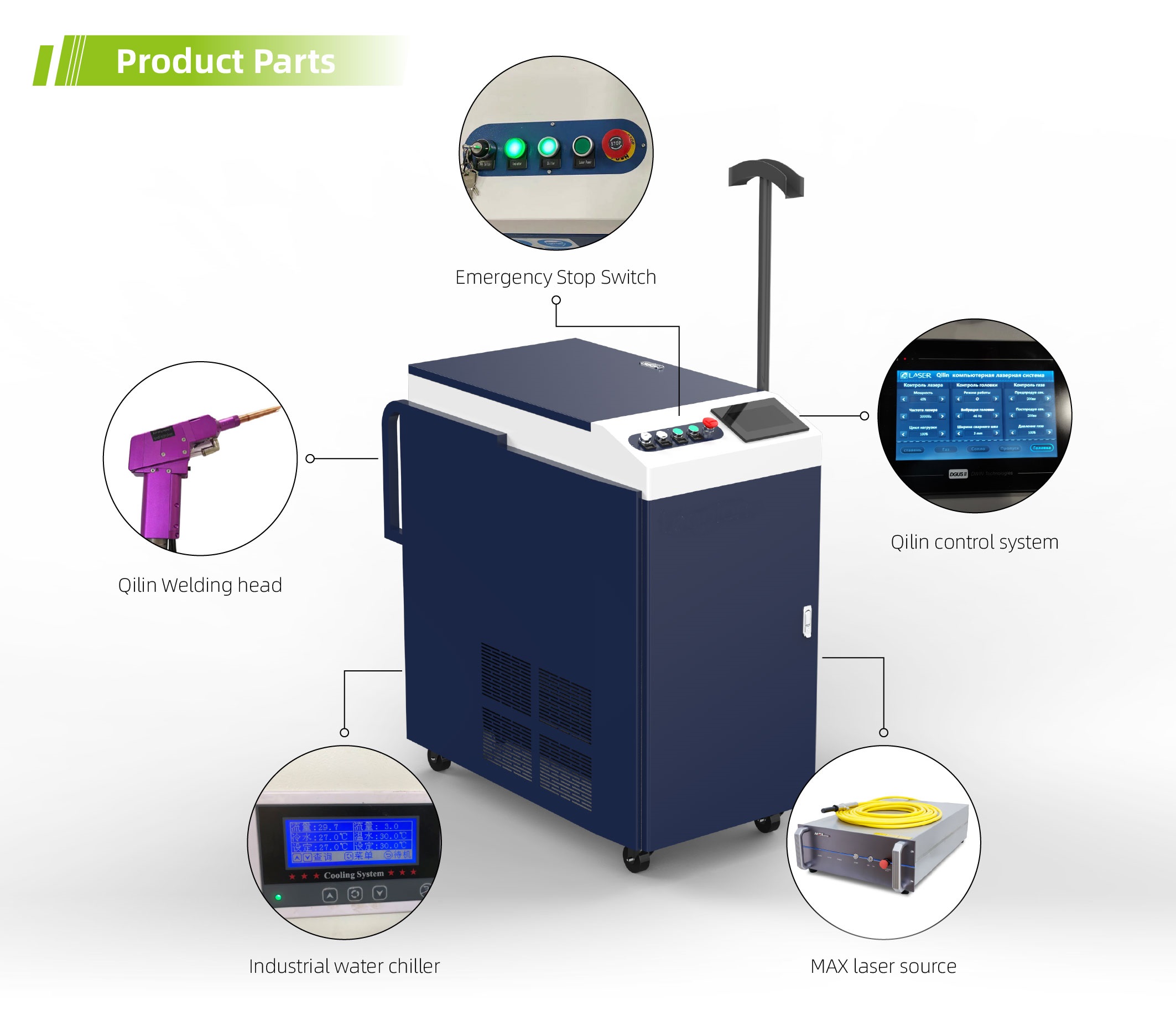
Industrial Application of Fiber Laser Welder
Anti-Reflection Technology and Optical Isolation
The core of modern fiber laser systems designed for highly reflective materials lies in a multi-stage optical isolation strategy. Engineers in the Caxias do Sul industrial sector are increasingly specifying systems equipped with hardware-based isolators that divert reflected light into a water-cooled beam dump. This ensures that the gain medium remains protected even during the initial stages of the weld cycle when reflectivity is at its peak.
Beyond hardware isolation, the implementation of Beam oscillation technology (often referred to as “wobble” welding) has proven instrumental. By oscillating the laser beam in specific patterns—such as circles, infinity loops, or zig-zags—the system can manipulate the melt pool’s dynamics. This oscillation breaks the surface tension and allows for better degassing of the weld pool, which is essential for reducing porosity in aluminum alloys. Additionally, the continuous movement of the beam reduces the direct back-reflection path, as the incident angle is constantly changing relative to the workpiece surface.
Optimizing the Heat-Affected Zone (HAZ)
One of the primary advantages of utilizing a high-brightness Fiber Laser Welder in the production lines of southern Brazil is the precise control over the Heat-Affected Zone (HAZ). In traditional MIG or TIG welding, the broad heat input can lead to significant grain growth and loss of mechanical properties in tempered aluminum alloys (such as the 6000 series).
Fiber lasers, characterized by their high power density and small spot size, allow for rapid heating and cooling cycles. This minimizes the duration the material spends at critical temperatures, preserving the base metal’s microstructural integrity. For the transport industry in Caxias do Sul, this translates to lighter, stronger joints that can withstand the fatigue cycles required for long-haul trailers and bus frames. Data indicates that laser-welded aluminum joints can retain up to 15-20 percent more tensile strength compared to conventional arc-welding methods due to the restricted HAZ.
Strategic Implementation in the Caxias do Sul Metal-Mechanic Cluster
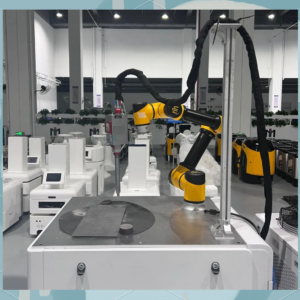
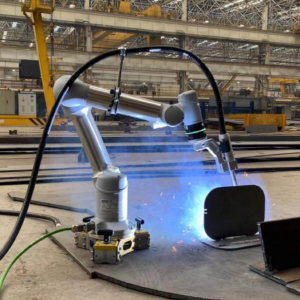
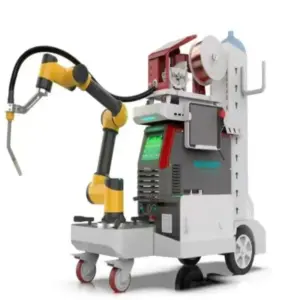
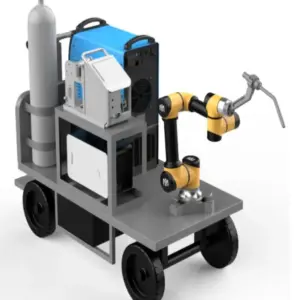
The deployment of these systems in Brazil is not merely a localized upgrade but a strategic move to align with global Industry 4.0 trends. Local manufacturers are integrating fiber lasers with robotic arms and CNC gantries to achieve high levels of repeatability. The technical data suggests that for 3mm thick aluminum plates, a 3kW fiber laser with anti-reflection optics can achieve welding speeds exceeding 5 meters per minute, significantly outperforming traditional methods while maintaining a superior aesthetic finish that requires minimal post-processing.
Moreover, the integration of real-time monitoring systems allows for the detection of back-reflection intensity during the process. If the reflected energy exceeds a predetermined threshold, the system can automatically adjust parameters or terminate the cycle to prevent hardware failure. This level of process control is vital for B2B contracts where zero-defect manufacturing is a contractual requirement.
Economic Considerations and ROI for Global B2B Partners
From a B2B perspective, the high initial capital expenditure of fiber laser systems with anti-reflection technology is offset by several factors:
1. Reduction in Consumables: Unlike arc welding, fiber lasers do not require electrodes or frequent nozzle replacements.
2. Energy Efficiency: Fiber lasers operate at wall-plug efficiencies of 30-40 percent, significantly higher than CO2 lasers or traditional welding power sources.
3. Material Savings: The ability to weld thin-gauge copper and aluminum allows for the design of lighter components, reducing material costs and improving the performance of the end product.
For international companies looking to source components from Caxias do Sul, the presence of this technology ensures that the local supply chain can handle complex geometries in “difficult-to-weld” materials with the precision required for high-tech applications.
Industry Insight: The Future of Laser Processing in Non-Ferrous Metals
The industrial landscape in Caxias do Sul serves as a microcosm for a broader global shift. As the world moves toward electrification, the demand for copper busbar welding and aluminum battery enclosures will escalate exponentially. The industry insight derived from the current technological adoption suggests that the future of fiber laser welding will not just rely on raw power, but on “spectral and spatial manipulation.”
We are seeing a move toward hybrid wavelengths—combining blue lasers (which have much higher absorption in copper) with fiber lasers—to initiate the melt pool more efficiently. However, until these hybrid systems reach commercial maturity and cost-parity, the advanced anti-reflection fiber laser remains the workhorse of the industry. For manufacturers in Caxias do Sul and their global partners, mastering the physics of back-reflection and beam oscillation is the current gold standard for high-throughput, high-reliability production in the non-ferrous sector. The ability to stabilize the keyhole in highly reflective materials is no longer a niche capability; it is the fundamental requirement for the next generation of industrial manufacturing.
Industrial Expertise & Support
Are you looking for high-performance Fiber Laser Welder tailored for the Global market? Our engineering team provides comprehensive solutions for modern manufacturing.