Introduction: The Engineering Challenge of Coastal Industrial Environments
Valparaíso, Chile, represents one of the most demanding atmospheric environments for high-precision manufacturing equipment. As a primary port city characterized by high relative humidity, significant salt spray, and fluctuating maritime temperatures, the region poses a constant threat to industrial electronics and mechanical integrity. For enterprises deploying a CNC Pipe Laser Machine in such locales, standard industrial specifications are often insufficient. The intersection of saline air and high-power laser optics requires a specialized approach to machine architecture, focusing specifically on IP54-rated protection and active climate control. This article examines the technical requirements for adapting fiber laser pipe cutting technology to thrive in high-humidity zones, ensuring operational longevity and geometric precision.
Atmospheric Corrosion and Electronic Degradation in Maritime Zones
The primary adversary in Valparaíso’s industrial sector is electrochemical corrosion. High humidity levels, often exceeding 80 percent, facilitate the formation of a conductive electrolyte layer on sensitive components. When combined with airborne sodium chloride (NaCl) from the Pacific Ocean, this leads to accelerated oxidation of non-treated ferrous components and the potential for short-circuiting in control boards. A standard CNC system lacks the hermetic sealing necessary to prevent these micro-particles from infiltrating the power supply units and the Fiber Laser Resonator.
To mitigate these risks, the adaptation process begins with the structural chassis. Utilizing specialized epoxy-based coatings and replacing standard fasteners with stainless steel variants (Grade 316) is essential. However, the most critical protection occurs at the level of the electrical cabinet and the laser source housing, where environmental ingress must be strictly regulated through standardized sealing protocols.

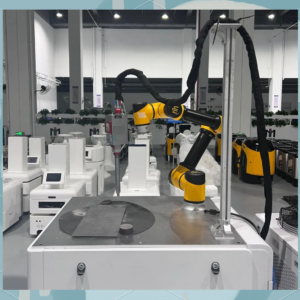
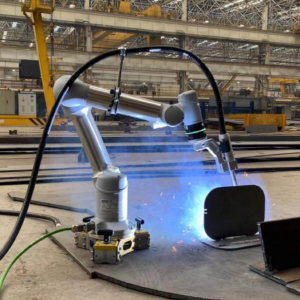
Industrial Application of CNC Pipe Laser Machine
Implementing IP54-Rated Enclosures for Critical Systems
The IP54 rating is a benchmark for machines operating in “harsh” environments. The first digit, “5,” indicates that the equipment is protected against dust ingress to a level that does not interfere with operation. The second digit, “4,” signifies protection against water splashing from any direction. In the context of a CNC Pipe Laser Machine, IP54-rated enclosures are non-negotiable for the following sub-systems:
- The Main Control Cabinet: Houses the PLC, servo drivers, and CNC interface.
- The Laser Source: The most expensive and sensitive component of the system.
- The Beam Delivery Path: Including the bellows and the cutting head assembly.
Achieving IP54 compliance requires the use of high-grade synthetic rubber gaskets, sealed cable glands (PG or metric threads with O-rings), and closed-loop cooling systems. Unlike standard ventilated cabinets that pull in ambient (and salty) air, an IP54 cabinet utilizes an internal heat exchanger or a specialized industrial air conditioner to maintain a stable internal temperature without exchanging air with the external environment.
Thermal Management and Condensation Control
In high-humidity zones like Valparaíso, temperature fluctuations can lead to the “Dew Point” phenomenon inside the machine. If the temperature of the laser optics or the internal electronics falls below the dew point of the surrounding air, moisture will condense directly onto the surfaces. This is catastrophic for high-power laser lenses, as moisture can cause beam scattering or permanent thermal damage to the coating.
Technical adaptation involves the integration of a dual-circuit industrial chiller with an intelligent dew point tracking system. The chiller does not merely cool; it regulates the temperature of the cutting head and the laser source to remain exactly 1-2 degrees Celsius above the ambient temperature. Furthermore, the inclusion of desiccant-based air dryers within the beam path ensures that the pressurized air used for purging the optics remains at a relative humidity of less than 5 percent.
Mechanical Stability: Linear Motion and Galvanic Protection
The mechanical precision of a CNC Pipe Laser Machine relies on the unhindered movement of the chuck and the laser gantry. In coastal Chile, the rack-and-pinion systems and linear guides are susceptible to pitting corrosion. Technical adaptation includes the implementation of automated lubrication systems that apply a consistent, thin film of high-viscosity anti-corrosion oil. This oil serves a dual purpose: reducing friction and acting as a physical barrier against moisture.
Furthermore, engineers must address Galvanic Corrosion Prevention. When two dissimilar metals (such as aluminum and steel) come into contact in a humid, saline environment, an electrical current flows between them, causing the more anodic metal to corrode at an accelerated rate. Adaptation involves using non-conductive spacers and specialized coatings on all mating surfaces to interrupt this electrochemical process, preserving the machine’s structural alignment over a 10-to-15-year lifecycle.
Optical Integrity in Saline Environments
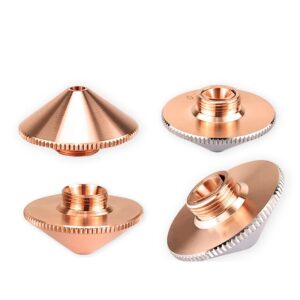
The cutting head is the “business end” of the CNC pipe laser. In Valparaíso, the risk of salt crusting on the protective window is high. Even microscopic salt crystals can absorb laser energy, leading to localized heating and “thermal lensing,” which distorts the cut quality. To combat this, adapted machines utilize a positive-pressure system within the cutting head. By maintaining a constant outflow of ultra-dry, filtered nitrogen or compressed air, the system prevents ambient maritime air from ever entering the optical chamber.
Economic Impact and ROI of Climate Adaptation
From a B2B perspective, the initial capital expenditure (CAPEX) for an IP54-adapted machine is approximately 15-20 percent higher than a standard model. However, the Total Cost of Ownership (TCO) is significantly lower. In high-humidity zones, non-adapted machines typically experience a 30 percent higher failure rate in electronic components within the first 24 months. The cost of replacing a single 6kW fiber laser source due to moisture ingress can exceed $40,000 USD, not including the losses incurred from production downtime. By investing in climate-hardened technology, Valparaíso-based manufacturers ensure consistent uptime and the ability to meet the rigorous tolerances required by the mining and maritime construction industries.
Industry Insight: The Future of Decentralized Coastal Manufacturing
As global supply chains shift toward “near-shoring” and localized production, the demand for high-end CNC equipment in coastal logistics hubs like Valparaíso will continue to rise. The industry is moving away from “one-size-fits-all” machinery toward “geographically optimized” hardware. We anticipate that the next generation of CNC Pipe Laser Machine technology will incorporate integrated IoT sensors that monitor real-time salinity and humidity levels, automatically adjusting lubrication cycles and internal cabinet pressures. For the global B2B market, the lesson is clear: technical specifications must be dictated by the environment, not just the application. Engineering for the local climate is no longer an optional upgrade; it is a fundamental requirement for operational viability in the modern industrial era.
Industrial Expertise & Support
Are you looking for high-performance CNC Pipe Laser Machine tailored for the Global market? Our engineering team provides comprehensive solutions for modern manufacturing.