Strategic Implementation of CNC Pipe Laser Technology in the Valencia Industrial Axis
Valencia, the capital of Carabobo State, has historically functioned as the primary industrial engine of Venezuela. The region’s industrial parks, including Zona Industrial I, II, and Municipal, host a dense concentration of automotive, agro-industrial, and construction firms. As global manufacturing standards migrate toward high-precision automation, the integration of the CNC Pipe Laser Machine has emerged as a critical factor for maintaining regional competitiveness. This transition from conventional mechanical sawing and manual plasma cutting to automated fiber laser systems addresses the specific logistical and economic challenges faced by manufacturers in the Carabobo region.
The adoption of advanced photonics in pipe fabrication allows local enterprises to bypass traditional bottlenecks associated with secondary finishing processes. By consolidating cutting, drilling, and slotting into a single automated cycle, the industrial parks in Valencia are realizing a significant reduction in total cost per part. This technical shift is not merely a localized trend but a necessary evolution to meet international quality certifications required for export-grade components.
Technical Architecture and Operational Advantages
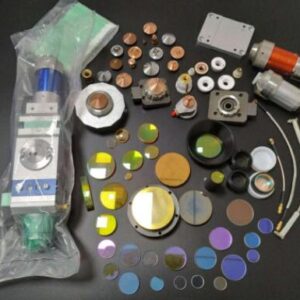
The core of the modern CNC Pipe Laser Machine lies in its Fiber Laser Resonator, which offers a wavelength of approximately 1.064 micrometers. This specific wavelength is highly absorbed by common industrial metals such as carbon steel, stainless steel, and aluminum, which are the primary materials processed in Valencia’s heavy industry sectors. Unlike CO2 lasers, fiber technology eliminates the need for complex internal mirror systems, reducing maintenance intervals and operational downtime—a vital consideration in environments where specialized spare parts may face lead-time constraints.
Furthermore, these machines utilize sophisticated 4-axis or 5-axis synchronization. This allows for complex geometries, such as saddle cuts and miter joints, to be executed with a precision of +/- 0.05mm. For the automotive assembly plants and structural steel fabricators in Carabobo, this level of accuracy ensures that downstream welding processes are more efficient. Precise fit-up reduces the volume of filler material required and minimizes the Heat-Affected Zone (HAZ), thereby preserving the structural integrity of the base metal.

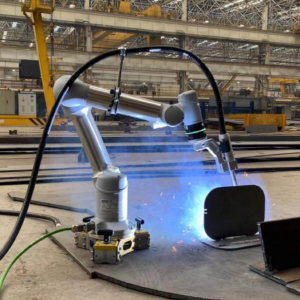
Industrial Application of CNC Pipe Laser Machine
ROI Analysis for Local Industrial Parks
Quantifying the Return on Investment (ROI) for a CNC Pipe Laser Machine in the context of Valencia requires an analysis of three distinct vectors: material yield, labor optimization, and energy efficiency. In a market where raw material costs are subject to global fluctuations, maximizing the output from every linear meter of tubing is paramount.
Advanced nesting software integrated into these CNC systems allows for Kerf Width Optimization. By minimizing the gap between parts and utilizing common-line cutting techniques, manufacturers can reduce scrap rates by up to 15% compared to traditional mechanical methods. In high-volume production environments, such as those found in the manufacturing of agricultural equipment or metal furniture in the Valencia region, these material savings can offset the initial capital expenditure of the machinery within 18 to 24 months.
Labor costs also undergo a structural shift. While the requirement for manual operators decreases, the demand for skilled technicians capable of managing CNC programming and system calibration increases. The reduction in manual deburring, grinding, and secondary drilling operations means that a single laser system can often replace the output of four to five conventional workstations. This consolidation of the production floor footprint allows for higher throughput without the need for physical expansion of existing facilities in the industrial zones.
Integration with Automated Material Handling
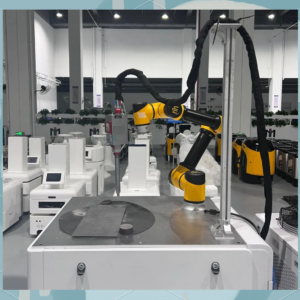
The efficiency of the laser cutting process is often limited by the speed of loading and unloading. For the industrial parks in Valencia to achieve maximum ROI, the implementation of Automated Material Handling systems is essential. These systems utilize bundle loaders and conveyor discharge units to ensure the laser remains in a continuous state of operation.
In the context of the Venezuelan energy landscape, the high wall-plug efficiency of fiber laser systems (often exceeding 30%) provides a distinct advantage over older technologies. Lower power consumption per cut cycle reduces the strain on local electrical infrastructure and lowers the operational overhead. When combined with automated loading, the machine can operate during off-peak hours with minimal supervision, further optimizing the cost-to-output ratio.
Sector-Specific Impact: Construction and Automotive
The construction sector in Carabobo relies heavily on hollow structural sections (HSS). Traditional fabrication involves manual layout and torch cutting, which are prone to human error and require significant rework. A CNC Pipe Laser Machine automates the creation of complex interlocking joints, which are increasingly utilized in modern architectural designs and industrial warehouses. This precision facilitates faster on-site assembly, reducing the total duration of construction projects and improving liquidity for local firms.
In the automotive sector, the move toward lightweighting requires the use of high-strength, thin-walled tubing. These materials are sensitive to the thermal distortions caused by traditional plasma cutting. The high power density of a fiber laser ensures a narrow kerf and minimal thermal input, maintaining the mechanical properties of the alloy. As Valencia seeks to revitalize its position as an automotive hub, the ability to produce components that meet the rigorous tolerances of international OEMs is a prerequisite for growth.
Concluding Industry Insight
The industrial landscape of Valencia, Venezuela, is at a technological crossroads. The historical reliance on legacy machinery is being challenged by the need for greater precision and lower operational costs. The data suggests that the implementation of CNC pipe laser technology is not merely an incremental improvement but a fundamental shift in manufacturing logic. As global supply chains continue to favor regional hubs that can provide high-precision components with short lead times, the industrial parks of Carabobo are well-positioned to capture this demand through strategic investment in automation.
The long-term success of manufacturing in the region will depend on the ability of local firms to integrate these high-tech assets into a cohesive digital workflow. By leveraging the superior ROI provided by fiber laser technology, Valencia can transition from a traditional manufacturing center to a high-tech fabrication hub capable of competing on the global stage. The focus must remain on technical proficiency and the continuous optimization of automated systems to ensure sustainable economic recovery and industrial resilience.
Industrial Expertise & Support
Are you looking for high-performance CNC Pipe Laser Machine tailored for the Global market? Our engineering team provides comprehensive solutions for modern manufacturing.