Industrial Infrastructure and the Necessity of Power Conditioning in São Paulo
São Paulo stands as the primary industrial engine of Brazil, hosting a dense concentration of automotive, aerospace, and heavy machinery fabrication facilities. While the metropolitan grid is robust, the sheer volume of inductive loads from high-capacity factories often results in localized voltage fluctuations, harmonic distortions, and transient surges. For precision manufacturing equipment, specifically the CNC Pipe Laser Machine, these electrical inconsistencies represent a significant risk to both operational uptime and component longevity.
In high-precision thermal cutting, the stability of the electrical input directly correlates with the quality of the kerf and the consistency of the pulse frequency. When operating in an environment like São Paulo’s industrial districts, where grid demand peaks can cause voltage sags, the integration of built-in voltage regulation is no longer an optional feature but a core engineering requirement. This article examines the technical implementation of integrated power stabilization and its impact on fiber laser performance in volatile grid environments.
Technical Challenges of Grid Instability on Fiber Laser Sources
The Fiber Laser Source is the most sensitive component within a pipe cutting system. These units rely on high-efficiency semiconductor diodes to pump the gain medium. These diodes require a constant, regulated DC current. Even minor deviations in input voltage can lead to fluctuations in the output power of the beam. In a CNC Pipe Laser Machine, these fluctuations manifest as irregular surface finishes, incomplete cuts, or increased dross accumulation on the interior of the pipe.

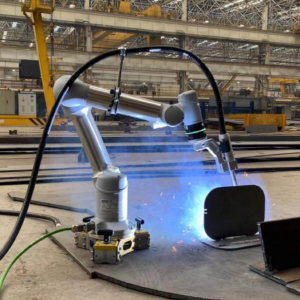
Industrial Application of CNC Pipe Laser Machine
Furthermore, rapid voltage transients can cause premature aging of the laser modules. In São Paulo’s heavy industrial zones, the switching of large motors or arc welding equipment on the same feeder line can induce “noise” into the system. Without internal regulation, this noise bypasses standard breakers and reaches the sensitive control electronics, potentially leading to catastrophic failure of the laser’s power supply units (PSUs). By integrating a dedicated Voltage Stabilization Technology within the machine’s cabinet, manufacturers isolate the laser source from these external variables, ensuring a constant output regardless of the external grid’s state.
The Mechanics of Built-in Voltage Regulation
Integrated regulation systems in modern CNC pipe lasers typically employ a combination of an Automatic Voltage Regulator (AVR) and an isolation transformer. Unlike external stabilizers, which add footprint and require additional cabling, built-in systems are optimized for the specific current draw of the machine’s servo motors and laser source. This integration allows the machine’s central control unit to monitor real-time power metrics and adjust the compensation circuitry in milliseconds.
The system utilizes a high-speed microprocessor to sample the input voltage. If the voltage deviates beyond a predefined threshold—typically +/- 1.5%—the system engages a motorized variac or a solid-state tap changer to normalize the output. This is critical for Servo Drive Synchronization, as the multi-axis movement required for complex pipe geometries (such as saddle cuts or miter joints) depends on the precise timing of the drive electronics. A drop in voltage can lead to a loss of torque or positioning errors, resulting in scrapped workpieces.
Optimizing Operational Efficiency in the Brazilian Market
For B2B stakeholders in São Paulo, the total cost of ownership (TCO) of a CNC Pipe Laser Machine is heavily influenced by maintenance cycles and energy efficiency. Machines equipped with built-in regulation often feature Power Factor Correction (PFC) modules. PFC reduces the reactive power drawn from the grid, which is particularly beneficial in Brazil where industrial utility providers impose penalties for low power factor ratings.
By correcting the power factor internally, the machine operates with higher electrical efficiency, reducing heat generation within the electrical cabinet. This thermal management is vital in the humid, subtropical climate of São Paulo. Excessive heat is a primary driver of electronic component failure; thus, by maintaining a stable voltage and a high power factor, the internal cooling systems (chillers and cabinet fans) operate within their optimal parameters, further extending the machine’s MTBF (Mean Time Between Failures).
Impact on Precision and Repeatability
The accuracy of a CNC pipe laser is measured in microns. During the cutting of thick-walled carbon steel or reflective aluminum tubing, the laser must maintain a precise focal position and gas pressure. The solenoid valves and proportional valves that control the assist gas (Oxygen or Nitrogen) are also sensitive to voltage stability. If the voltage drops, the valve response time may lag, leading to a momentary imbalance in the gas-to-power ratio at the cutting head.
With an integrated stabilization system, the machine ensures that the mechanical and pneumatic subsystems receive a “clean” signal. This level of control is essential for industries in São Paulo that supply the global market, such as automotive parts manufacturers who must adhere to strict ISO standards. Repeatability is guaranteed because the machine’s internal environment remains constant, effectively decoupling the manufacturing process from the inconsistencies of the local infrastructure.
Global Implications: Lessons from São Paulo’s Industrial Sector
The adoption of built-in voltage regulation in São Paulo provides a blueprint for global manufacturing hubs facing similar infrastructure challenges, such as those in Southeast Asia or parts of Eastern Europe. For global procurement managers, specifying “built-in voltage regulation” when acquiring a CNC Pipe Laser Machine is a strategic move to de-risk the investment. It eliminates the need for secondary procurement of third-party stabilizers, which often lack the communication protocols to interface directly with the CNC software.
Furthermore, machines designed for these environments are generally more rugged. They feature enhanced electromagnetic interference (EMI) filtering and reinforced grounding, which are beneficial even in regions with stable grids. The ability to handle “dirty” power is a hallmark of high-end engineering, ensuring that the machine can be deployed in diverse geographic locations without requiring extensive electrical retrofitting.
Industry Insight: The Shift Toward Smart Power Management
As we look toward the future of industrial fabrication, the convergence of power electronics and digital diagnostics is becoming the new standard. The integration of voltage regulation within CNC pipe lasers is evolving into “Smart Power Management.” Future systems will not only stabilize voltage but also log power quality data to the cloud, allowing for predictive maintenance. If a machine detects a consistent pattern of brownouts or surges at a specific time of day, it can alert the facility manager to potential issues within the factory’s internal distribution network before a component failure occurs.
In conclusion, for manufacturers operating in São Paulo and similar high-demand industrial environments, the stability of the power supply is as critical as the wattage of the laser itself. By prioritizing machines with built-in regulation, companies ensure that their CNC Pipe Laser Machine operates at peak performance, delivering the precision, speed, and reliability required to compete in a global B2B landscape. The shift toward integrated, intelligent power conditioning represents a maturation of the industry, where the resilience of the system is viewed as a fundamental component of its technological value.
Industrial Expertise & Support
Are you looking for high-performance CNC Pipe Laser Machine tailored for the Global market? Our engineering team provides comprehensive solutions for modern manufacturing.