Introduction: The Evolution of Precision Fabrication in South American Hubs
The industrial landscape in Quito, Ecuador, is undergoing a significant transition from traditional mechanical fabrication to advanced automated systems. As a strategic center for Andean manufacturing, Quito’s industrial sectors—ranging from HVAC infrastructure to automotive component production—are increasingly demanding high-precision solutions for non-ferrous metal processing. The integration of the CNC Pipe Laser Machine equipped with advanced anti-reflection technology represents a critical milestone in this transition. This article examines the technical requirements, the physics of back-reflection in fiber laser systems, and the implementation of specialized hardware to facilitate the processing of high-reflectivity materials like copper and aluminum in high-altitude industrial environments.
The Physics of Reflectivity in Fiber Laser Processing
Copper and aluminum are essential materials in modern engineering due to their superior thermal and electrical conductivity. However, these same properties present substantial challenges for standard fiber laser systems. In its solid state, copper reflects over 95% of infrared radiation at the 1.06-micron wavelength typical of fiber lasers. This high reflectivity creates a phenomenon known as back-reflection, where the laser energy is redirected into the delivery fiber and back toward the resonator.
Without specialized mitigation, back-reflection can cause catastrophic failure in the laser source. The energy feedback leads to rapid thermal expansion within the optical components, potentially damaging the gain medium or the pump diodes. In the context of a CNC Pipe Laser Machine, where the beam must maintain focus across varying pipe geometries and wall thicknesses, managing this reflected energy is the primary technical hurdle for operators in the Quito region.
Anti-Reflection Technology: Back-Reflection Mitigation Strategies
To address the risks associated with processing non-ferrous metals, modern CNC systems utilize a multi-layered approach to Back-Reflection Mitigation. This technology ensures that the machine can maintain continuous operation without triggering safety shutdowns or sustaining hardware damage. There are three primary components to this technological suite:
First, the integration of optical isolators within the beam delivery system acts as a one-way valve for photons. These components utilize the Faraday effect to rotate the polarization of the light, ensuring that any reflected energy is diverted into a water-cooled beam dump rather than returning to the laser resonator. This is critical for maintaining the integrity of the CNC Pipe Laser Machine during the initial piercing phase, which is when reflectivity is at its peak.
Second, advanced sensors monitor the back-reflection levels in real-time. If the reflected energy exceeds a predetermined threshold, the CNC controller adjusts the pulse frequency or beam parameters instantaneously to stabilize the process. This closed-loop feedback system allows for the consistent cutting of high-purity copper and 6000-series aluminum alloys.

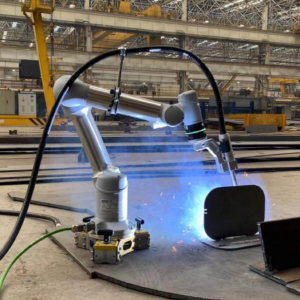
Industrial Application of CNC Pipe Laser Machine
Third, the use of specialized “nLIGHT” or similar beam-shaping technologies allows the operator to modify the power density distribution. By creating a “donut” or “ring” shaped beam profile, the system can improve the absorption rate of the material, reducing the total amount of energy reflected back into the optics.
Technical Specifications and Geometric Precision in Pipe Cutting
The CNC Pipe Laser Machine utilized in Quito’s industrial zones must handle a diverse array of profiles, including round, square, rectangular, and oval cross-sections. The mechanical architecture of these machines typically involves a dual-chuck system with high-speed rotation capabilities. Precision is maintained through synchronized movements between the laser head (often a 5-axis configuration) and the rotating workpiece.
In Non-Ferrous Material Processing, the kerf width and heat-affected zone (HAZ) must be strictly controlled. Because aluminum has a high thermal conductivity, heat dissipates rapidly from the cutting point, which can lead to dross formation on the interior of the pipe. Anti-reflection technology, combined with high-pressure nitrogen assist gases, ensures that the melt is expelled cleanly, resulting in a burr-free finish that requires no secondary processing. This is particularly vital for Quito-based manufacturers supplying the food processing and pharmaceutical industries, where internal pipe cleanliness is a mandatory requirement.
Environmental Factors: High-Altitude Laser Operation
Operating a CNC Pipe Laser Machine in Quito presents unique environmental challenges due to the city’s elevation (approximately 2,850 meters above sea level). The lower atmospheric pressure affects the cooling efficiency of air-cooled components and the behavior of the assist gas dynamics. Anti-reflection technology must be calibrated to account for these variables.
The dielectric properties of the air and the density of the plasma shield generated during the cutting process differ at high altitudes. Advanced CNC systems compensate for this by adjusting the gas flow rates and the focal position of the laser head. The integration of Optical Isolator Technology is even more critical here, as the stability of the laser beam is paramount when working in thinner atmospheres where thermal regulation of the laser source requires higher precision from the chilling units.
Economic Impact and Production Efficiency
The adoption of anti-reflection capable machines in Ecuador has significantly reduced the cost per part for local fabricators. Previously, copper and aluminum pipes were cut using mechanical saws or plasma systems, both of which introduce significant material waste and require extensive manual finishing. The transition to CNC laser technology allows for nesting software integration, which optimizes the layout of cuts on a single length of pipe, reducing scrap rates by up to 30%.
Furthermore, the ability to cut complex geometries—such as fish-mouth joints and intricate perforations—in a single pass eliminates the need for multiple setups. For the global market, this means that Ecuadorian manufacturers can now compete on quality and lead times for specialized components used in renewable energy systems, such as solar thermal collectors and electrical busbars.
Industry Insight: The Shift Toward Material-Specific Optimization
The global trajectory of the laser cutting industry is moving away from “all-purpose” machines toward material-specific optimization. As the demand for electric vehicles (EVs) and green energy infrastructure grows, the requirement for copper and aluminum processing will only intensify. The deployment of anti-reflection technology in Quito is a microcosm of a larger global trend: the democratization of high-end laser physics.
We are entering an era where the hardware’s ability to “self-protect” against back-reflection is no longer a luxury feature but a fundamental requirement for industrial viability. For B2B stakeholders, the focus should remain on the integration of smart sensors and beam-shaping capabilities. The future of pipe fabrication lies in the machine’s ability to autonomously sense material reflectivity and adjust its optical path in microseconds. This level of technical sophistication ensures that regions like Quito can maintain a competitive edge in the global supply chain, providing high-precision components that meet the rigorous standards of modern engineering.
Industrial Expertise & Support
Are you looking for high-performance CNC Pipe Laser Machine tailored for the Global market? Our engineering team provides comprehensive solutions for modern manufacturing.