Strategic Integration of CNC Pipe Laser Technology in Regional Industrial Hubs
The industrial landscape of Mendoza, Argentina, has undergone a significant transformation, transitioning from traditional mechanical processing to high-precision automated systems. Central to this evolution is the deployment of the CNC Pipe Laser Machine, a tool that has become indispensable for sectors ranging from viticulture equipment manufacturing to large-scale structural engineering for the mining and energy sectors. In a global B2B context, the acquisition of such machinery is no longer viewed merely as an operational expense but as a strategic asset. The valuation of these machines is heavily dictated by their core components—specifically the laser source—and their ability to maintain structural integrity over a decade of intensive operation.
In Mendoza’s specific industrial climate, characterized by dry conditions and a demand for heavy-duty output, the technical configuration of a pipe laser determines its long-term viability. When evaluating the secondary market for metal fabrication equipment, machines equipped with premium fiber sources like IPG or Raycus consistently command higher prices. This article examines the technical parameters that drive high residual value and why the Mendoza industrial corridor serves as a benchmark for global procurement standards.
The Impact of Laser Source Selection on Asset Depreciation
The laser source is the primary determinant of a machine’s performance and its eventual resale value. In the current market, two brands dominate the discourse: IPG Photonics and Raycus. Each offers distinct advantages that affect the Photoelectric Conversion Efficiency and the overall lifecycle of the system.
IPG Photonics: The Gold Standard for Residual Value
IPG fiber lasers are recognized globally for their stability and long diode life, often exceeding 100,000 hours. For a facility in Mendoza, an IPG source ensures that the machine can handle high-reflectivity materials like aluminum and brass, which are common in specialized irrigation components. From a financial perspective, an IPG-equipped CNC Pipe Laser Machine typically retains 15-20% more value after five years compared to generic alternatives. This is due to the global availability of spare parts and the brand’s reputation for minimal power degradation over time.
Raycus: Balancing Performance and Capital Expenditure
Raycus has emerged as a formidable competitor, offering high-power stability that meets the requirements of 80% of pipe processing applications. In the Argentine market, Raycus sources are favored for their excellent cost-to-performance ratio. While the initial investment is lower, the technical advancements in Raycus’s RFL series have narrowed the gap in beam quality. For global buyers, a used machine with a well-maintained Raycus source represents a high-utility asset with a predictable maintenance schedule, ensuring the residual value remains robust in the secondary regional market.
Mechanical Architecture and Thermal Stability
Beyond the laser source, the physical construction of the machine determines its precision over time. High-quality pipe lasers utilized in Mendoza’s heavy industries often feature a heavy-duty carbon steel plate welded bed. To ensure long-term accuracy, these beds must undergo Heat Treatment Stress Relief (annealing) to eliminate internal stresses generated during the welding process.

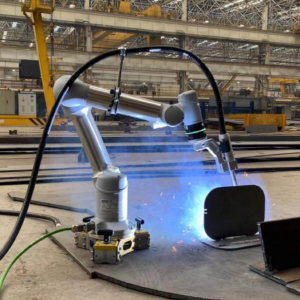
Industrial Application of CNC Pipe Laser Machine
A machine bed that has been properly aged and precision-machined by a large-scale gantry milling center will maintain a parallelism and squareness within ±0.03mm. In the context of resale, a buyer will prioritize the “bed health.” If the frame is prone to thermal deformation, the most expensive laser source becomes irrelevant. Therefore, machines engineered with a focus on structural rigidity—often weighing significantly more than entry-level models—depreciate at a much slower rate because they can be refurbished and recalibrated to factory specifications even after years of high-volume production.
Technical Specifications Driving Global Demand
The global demand for used CNC pipe lasers is focused on specific technical capabilities that allow for versatile production. Machines operating in Mendoza are often configured with the following specifications to ensure they meet both local and international standards:
Chuck Systems and Centering Accuracy
Pneumatic full-stroke chucks are the industry standard. They eliminate the need for manual adjustment when switching between different pipe diameters (e.g., from 20mm to 220mm). The ability of the chuck to maintain a high clamping force without deforming thin-walled tubes is a critical technical metric. Systems that utilize self-centering mechanisms reduce material waste and increase the throughput of the CNC Pipe Laser Machine.
Software and Control Systems
Integration with platforms like CypTube or EtherCAT-based control systems is vital. These systems allow for real-time monitoring of the cutting process and support complex nesting algorithms. For a B2B buyer, a machine with a standardized, widely supported CNC interface is much more valuable than one with a proprietary, closed-loop system that is difficult to service or upgrade.
Mendoza as a Strategic Case Study for Machine Longevity
Mendoza’s industrial sector is unique due to its proximity to the Andes and its role as a gateway between Atlantic and Pacific trade routes. The equipment used here must withstand fluctuating power grids and varying environmental dust levels. Consequently, local operators often invest in higher-tier filtration systems and voltage stabilizers.
When these machines enter the global resale market, they are often accompanied by rigorous maintenance logs. The high residual value of a CNC Pipe Laser Machine in this region is a testament to the synergy between high-end Chinese or European hardware and disciplined operational protocols. For an international investor, purchasing a machine from a high-standard facility in Mendoza offers assurance that the technology has been utilized within its optimal parameters.
Concluding Industry Insight: The Shift Toward Circular Equipment Economy
The global B2B manufacturing sector is moving toward a circular economy where the “end-of-life” value of machinery is considered at the point of initial purchase. In the realm of pipe processing, this shift is particularly pronounced. As fiber laser technology matures, the hardware gap between new and five-year-old machines is narrowing. This makes the structural integrity and the brand of the laser source (IPG/Raycus) the two most critical variables in asset valuation.
The industry is observing a trend where companies no longer run machines to failure. Instead, they operate them for 5-7 years—the peak efficiency window—and then leverage the high residual value to upgrade to the next generation of Fiber Laser Technology. In regions like Mendoza, where capital equipment costs are influenced by import dynamics, maintaining a high resale value is not just a financial preference but a business necessity. The future of the industry lies in modularity; machines designed with replaceable laser modules and upgradeable software will dominate the market, ensuring that the heavy mechanical investments made today remain profitable assets well into the next decade. Professional fabricators should prioritize the “Total Cost of Ownership” (TCO) which accounts for the high recovery of capital at the end of the machine’s primary service life.
Industrial Expertise & Support
Are you looking for high-performance CNC Pipe Laser Machine tailored for the Global market? Our engineering team provides comprehensive solutions for modern manufacturing.