The Strategic Integration of CNC Pipe Laser Machines in Medellín’s Industrial Corridor
Medellín, Colombia, has transitioned from a traditional manufacturing base to a sophisticated hub of high-tech industrial production. Within the industrial parks of Itagüí, Girardota, and Sabaneta, the adoption of advanced fabrication technology is no longer optional for maintaining regional competitiveness. The deployment of the CNC Pipe Laser Machine represents a fundamental shift in how local enterprises approach metal processing. By replacing conventional mechanical sawing, drilling, and milling with high-precision fiber laser technology, manufacturers are realizing measurable gains in throughput and precision. This article examines the technical parameters and the quantifiable Return on Investment (ROI) associated with these systems in the context of the Colombian industrial landscape.
Technical Specifications and Operational Advantages
The modern CNC Pipe Laser Machine utilizes a Fiber Laser Resonator, typically ranging from 1kW to 6kW for standard industrial applications in Medellín. Unlike CO2 lasers, fiber technology operates at a wavelength of approximately 1.06 microns, which allows for superior absorption rates in reflective metals such as aluminum, brass, and copper—materials frequently used in the region’s growing electrical and construction sectors.
One of the primary technical advantages is the integration of an Automatic Loading System. In a high-volume production environment, manual loading of heavy steel pipes accounts for significant downtime. Automated systems can reduce the loading cycle to under 20 seconds per tube. Furthermore, the use of pneumatic or hydraulic chucks ensures that the pipe remains centered during high-speed rotations, maintaining a positioning accuracy of ±0.03mm. This level of precision is unattainable with manual plasma or mechanical cutting methods, directly impacting the quality of the final assembly and reducing the need for secondary finishing processes.
Quantifying ROI: Labor, Material, and Time
For industrial parks in Medellín, the ROI of a laser pipe cutting system is calculated through three primary pillars: labor consolidation, material utilization, and cycle time reduction. Traditional pipe processing requires a sequence of independent operations: measuring, marking, sawing, deburring, and drilling. Each step introduces a margin of error and requires dedicated labor.
A CNC Pipe Laser Machine consolidates these five steps into a single automated process. Data from local fabrication facilities indicate that a single laser operator can replace the output of four traditional workstations. This labor consolidation allows companies to reallocate skilled workers to higher-value tasks such as complex assembly or quality assurance. Furthermore, the software-driven nature of the machine utilizes Nesting Optimization algorithms. By calculating the most efficient arrangement of parts on a standard 6-meter pipe, these algorithms minimize the “tailing” or scrap material. In many cases, material waste is reduced from 10-15 percent down to less than 3 percent, providing a direct saving on raw material procurement costs.
Infrastructure and Energy Efficiency in the Antioquia Region
The industrial infrastructure in Antioquia provides a unique environment for the implementation of fiber laser technology. While the initial capital expenditure (CAPEX) for a laser system is higher than that of mechanical equipment, the operational expenditure (OPEX) is significantly lower. Fiber lasers boast a wall-plug efficiency of approximately 30 to 35 percent, compared to the 10 percent efficiency of older CO2 models. In a region where energy costs are a critical factor in the overhead of industrial parks, this efficiency translates into lower per-part costs.

Industrial Application of CNC Pipe Laser Machine
Additionally, the maintenance requirements for these machines are minimal. The absence of internal mirrors and moving parts within the laser source eliminates the need for frequent optical alignments. For manufacturers in Medellín, this means higher machine uptime and lower dependence on specialized external technicians for routine maintenance. The stability of the local power grid, supplemented by industrial-grade voltage stabilizers, ensures that these high-sensitivity machines operate within their optimal parameters, further extending the lifespan of the laser source.
Market Expansion and Competitive Positioning
The ability to perform complex cuts—such as bird-mouth joints, miter cuts, and intricate slot-and-tab designs—opens new market opportunities for local fabricators. Previously, such geometries were either impossible or cost-prohibitive to produce. With a CNC Pipe Laser Machine, Medellín-based companies can now bid on international contracts that require high-tolerance components for the automotive, aerospace, and renewable energy sectors.
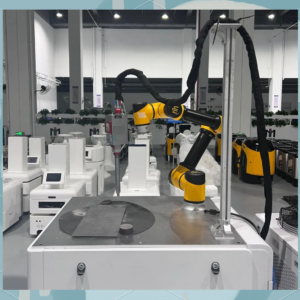
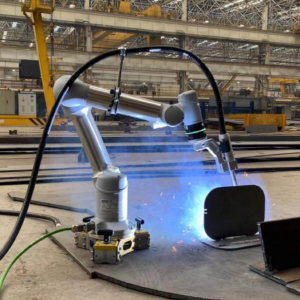
By producing components that are “ready-to-weld,” the fabrication cycle is accelerated. The high-quality Kerf Width (the width of the cut) produced by the laser is so narrow that components fit together with zero-gap tolerances. This precision facilitates the use of robotic welding arms, creating a synergistic effect that further automates the production line and drives down the total cost of ownership for the facility.
Concluding Industry Insight: The Future of Smart Fabrication
The integration of CNC pipe laser technology in Medellín is a clear indicator of the region’s trajectory toward Industry 4.0. As global supply chains continue to seek “near-shoring” opportunities, Colombian manufacturers must leverage high-precision automation to compete with East Asian and North American counterparts. The proven ROI of these machines extends beyond simple cost-per-cut metrics; it encompasses the agility to pivot production lines quickly and the capability to handle complex materials with minimal waste. For industrial parks in Medellín, the transition to fiber laser pipe processing is not merely a technical upgrade, but a strategic imperative to secure a position in the global value chain. The data suggests that firms adopting this technology within the current fiscal cycle will likely achieve full amortization within 18 to 24 months, depending on shift volume, positioning them as leaders in the next decade of South American industrial excellence.
Industrial Expertise & Support
Are you looking for high-performance CNC Pipe Laser Machine tailored for the Global market? Our engineering team provides comprehensive solutions for modern manufacturing.