Precision Engineering in the Joinville Industrial Cluster
Joinville, located in the state of Santa Catarina, Brazil, has established itself as the primary metal-mechanic hub of Latin America. As global demand for high-end metal furniture increases, the integration of advanced fabrication technologies has become a prerequisite for maintaining export competitiveness. The adoption of the CNC Pipe Laser Machine within this region represents a significant shift from traditional mechanical sawing and drilling toward high-velocity thermal erosion processes. For furniture exporters, this transition is not merely a matter of speed but a critical upgrade in edge quality and dimensional repeatability.
The global furniture market requires strict adherence to international tolerances. Manufacturers in Joinville are leveraging fiber laser technology to meet these demands, ensuring that structural components—ranging from carbon steel to anodized aluminum—are delivered with zero-defect profiles. This article examines the technical parameters of fiber laser pipe cutting and how these systems eliminate secondary finishing processes, thereby optimizing the supply chain for international distribution.
Technical Parameters of Fiber Laser Pipe Fabrication
The core of modern pipe fabrication in Joinville centers on the Fiber Laser Resonator. Unlike CO2 lasers, fiber sources utilize a solid-state medium to amplify light, which is then delivered via flexible fiber optic cables to the cutting head. This allows for a significantly higher power density and a shorter wavelength, typically around 1.06 microns. This wavelength is more readily absorbed by metals, enabling faster cutting speeds on thin-walled tubes common in the furniture industry.

Industrial Application of CNC Pipe Laser Machine
Current CNC systems deployed in the region utilize multi-axis control—often 3 to 5 axes—allowing the cutting head to maintain a perpendicular orientation to the pipe surface even during complex beveling or intersecting cuts. The positional accuracy of these machines typically falls within a range of +/- 0.03mm, with a repeatability of +/- 0.02mm. For exporters, this means that every batch of chair frames or table supports is identical, facilitating seamless assembly at the final destination without the need for manual adjustments or jigs.
Eliminating the Heat Affected Zone and Burrs
One of the primary challenges in traditional pipe cutting is the formation of burrs—excess material that solidifies on the edge of the cut. In mechanical cutting, this is caused by friction and blade displacement. In low-quality thermal cutting, it results from an improperly balanced gas-to-power ratio. The CNC Pipe Laser Machine utilizes high-pressure assist gases (typically Nitrogen or Oxygen) to expel molten material instantly from the kerf.
The result is a “burr-free” finish that is essential for the furniture sector for several reasons:
1. Coating Adhesion: Furniture frames often undergo electrostatic powder coating. Any residual burr or slag acts as a point of failure where the coating cannot properly bond, leading to premature corrosion. Laser-cut edges provide a clean surface for maximum paint adhesion.
2. Safety and Aesthetics: High-end furniture exporters cannot permit sharp edges on visible components. By achieving a burr-free cut, Joinville manufacturers eliminate the secondary deburring stage, which traditionally involves manual grinding or vibratory finishing. This reduces the Heat Affected Zone (HAZ), ensuring the metallurgical properties of the pipe remain stable and the aesthetic integrity is preserved.
3. Precision Fitment: In “ready-to-assemble” (RTA) furniture, components must interlock perfectly. The absence of dross or slag ensures that male/female joints fit with calculated tolerances, reducing assembly time for the end consumer.
Advanced Nesting and Material Optimization
Efficiency in the Joinville export model is driven by Automatic Nesting Software integrated into the CNC workflow. This software calculates the most efficient arrangement of parts on a standard 6-meter or 12-meter length of pipe. In furniture production, where multiple small components are often required from a single tube, nesting minimizes “remnant” waste.
Furthermore, the software manages complex geometries such as “saddle cuts” and “miter joints.” Traditionally, these required multiple setups on different machines. A laser system performs these operations in a single pass. The ability to cut holes, slots, and end-profiles in one continuous cycle reduces the total cycle time per part by up to 70% compared to conventional methods. This throughput is vital for Joinville-based companies fulfilling large-scale contracts for European or North American retailers.
Material Versatility for Global Design Standards
The furniture industry is characterized by rapid design iterations. The CNC pipe laser’s ability to handle various profiles—round, square, rectangular, oval, and even D-shaped profiles—gives designers in Joinville the freedom to innovate. Fiber lasers are particularly effective on reflective materials like brass and copper, which are increasingly popular in contemporary furniture aesthetics but difficult to process with older laser technologies.
By utilizing high-wattage fiber sources (ranging from 2kW to 6kW), manufacturers can process wall thicknesses from 0.5mm for lightweight shelving to 10mm for heavy-duty industrial furniture. The precision of the laser ensures that even thin-walled tubing does not suffer from mechanical deformation, which is a common risk when using traditional physical clamping and sawing methods.
Logistical Advantages and International Compliance
Joinville’s proximity to the ports of Itapoá and São Francisco do Sul provides a logistical gateway for furniture exporters. However, logistical efficiency must be matched by product compliance. International buyers require documentation of material traceability and adherence to ISO standards. The digital nature of CNC pipe laser cutting allows for integrated logging of production data, ensuring that every part meets the specified CAD parameters.
The reduction in manual handling also decreases the risk of surface scratches or “handling damage,” which is a frequent cause of rejection in the luxury furniture market. By automating the loading, cutting, and unloading process, Joinville manufacturers maintain a high level of “surface critical” quality that is necessary for chrome-plated or polished stainless steel finishes.
Industry Insight: The Future of South American Fabrication
The industrial landscape of Joinville is indicative of a broader trend in South American manufacturing: the move toward “Industry 4.0” integration. The reliance on the CNC Pipe Laser Machine is not just a localized preference but a strategic response to the global compression of lead times. As shipping costs fluctuate, the value-add must come from manufacturing precision and the elimination of labor-intensive secondary processes.
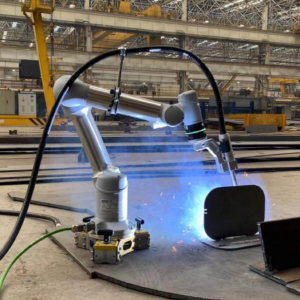
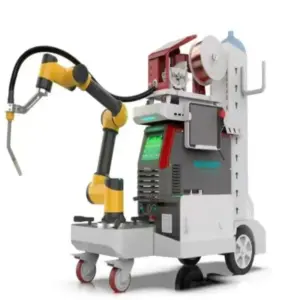
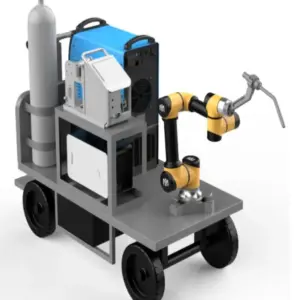
We anticipate that the next phase for Joinville exporters will involve the integration of robotic welding cells directly coupled with laser-cut components. Because laser cutting produces such high-precision edges, the fit-up for robotic welding is optimized, allowing for fully automated production lines. For the global furniture market, this means that Brazil is no longer just a provider of raw materials, but a sophisticated hub of high-tech finished goods, capable of competing with any manufacturing center in the world on the basis of quality, speed, and technical excellence.
Industrial Expertise & Support
Are you looking for high-performance CNC Pipe Laser Machine tailored for the Global market? Our engineering team provides comprehensive solutions for modern manufacturing.