The Industrial Evolution of Tube Processing in Curitiba, Brazil
The industrial landscape of Curitiba, the capital of Paraná, has long been recognized as a primary hub for automotive, agribusiness, and heavy machinery manufacturing in South America. As global demand for high-precision components increases, the region has seen a significant shift from traditional mechanical sawing and plasma cutting to advanced laser processing. Central to this transition is the adoption of the CNC Pipe Laser Machine, integrated with high-efficiency fiber laser sources. This technology represents a critical advancement in metal fabrication, offering a combination of high-speed processing and reduced operational overhead that aligns with international manufacturing standards.
In Curitiba’s competitive industrial sector, the implementation of fiber source technology is not merely a preference but a strategic necessity. The shift toward fiber optics in laser generation has fundamentally altered the cost-benefit analysis of tube and profile fabrication. By replacing older CO2 gas laser resonators with solid-state fiber modules, manufacturers in Brazil are achieving higher throughput with a significantly smaller carbon footprint and lower electricity consumption.
Technical Parameters of the Fiber Laser Source
The core of the modern Fiber Laser Source lies in its ability to generate a high-intensity beam within an optical fiber doped with rare-earth elements, typically ytterbium. Unlike CO2 lasers that operate at a wavelength of 10.6 micrometers, fiber lasers operate at approximately 1.07 micrometers. This shorter wavelength is absorbed more efficiently by metallic materials, particularly reflective metals such as aluminum, brass, and copper, which are prevalent in the Curitiba manufacturing corridor.
The energy efficiency of these systems is measured through Wall-Plug Efficiency (WPE). While traditional CO2 systems hover around a 10% efficiency rate, modern fiber sources utilized in CNC pipe laser machines achieve 35% to 40% efficiency. This reduction in energy waste translates directly into lower thermal output, requiring less robust cooling systems and further decreasing the total kilowatt-hour consumption per ton of processed material. For industrial plants in Brazil, where energy costs are a significant portion of OpEx, this efficiency provides a measurable competitive advantage in the global export market.
Precision Engineering and CNC Integration
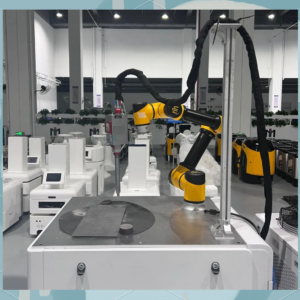
The integration of a fiber source into a CNC Pipe Laser Machine involves sophisticated motion control systems. In Curitiba’s high-output facilities, these machines are required to handle various geometries, including round, square, rectangular, and open profiles like C-channels or L-angles. The CNC system coordinates the rotation of the chuck (the A-axis) with the longitudinal movement of the cutting head (the Z and Y axes) to maintain a constant focal point on the material surface.
Precision is maintained through high-resolution encoders and servo motors that ensure positioning accuracy within tolerances of +/- 0.05mm. Furthermore, the use of Automatic Nesting Software allows for the optimization of raw material usage. By calculating the most efficient arrangement of parts on a single length of pipe, the software minimizes “remnant” or scrap material. This is particularly vital for Curitiba-based exporters who must manage fluctuating raw material costs while maintaining lean manufacturing protocols.

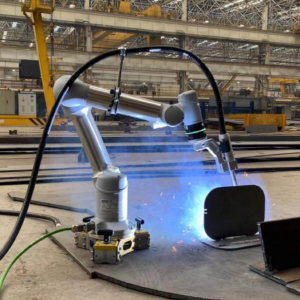
Industrial Application of CNC Pipe Laser Machine
Structural Advantages of Fiber-Based Systems
The mechanical architecture of a fiber-fed CNC machine is inherently simpler than its CO2 predecessors. Because the laser beam is delivered via a flexible fiber optic cable rather than a complex series of mirrors and bellows, the system is less susceptible to misalignment caused by vibration or thermal expansion. This “fit-and-forget” beam delivery system reduces the need for frequent optical calibrations, which is essential for 24/7 production environments found in the industrial parks of Araucária and São José dos Pinhais.
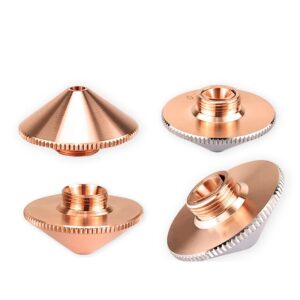
Moreover, the absence of laser gases (such as Helium, Nitrogen, and CO2) in the beam generation process eliminates a significant recurring cost. The only gases required are the assist gases—Oxygen for carbon steel or Nitrogen for stainless steel and aluminum—which are used at the cutting nozzle to expel molten metal and protect the lens from debris.
Operational Impacts on the Curitiba Supply Chain
The local supply chain in Curitiba benefits from the versatility of fiber laser technology. The ability to cut complex intersections, such as saddle joints and miter cuts, in a single pass eliminates the need for secondary processes like drilling, milling, or deburring. This consolidation of the manufacturing workflow reduces the “Work in Progress” (WIP) time, allowing local fabricators to meet shorter lead times for international clients.
Furthermore, the high beam quality of fiber sources—characterized by a low Beam Parameter Product (BPP)—enables a smaller focal spot size. This results in a narrower kerf width and a reduced Heat Affected Zone (HAZ). Maintaining the structural integrity of the base metal is critical for the agribusiness sector in Paraná, where components for harvesters and tractors must withstand high mechanical stress without failure at the weld points or cut edges.
Maintenance and Longevity of Fiber Technology
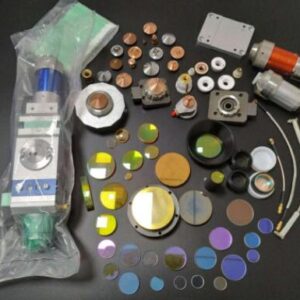
From a maintenance perspective, the fiber laser source is a solid-state component with an expected diode life exceeding 100,000 hours. In a standard two-shift operation in Brazil, this equates to over 15 years of operational life with minimal degradation in power output. The modular design of modern fiber units allows for individual diode modules to be replaced without decommissioning the entire laser source, ensuring maximum uptime for the facility.
The CNC interface also provides real-time telemetry, monitoring parameters such as gas pressure, internal temperature, and beam stability. For companies in Curitiba, this data-driven approach facilitates predictive maintenance, where components are serviced based on actual wear data rather than arbitrary time intervals, further optimizing the total cost of ownership (TCO).
Concluding Industry Insight
The adoption of energy-efficient fiber source technology in CNC pipe laser machines marks a definitive maturation of the Brazilian metalworking sector. Curitiba’s industrial base is successfully pivoting away from labor-intensive, high-waste traditional methods toward an automated, data-centric fabrication model. As global sustainability mandates become more stringent, the focus on Wall-Plug Efficiency and material optimization will be the primary drivers for capital investment. The future of tube processing lies in the intersection of high-frequency fiber optics and intelligent CNC automation, positioning Curitiba as a high-tech manufacturing node capable of competing on both precision and environmental accountability. Companies that prioritize these technical efficiencies today will secure a significant logistical and economic advantage in the global supply chain of tomorrow.
Industrial Expertise & Support
Are you looking for high-performance CNC Pipe Laser Machine tailored for the Global market? Our engineering team provides comprehensive solutions for modern manufacturing.