The Evolution of Metal Fabrication in the Valle del Cauca Industrial Hub
The industrial landscape of Cali, Colombia, has undergone a significant transformation over the last decade. As the primary urban center of the Valle del Cauca, Cali serves as a strategic gateway for the metalworking and manufacturing sectors due to its proximity to the Port of Buenaventura. The transition from conventional mechanical sawing and manual drilling to high-precision thermal cutting has been accelerated by the adoption of the CNC Pipe Laser Machine. This shift is not merely a matter of operational speed but a strategic investment in capital equipment that maintains high liquidity and long-term asset value.
For global manufacturers and regional distributors, the deployment of fiber laser technology in South American markets represents a maturation of the supply chain. By integrating advanced motion control systems with high-stability laser oscillators, facilities in Cali are achieving tolerances previously reserved for aerospace-grade environments. The technical focus remains on three pillars: structural integrity of the machine bed, the reliability of the fiber source, and the secondary market demand that dictates the residual value of the asset.
Technical Specifications of Fiber Laser Sources: IPG vs. Raycus
The core of any Fiber Laser Source lies in its ability to convert electrical energy into a coherent light beam with high efficiency. In the Cali market, two dominant brands dictate the performance metrics and subsequent resale value of pipe laser systems: IPG Photonics and Raycus.

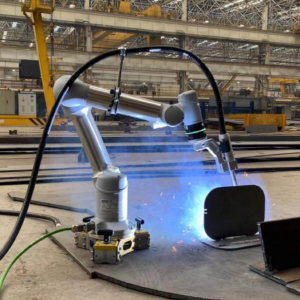
Industrial Application of CNC Pipe Laser Machine
IPG Photonics: The Gold Standard for Global Compatibility
IPG Photonics utilizes a master oscillator power amplifier (MOPA) architecture that offers unparalleled beam quality. For a CNC pipe laser, this translates to a smaller heat-affected zone (HAZ) and the ability to cut reflective materials such as aluminum and brass without back-reflection damage. From a technical standpoint, IPG sources boast a Photoelectric Conversion Efficiency exceeding 35%, which significantly reduces operational overhead in high-tariff energy markets. The global service network of IPG ensures that machines located in Colombia can be maintained with OEM parts, a critical factor in preserving the machine’s residual value for future international resale.
Raycus: Cost-Effective Robustness for Regional Scaling
Raycus has established itself as a formidable alternative, particularly for 1kW to 6kW applications. While often positioned as a more economical entry point, Raycus sources are engineered for high stability in fluctuating industrial environments. Their latest RFL series provides excellent power stability (<1.5% fluctuation), which is vital when processing long-form structural pipes that require consistent penetration over a 6-meter or 12-meter length. For many fabricators in Cali, Raycus offers a faster return on investment (ROI) while still utilizing a standard QBH interface, allowing for future upgrades or source replacements.
Mechanical Architecture and Its Impact on Residual Value
While the laser source is the heart of the system, the mechanical chassis determines the machine’s longevity. High residual value is directly correlated to the structural aging of the machine bed. In high-end CNC pipe laser machines, the use of a heavy-duty carbon steel plate welded bed, which undergoes stress-relief annealing and vibration aging, prevents deformation over a 10-to-15-year lifecycle.
The Role of the Pneumatic Chuck System
A critical component in pipe processing is the Pneumatic Chuck System. Unlike manual chucks, full-stroke pneumatic systems provide self-centering accuracy and consistent clamping force regardless of wall thickness. This precision prevents material slippage during high-acceleration rotations (up to 120 RPM), ensuring that hole geometries remain perfectly circular. Machines equipped with high-speed, synchronized chucks retain a premium on the secondary market because they minimize mechanical wear on the drive gears and servo motors.
Operational Efficiency: Software and Kinematics
In the context of Cali’s manufacturing sector, the ability to process complex profiles—including round, square, rectangular, and D-shaped tubes—is essential. The integration of specialized nesting software, such as CypTube or Lantek, allows for optimal material utilization. Technical data suggests that automated nesting can reduce scrap rates by up to 15% compared to manual layout methods.
Furthermore, the kinematic performance of the machine—defined by its acceleration rates (G) and positioning accuracy (mm/m)—is a byproduct of the rack-and-pinion systems and linear guides used. Systems utilizing Alpha (Germany) or Shimpo (Japan) reducers paired with Yaskawa (Japan) servo motors are standard in machines that boast high residual value. These components are designed for millions of cycles, ensuring that even after five years of three-shift operation, the machine maintains a positioning accuracy within ±0.03mm.
Market Dynamics: Why Cali is a Strategic Location
The geographic location of Cali provides a unique advantage for the lifecycle of industrial machinery. As a hub for the Andean region, equipment maintained here often serves as a primary asset for local infrastructure projects before being transitioned to secondary markets in neighboring countries like Ecuador or Peru. The high Residual Value of a CNC pipe laser machine in this region is supported by the scarcity of high-precision service centers; therefore, machines built with globally recognized components (IPG, Raycus, HIWIN, Schneider) are highly liquid assets.
Maintenance Protocols for Value Retention
To ensure the machine maintains its valuation, technical operators in Cali adhere to rigorous maintenance schedules, including:
- Laser source diode current monitoring to track degradation.
- Chiller water conductivity testing to prevent internal fouling of the laser path.
- Calibration of the capacitive height sensor in the cutting head to ensure focal consistency.
- Lubrication of the helical rack-and-pinion system to prevent backlash development.
Concluding Industry Insight
The global shift toward “smart manufacturing” dictates that the value of a machine is no longer found in its weight in steel, but in its digital and mechanical precision over time. In Cali, Colombia, the adoption of CNC pipe laser machines powered by IPG or Raycus sources represents a move toward high-yield production environments. The data indicates that machines utilizing fiber technology depreciate at a significantly slower rate than CO2 or plasma alternatives, primarily due to the solid-state nature of the laser medium and the lower maintenance requirements of the motion system.
For the B2B buyer, the decision-making process must prioritize the “Total Cost of Ownership” (TCO) over the initial purchase price. A machine that integrates a robust mechanical frame with a top-tier fiber source will not only provide superior production margins during its primary service life but will also command a resale price 30-40% higher than “generic” alternatives. As the metalworking industry in South America continues to modernize, the CNC Pipe Laser Machine stands as the benchmark for technological maturity and investment security in the region.
Industrial Expertise & Support
Are you looking for high-performance CNC Pipe Laser Machine tailored for the Global market? Our engineering team provides comprehensive solutions for modern manufacturing.