Industrial Transformation in Belo Horizonte: Accelerating Throughput in Metal Fabrication
The industrial corridor of Belo Horizonte, Brazil, serves as a critical nexus for the South American mining, automotive, and heavy engineering sectors. Historically, the fabrication of complex pipe and tube structures in this region relied on a fragmented sequence of manual operations, including mechanical sawing, manual layout marking, drilling, and milling. This traditional workflow often resulted in a 72-hour cycle time for complex batch orders, introducing significant bottlenecks in the supply chain. The integration of the CNC Pipe Laser Machine into these facilities has fundamentally altered this production timeline, compressing the same workload into a 3-hour window.
This transition represents more than a simple upgrade in hardware; it signifies a shift toward integrated digital manufacturing. By consolidating multiple machining steps into a single automated process, manufacturers in Minas Gerais are achieving tolerances and speeds previously unattainable with conventional toolsets. This article analyzes the technical parameters and process optimizations that facilitate a 95.8 percent reduction in cycle time.
The Technical Limitations of Legacy Fabrication Workflows
To understand the leap to a 3-hour cycle, one must first quantify the inefficiencies of the 72-hour legacy model. In a standard structural steel application, the process begins with raw material cutting. Mechanical band saws, while effective for straight cuts, require manual measurement and setup for every angle or miter. Following the cut, technicians must perform manual layout marking based on 2D blueprints—a process highly susceptible to human error.
Subsequent stages involve drilling or punching for bolt holes and milling for complex intersections or “fish-mouth” joints required for welding. Each movement of the workpiece between stations adds “dead time” due to material handling and re-calibration. In a high-volume facility in Belo Horizonte, these cumulative delays, combined with the necessity of manual deburring to remove mechanical slag, extended the production of a standard kit to three full working days.
Implementation of the CNC Pipe Laser Machine
The introduction of the CNC Pipe Laser Machine eliminates the multi-station requirement. These systems utilize a high-power Fiber Laser Source—typically ranging from 3kW to 12kW depending on wall thickness—to execute cutting, hole-making, and complex profiling in a single continuous operation. The machine’s ability to rotate the workpiece 360 degrees while the laser head moves along multiple axes allows for the creation of intricate geometries that were previously impossible to machine efficiently.
Key to this speed is the integration of advanced Nesting Software. This software takes 3D CAD data and optimizes the arrangement of parts on a single length of pipe to minimize scrap. It automatically generates the toolpaths required for complex intersections, ensuring that when the pipe leaves the machine, it is ready for immediate assembly or welding without the need for secondary grinding or fit-up adjustments.

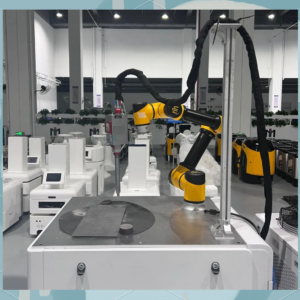
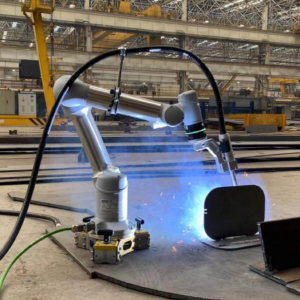
Industrial Application of CNC Pipe Laser Machine
Quantifying the Reduction in Cycle Time
The reduction from 72 hours to 3 hours is achieved through three primary technical drivers: simultaneous processing, high-speed motion control, and the elimination of manual layout.
1. Elimination of Non-Value-Added Time
In the traditional model, approximately 60 percent of the 72-hour cycle was spent on material handling and waiting between stations. The automated CNC Pipe Laser Machine utilizes an Automated Material Loading system that feeds raw stock into the chucks without operator intervention. By performing all cuts and holes in one setup, the non-value-added time is reduced to near zero.
2. Increased Cutting Velocity and Precision
Fiber laser technology offers significantly higher power density compared to CO2 lasers or mechanical methods. For a 6mm wall thickness carbon steel pipe, a fiber laser can maintain a feed rate that exceeds mechanical sawing by a factor of ten. Furthermore, the Kerf Width of a laser—often as narrow as 0.1mm to 0.2mm—allows for extreme precision. This precision ensures that components fit together perfectly during the welding phase, eliminating the “re-work” time that previously contributed to the 72-hour cycle.
3. Digital Workflow Integration
The shift to a 3-hour cycle is also a result of digital synchronization. In Belo Horizonte’s modernized plants, the engineering department sends XML or STEP files directly to the machine’s controller. The time previously spent by shop floor leads interpreting blueprints and marking pipes is replaced by a few minutes of software processing. The machine executes the program with absolute repeatability, ensuring the first part is identical to the thousandth.
Material Versatility and Structural Integrity
A critical factor for the Belo Horizonte market is the ability to process a wide range of materials used in mining infrastructure. The CNC Pipe Laser Machine is not limited to standard round tubes; it processes square, rectangular, and specialized profiles such as C-channels and I-beams. The localized heat-affected zone (HAZ) produced by the fiber laser ensures that the structural integrity of the high-tensile steel used in heavy machinery remains intact. This is a significant advantage over plasma cutting, which often requires extensive edge preparation due to a larger HAZ and increased dross accumulation.
Economic Impact and ROI Analysis
From a B2B perspective, the capital expenditure of a CNC Pipe Laser Machine is justified by the drastic reduction in cost-per-part. While the initial investment is higher than traditional saws and drills, the labor cost reduction is profound. A process that once required five operators over three days now requires one operator for three hours. This allows firms in Belo Horizonte to reallocate skilled labor to more complex assembly and quality assurance roles, increasing the total factory output without increasing headcount.
Furthermore, the reduction in lead time allows companies to move toward “Just-In-Time” (JIT) manufacturing. Instead of holding large inventories of pre-cut pipes, manufacturers can respond to orders in real-time, significantly improving cash flow and reducing warehouse overhead.
Concluding Industry Insight: The Future of Global Fabrication
The case study of Belo Horizonte’s transition from a 72-hour to a 3-hour cycle time is a microcosm of a larger global trend in metal fabrication. As industrial hubs worldwide face increasing pressure to reduce lead times and improve precision, the reliance on multi-step mechanical processing is becoming a liability. The future of the industry lies in “Process Consolidation.”
The CNC Pipe Laser Machine is the primary catalyst for this consolidation. As laser power continues to scale upward and software becomes more adept at handling complex 3D geometries, the distinction between “cutting” and “machining” will continue to blur. For global B2B stakeholders, the takeaway is clear: competitive advantage is no longer found solely in labor arbitrage, but in the aggressive adoption of high-throughput, automated technologies that redefine the limits of production speed and accuracy. The shift seen in Brazil is a blueprint for any industrial region looking to maintain relevance in an increasingly automated global supply chain.
Industrial Expertise & Support
Are you looking for high-performance CNC Pipe Laser Machine tailored for the Global market? Our engineering team provides comprehensive solutions for modern manufacturing.