Strategic Industrial Evolution: Implementing CNC Pipe Laser Systems in Barranquilla
The industrial landscape of Barranquilla, Colombia, is undergoing a significant transformation as it transitions from traditional mechanical fabrication to automated precision engineering. As a primary port city with direct access to Atlantic shipping lanes, Barranquilla serves as a critical hub for the manufacturing of structural steel, offshore equipment, and complex architectural components. The integration of the CNC Pipe Laser Machine into this ecosystem represents a quantitative leap in throughput capacity. By replacing manual sawing, drilling, and deburring processes with a single-pass thermal cutting solution, regional manufacturers are achieving tolerances previously reserved for aerospace applications. This article examines the technical synergy between fiber laser hardware and AI-driven Human-Machine Interfaces (HMI), specifically focusing on how these systems reduce the operator learning curve to a mere 48 hours.
Technical Architecture of Modern Fiber Laser Tube Processing
The core of the CNC Pipe Laser Machine lies in its Fiber Laser Resonator, typically ranging from 2kW to 6kW for standard industrial applications in the Colombian market. Unlike CO2 variants, fiber lasers operate at a wavelength of approximately 1.06 microns, allowing for superior absorption rates in reflective materials such as stainless steel, aluminum, and brass. The mechanical assembly utilizes a multi-axis configuration, where the rotational movement of the workpiece is synchronized with the longitudinal and vertical travel of the cutting head.
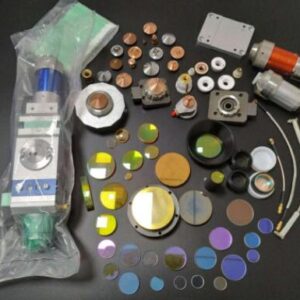
Precision is maintained through a high-speed Pneumatic Chuck Synchronization system. These chucks provide the necessary clamping force to secure heavy-walled industrial piping while maintaining the sensitivity required for thin-walled decorative tubing. In Barranquilla’s humid coastal environment, these machines are often equipped with specialized dust extraction and filtration units to prevent atmospheric particulates from interfering with the optical path, ensuring consistent beam quality over long production cycles.
The AI-Driven HMI: Eliminating the Traditional Skills Gap
Historically, operating a multi-axis CNC system required years of specialized training in G-code and manual parameter adjustment. The introduction of AI-enhanced HMI has fundamentally altered this trajectory. The AI layer acts as an intermediary between the raw CAD/CAM data and the physical execution of the cut. It utilizes Nesting Algorithms to calculate the most efficient use of material, automatically orienting parts to minimize scrap and reduce the number of pierces required.
The HMI features a predictive database of material behaviors. When an operator inputs the material type (e.g., ASTM A36 carbon steel) and wall thickness, the AI automatically calibrates the gas pressure (Oxygen or Nitrogen), focal position, and feed rate. This removes the “trial and error” phase that typically consumes the first several weeks of a new machine’s deployment. In the context of Barranquilla’s expanding labor market, this allows firms to upskill existing personnel rapidly without requiring extensive backgrounds in computational geometry.
The 48-Hour Proficiency Timeline: A Quantitative Breakdown
The 2-day learning curve is not a marketing projection but a result of streamlined interface design. The training protocol is divided into four distinct modules over a 48-hour period:

Industrial Application of CNC Pipe Laser Machine
Day 1, Morning: Hardware Fundamentals and Safety Systems
The first six hours focus on the physical architecture of the machine. Operators learn the maintenance of the Fiber Laser Resonator, the cleaning of protective windows, and the calibration of the capacitive height sensor. Safety protocols regarding Class 4 laser radiation and high-pressure gas handling are established as the baseline for all operations.
Day 1, Afternoon: Software Interface and File Ingestion
The focus shifts to the AI HMI. Operators practice importing .STEP or .IGES files directly into the machine’s control unit. The AI automatically identifies intersections, miter cuts, and hole patterns. Operators learn to override parameters only when specific custom finishes are required, relying on the AI for 95 percent of standard processing tasks.
Day 2, Morning: Material Handling and Chuck Calibration
Day two begins with the physical loading of tubes. The training covers the adjustment of support rollers and the synchronization of the front and rear chucks. Operators learn how the machine compensates for “bow” or “twist” in lower-grade raw materials—a common challenge in regional supply chains—using the AI’s real-time sensing capabilities.
Day 2, Afternoon: Production Optimization and Troubleshooting
The final phase involves running full production nests. Operators are taught to interpret the HMI’s diagnostic feedback. If a cut fails due to a contaminated nozzle or inconsistent material density, the AI provides a visual prompt and a step-by-step resolution guide. By the end of hour 48, the operator is capable of maintaining a continuous production cycle with minimal supervision.
Economic Implications for the Barranquilla Manufacturing Sector
The deployment of these machines in Barranquilla offers a dual advantage: speed and versatility. The city’s proximity to major infrastructure projects—such as port expansions and bridge construction—demands high-volume production of tubular frames. Traditional methods might take four hours to process a complex manifold that the CNC Pipe Laser Machine completes in twelve minutes. Furthermore, the reduction in the learning curve means that manufacturing facilities can scale their operations in alignment with project demands, rather than being bottlenecked by the availability of highly specialized technicians.
Maintenance and Environmental Considerations
Operating high-precision laser equipment in a tropical, maritime environment like Barranquilla requires specific technical adherence. The AI HMI monitors the internal temperature of the laser source and the chiller units in real-time. If the ambient humidity affects the dew point within the cabinet, the system provides preemptive alerts to prevent condensation on the optics. This proactive maintenance model, driven by internal sensors, ensures that the machine’s lifespan is maximized despite the challenging external climate.
Industry Insight: The Future of Decentralized High-Tech Fabrication
The success of AI-integrated CNC systems in Barranquilla is a microcosm of a larger global trend: the democratization of high-precision manufacturing. As AI HMIs become more sophisticated, the geographical location of a factory becomes less of a barrier to entry regarding technical expertise. We are moving toward an era where the hardware’s “intelligence” compensates for regional skill gaps, allowing emerging industrial hubs to compete directly with established markets in North America and Europe. For Barranquilla, this means the ability to pivot from being a transit point for raw materials to becoming a high-value exporter of finished, precision-engineered components. The 2-day learning curve is not just a convenience; it is a catalyst for regional economic re-industrialization, proving that when the barrier to technology is lowered through intelligent design, the ceiling for production is raised exponentially.
Industrial Expertise & Support
Are you looking for high-performance CNC Pipe Laser Machine tailored for the Global market? Our engineering team provides comprehensive solutions for modern manufacturing.