The Integration of Small Diameter Pipe Laser Systems in Volatile Power Environments
The global precision manufacturing sector is increasingly looking toward emerging industrial hubs for specialized component production. Valencia, Venezuela, historically a center for automotive and heavy industry, represents a unique intersection of high-demand manufacturing and infrastructure challenges. Specifically, the deployment of Small Diameter Pipe Laser technology in this region requires a sophisticated approach to power management. For industries such as HVAC, automotive fuel lines, and medical device manufacturing, the accuracy of a laser cut on a 10mm to 50mm diameter pipe is non-negotiable. However, maintaining this accuracy requires more than just high-end optics; it necessitates an integrated solution for grid instability.
Precision laser cutting relies on the consistency of the beam’s focal point and power density. In regions where the electrical grid exhibits frequent fluctuations, the sensitive electronics within a fiber laser resonator are at significant risk. This article examines the technical necessity of built-in voltage regulation for laser systems operating in environments characterized by inconsistent utility delivery, focusing on the specific requirements of small-diameter applications.
Technical Challenges of Small Diameter Laser Cutting
Processing small diameter pipes introduces geometric complexities that are not present in flat-sheet or large-format tube cutting. The smaller the radius, the higher the requirement for synchronized motion between the rotary chuck and the laser head. Any minor deviation in power output can result in a “burn-through” on the opposite wall of the pipe or an inconsistent kerf width that compromises the structural integrity of the component.
When operating a Small Diameter Pipe Laser, the system utilizes high-frequency power supplies to convert grid electricity into the energy required to excite the laser medium. In Valencia’s industrial zones, the grid often experiences voltage sags and surges. Without internal mitigation, these fluctuations translate directly to the laser source, causing pulse-width modulation errors. For a pipe with a wall thickness of 1.0mm, a 5 percent drop in voltage can lead to an incomplete cut, while a 5 percent surge can overheat the material, leading to excessive dross and secondary finishing costs.

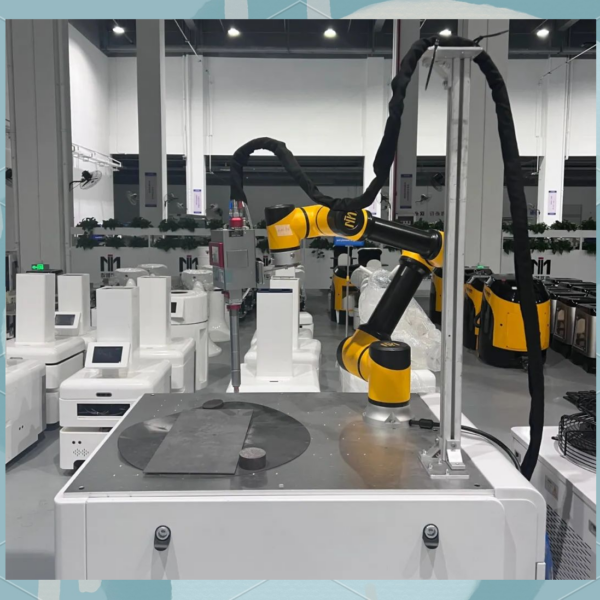
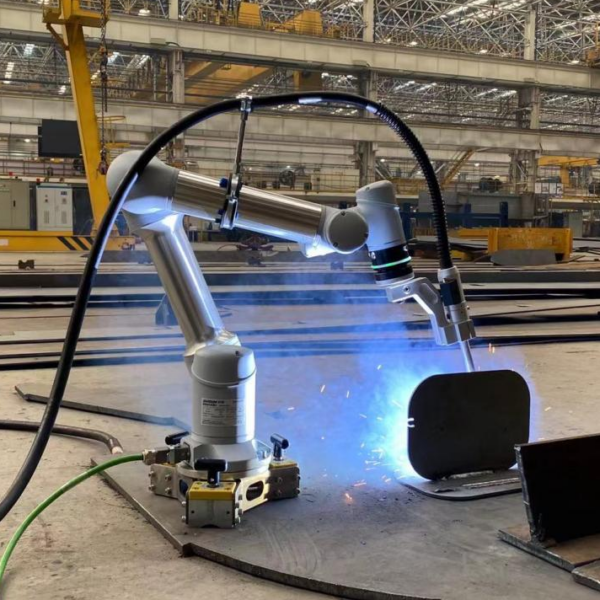
Industrial Application of Small Diameter Pipe Laser
Built-in Voltage Regulation: The Engineering Solution
Modern industrial lasers designed for global markets are now incorporating Automatic Voltage Regulation (AVR) directly into the machine’s electrical cabinet. This is a departure from traditional setups where external stabilizers were treated as optional peripherals. The integration of AVR within the CNC architecture allows for real-time communication between the power supply and the motion controller.
The technical architecture of these systems typically involves a multi-tap transformer or a solid-state electronic regulator. In the context of Valencia’s grid, a solid-state regulator is preferred due to its millisecond response time. These regulators utilize Silicon Controlled Rectifiers (SCRs) or Insulated Gate Bipolar Transistors (IGBTs) to adjust the output voltage. When the input voltage deviates from the nominal 380V or 480V standard, the internal sensors detect the delta and adjust the electromagnetic field in the regulator to maintain a constant output within a tolerance of plus or minus 1 percent.
Mitigating Harmonic Distortion and Grid Noise
Beyond simple voltage fluctuations, industrial grids in developing regions often suffer from high levels of Harmonic Distortion. This electrical “noise” is generated by other heavy machinery, such as large electric motors and arc welders, operating on the same circuit. For a laser system, harmonic distortion can interfere with the low-voltage control signals sent from the CNC to the servo motors.
The built-in regulation systems in high-tier pipe lasers include EMI/RFI filtering and isolation transformers. These components decouple the laser’s sensitive electronics from the primary grid. By filtering out high-frequency noise, the system ensures that the encoder feedback from the rotary axis remains clean. This is critical for small diameter pipes where the rotational speed is significantly higher than that used for larger tubes. A clean signal ensures that the pipe rotates at a precise angular velocity, maintaining the programmed surface speed required for a clean laser interaction.
Impact on Component Longevity and Operational Downtime
The economic argument for built-in voltage regulation is centered on the protection of the laser diode modules. In a fiber laser system, the diodes are the most expensive consumable components. These diodes are highly sensitive to over-voltage conditions. A single significant spike can cause catastrophic failure of the diode bank, leading to weeks of downtime and substantial repair costs. In a market like Valencia, where the supply chain for specialized replacement parts may face logistical delays, preventing failure through integrated regulation is a critical operational strategy.
Furthermore, consistent voltage ensures that the chilling unit—responsible for maintaining the temperature of the laser source and the cutting head—operates at peak efficiency. Fluctuations in power can cause the chiller’s compressor to cycle irregularly, leading to coolant temperature swings. In small diameter cutting, where the margin for thermal expansion is slim, maintaining a constant temperature is vital for beam stability and focus position.
Performance Metrics: A Comparative Analysis
Data collected from installations in high-volatility environments suggests that systems with integrated Laser Resonator Stability controls exhibit a 30 percent higher Mean Time Between Failure (MTBF) compared to systems relying on external, third-party stabilization. The primary reason is the “handshake” between the regulation hardware and the laser software. If the incoming voltage drops below a threshold that even the regulator cannot compensate for, the system can execute a controlled “Safe Shutdown” or “Pause” command, preserving the current state of the cut and protecting the optics.
In Valencia, where brownouts can occur during peak industrial hours, this feature allows operators to resume cutting exactly where the process stopped once power is stabilized. For small diameter pipes used in high-pressure applications, such as hydraulic lines, the ability to maintain a continuous, uninterrupted cut path is essential for passing non-destructive testing (NDT) and pressure certifications.
Concluding Industry Insight
The evolution of the Small Diameter Pipe Laser market demonstrates a shift from pure performance metrics (wattage and speed) toward infrastructure resilience. As manufacturing continues to decentralize into regions with developing power grids, the “ruggedization” of precision machinery becomes a primary competitive advantage. The integration of built-in voltage regulation is no longer a luxury feature for high-end models but a foundational requirement for any system intended for global deployment.
For manufacturers in Valencia and similar industrial hubs, the investment in hardware that accounts for local environmental variables is the most effective way to ensure global quality standards. The future of B2B industrial sales lies in providing equipment that creates its own stable micro-environment, effectively decoupling the quality of the final product from the inconsistencies of the local utility infrastructure. This trend will likely expand into other areas of additive and subtractive manufacturing, where the stability of the energy input is as critical as the quality of the raw material.
Industrial Expertise & Support
Are you looking for high-performance Small Diameter Pipe Laser tailored for the Global market? Our engineering team provides comprehensive solutions for modern manufacturing.