The industrial landscape of Santiago, Chile, has undergone a significant transformation as manufacturing facilities in key sectors—ranging from HVAC components to mining infrastructure—transition toward high-precision automation. Central to this evolution is the deployment of the Small Diameter Pipe Laser. As global supply chains demand higher tolerances and faster turnaround times, local industrial parks in Quilicura, Lampa, and Pudahuel are leveraging fiber laser technology to replace traditional mechanical sawing and drilling processes. This shift is not merely a technological upgrade but a calculated financial strategy aimed at maximizing Return on Investment (ROI) through the reduction of secondary operations and material waste.
Technical Specifications and Machine Architecture
A Small Diameter Pipe Laser is engineered specifically to handle tubing typically ranging from 10mm to 120mm in diameter. Unlike general-purpose tube lasers, these machines utilize high-speed, lightweight chucks designed for rapid rotation and high acceleration. In Santiago’s industrial context, where thin-walled stainless steel and aluminum tubing are prevalent, the ability to maintain structural integrity during high-speed processing is critical.
The integration of a high-brightness Fiber Laser Resonator allows for a concentrated beam profile. This precision is essential when processing small diameters, as the heat-affected zone (HAZ) must be minimized to prevent deformation of the tube wall. Most advanced systems currently deployed in Chilean industrial parks feature rapid-response sensors that adjust the focal point in real-time, compensating for any slight deviations in tube straightness. This level of technical control ensures that every cut, from simple perpendicular slices to complex miter joints and fish-mouth geometries, meets strict ISO standards.
Quantifying ROI: Beyond Initial Capital Expenditure
When analyzing the ROI for industrial parks in the Santiago Metropolitan Region, the data points toward three primary drivers: throughput speed, material utilization, and the elimination of downstream processing. Traditional methods of tube fabrication involve multiple stages: cutting, deburring, drilling, and often manual jigging for assembly. A pipe laser consolidates these steps into a single automated cycle.
In a typical production environment in the Pudahuel industrial belt, a Small Diameter Pipe Laser can reduce the total processing time per part by up to 70 percent. By utilizing advanced Nesting Software Algorithms, manufacturers can optimize the layout of parts on a single length of raw material. This reduces the “remnant” or scrap rate to as low as 3-5 percent, compared to the 12-15 percent often seen with manual sawing. Given the rising costs of raw metal alloys in the South American market, these material savings contribute directly to the bottom line, often allowing for machine payback periods of less than 24 months in high-volume environments.
Precision Engineering and Assembly Efficiency
One of the most significant technical advantages of laser-cut small diameter pipes is the accuracy of the fit-up. In sectors such as the manufacturing of medical equipment or high-end furniture in Santiago, tolerances are often measured in microns. The laser system provides a level of Kerf Compensation that traditional mechanical tools cannot match.

Industrial Application of Small Diameter Pipe Laser
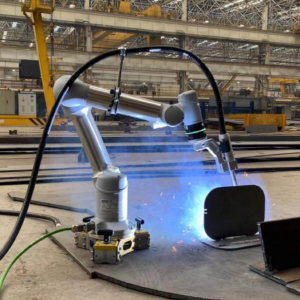
Because the laser cuts are precise and clean, the parts can move directly to the welding station without the need for grinding or deburring. Furthermore, the ability to cut interlocking tabs and slots into the pipe ends allows for “self-jigging” assemblies. This reduces the reliance on expensive manual labor and complex fixtures. For industrial parks looking to scale, this means that the throughput of the welding department increases without adding additional personnel, further enhancing the overall facility ROI.
Operational Stability in the Santiago Industrial Context
Santiago’s industrial parks are characterized by a mix of local SMEs and multinational subsidiaries. The operational stability of a Small Diameter Pipe Laser is bolstered by the region’s improving infrastructure. Modern fiber lasers are significantly more energy-efficient than older CO2 variants, consuming approximately 30 percent less power. This is a vital consideration in Chile, where industrial electricity tariffs can fluctuate.
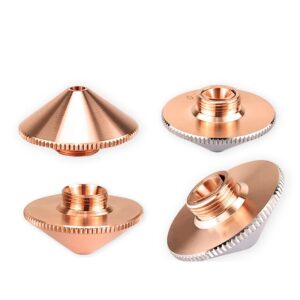
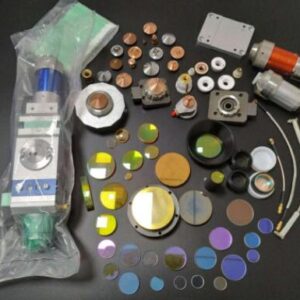
Additionally, the modular design of fiber laser sources ensures high uptime. In the event of a diode failure, the system can often continue to operate at reduced power, preventing total production halts. Local distributors in Santiago have also increased their inventory of consumables—such as nozzles and protective windows—ensuring that the supply chain for maintenance remains robust and localized, minimizing the “dead time” associated with importing parts from overseas.
Integration of Automatic Loading Systems
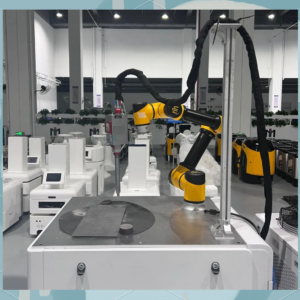
To achieve the maximum theoretical ROI, many facilities in Santiago are pairing their pipe lasers with Automatic Loading Systems. These systems handle bundles of raw tubing, singulating them and feeding them into the machine without operator intervention. In a 24/7 production cycle, this automation eliminates the variability of human labor and ensures a consistent cadence of output.
The technical synergy between the loader and the laser’s control unit allows for the detection of weld seams. The machine can automatically rotate the tube to ensure that the weld seam does not interfere with critical cutouts or bend locations. This level of intelligent processing is particularly valuable for the Chilean automotive and agricultural equipment sectors, where structural integrity is non-negotiable.
Concluding Industry Insight
The adoption of small diameter pipe laser technology in Santiago reflects a broader global trend: the localization of high-precision manufacturing. As the cost of international shipping remains volatile, the ability to produce complex, high-tolerance components within local industrial parks becomes a competitive necessity. The data from Santiago’s industrial hubs suggests that the transition to laser tube processing is no longer an “optional” upgrade for forward-thinking firms.
In the coming years, we anticipate a secondary wave of ROI driven by Industry 4.0 integration. The data harvested from these laser systems—tracking cut times, gas consumption, and error rates—will feed into larger ERP systems to provide a granular view of factory efficiency. For the global observer, Santiago serves as a compelling case study on how targeted investment in specialized laser technology can revitalize regional manufacturing hubs, turning them into high-efficiency centers capable of competing on a global stage. The focus will shift from simply “cutting parts” to “optimizing the entire value chain,” with the small diameter pipe laser as the technical cornerstone of that transformation.
Industrial Expertise & Support
Are you looking for high-performance Small Diameter Pipe Laser tailored for the Global market? Our engineering team provides comprehensive solutions for modern manufacturing.