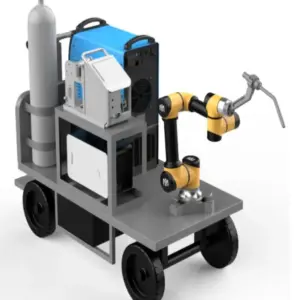
Introduction to High-Precision Pipe Fabrication in the Santiago Industrial Corridor
The industrial landscape in Santiago, Chile, has undergone a significant transformation toward automated precision manufacturing. As a primary hub for the Southern Cone’s metallurgical and aerospace sectors, the demand for high-accuracy processing of tubular components has intensified. Specifically, the implementation of Small Diameter Pipe Laser systems has become a technical necessity for facilities requiring tight tolerances and high throughput. These systems are designed to handle tube diameters typically ranging from 10mm to 120mm, addressing the specific needs of the medical device, automotive, and high-end furniture industries. However, the adoption of such technology in the Chilean market is not merely a matter of mechanical capability; it requires strict adherence to international safety protocols, specifically the CE and NR-12 standards, to ensure operational integrity and workforce protection.
Technical Specifications of Small Diameter Pipe Laser Systems
The core of a Small Diameter Pipe Laser system lies in its ability to maintain beam stability and rotational accuracy on small-scale geometries. Unlike large-format pipe cutters, these machines utilize specialized chucking systems—often pneumatic or electric high-speed synchronous chucks—that prevent tube deformation while maintaining high RPMs. The laser source, typically a Fiber Laser Resonator with power outputs ranging from 1kW to 3kW, provides a wavelength of approximately 1.06 microns. This wavelength is ideal for high absorption rates in stainless steel, carbon steel, and aluminum.
The precision of the cut is dictated by the Heat-Affected Zone (HAZ). In small diameter applications, excessive heat can lead to structural compromise or dross accumulation on the internal diameter of the pipe. Advanced systems in Santiago utilize modulated pulse frequencies and assist gases such as Nitrogen or Oxygen to minimize the HAZ, ensuring that the metallurgical properties of the pipe remain intact. This is critical for industries where the internal surface finish of the pipe is as important as the external cut quality.
CE Certification: Ensuring European Safety and Quality Standards
For manufacturing entities in Santiago looking to export components to the European Union or maintain global quality benchmarks, CE certification is a non-negotiable requirement. This certification indicates that the laser equipment complies with the essential health and safety requirements (EHSR) set out in European Directives. Specifically, the CE Machinery Directive (2006/42/EC) governs the mechanical design and construction of the pipe laser.
Technical compliance under CE involves rigorous testing of Electromagnetic Compatibility (EMC) and Low Voltage Directives (LVD). For a pipe laser, this means the electrical cabinets must be shielded against interference and the laser radiation must be fully contained within a Class 1 enclosure. In the context of Santiago’s industrial sector, utilizing CE-certified equipment reduces the risk of electrical failure and ensures that the machine’s documentation—including the Declaration of Conformity—is available for international audits.
NR-12 Compliance: The Regulatory Framework for Workplace Safety
While CE is an international benchmark, NR-12 (Norma Regulamentadora 12) is a stringent safety standard originally from Brazil that has become a de facto reference for machine safety across South America, including Chile. NR-12 focuses heavily on the prevention of accidents during the operation and maintenance of machinery. For a Small Diameter Pipe Laser, NR-12 compliance requires the integration of specific safety circuits and physical barriers.

Industrial Application of Small Diameter Pipe Laser
Key components of NR-12 Safety Interlocks include dual-channel safety relays, monitored emergency stop buttons, and light curtains that disable the machine if the operator enters the cutting zone. In Santiago, technical inspectors often look for the “Safety PLC” which manages these inputs independently of the machine’s primary CNC controller. This redundancy ensures that even in the event of a software crash, the hardware-level safety protocols remain active. Furthermore, NR-12 dictates that all energy sources—electrical, pneumatic, and hydraulic—must be lockable (LOTO) to prevent accidental startup during maintenance cycles.
Integration of Automated Loading Systems in Small Diameter Processing
To maximize the ROI of laser systems in the Santiago market, integration with automated bundle loaders is essential. For small diameter pipes, the challenge lies in the vibration control of long, thin workpieces during high-speed rotation. Technical solutions involve the use of multiple support points and active following mechanisms that adjust the height of the pipe support in real-time as the laser head moves along the X-axis.
The software interface (CAD/CAM) plays a vital role in this integration. Modern systems utilize nesting algorithms specifically designed for tubular shapes, optimizing material usage and reducing scrap rates. In a high-cost material environment like Chile, where specialty alloys are often imported, reducing waste by even 3-5 percent through efficient nesting can result in significant annual savings. These software packages also provide the necessary data for ERP integration, allowing Santiago-based manufacturers to track production metrics and maintenance schedules in real-time.
Environmental and Operational Considerations in the Santiago Region
Operating high-precision laser equipment in Santiago requires consideration of the local environment. The region’s seismic activity necessitates specialized anchoring and leveling of the laser bed to maintain optical alignment. Additionally, the air quality and dust levels in industrial zones like Quilicura or Lampa require robust filtration systems for the laser’s cooling units and electrical cabinets.
The cooling system, or chiller, must be a dual-circuit type to independently regulate the temperature of the fiber source and the cutting head. Given the varying ambient temperatures in central Chile, these chillers must be equipped with high-precision thermostats to prevent thermal expansion of the mechanical components, which could otherwise lead to a drift in cutting accuracy over a long production shift.
Industry Insight: The Future of Compliant Laser Fabrication
The convergence of CE and NR-12 standards in the Chilean market represents a broader global trend toward the “Safety by Design” philosophy. For the Santiago industrial sector, the shift toward compliant Small Diameter Pipe Laser technology is not just a regulatory hurdle but a strategic advantage. As global supply chains prioritize ESG (Environmental, Social, and Governance) criteria, facilities that operate under high safety and efficiency standards are more likely to secure international contracts.
Looking forward, the integration of Artificial Intelligence (AI) in monitoring the Heat-Affected Zone (HAZ) and predictive maintenance will be the next technical frontier. Systems will soon be able to adjust cutting parameters autonomously based on real-time sensor feedback regarding material consistency and beam quality. For manufacturers in Santiago, staying ahead of this curve means investing in modular platforms that can be upgraded to these new standards while remaining firmly rooted in the safety protocols of today. The future of pipe fabrication lies in the balance between extreme precision and uncompromising operational safety.
Industrial Expertise & Support
Are you looking for high-performance Small Diameter Pipe Laser tailored for the Global market? Our engineering team provides comprehensive solutions for modern manufacturing.