The Industrial Evolution of Santa Cruz: Precision Manufacturing in the Lowlands
Santa Cruz de la Sierra has solidified its position as the primary industrial engine of Bolivia, contributing significantly to the national GDP through its expansive industrial parks, such as the Parque Industrial Latinoamericano (PILAT). As the region transitions from basic raw material processing to complex metal fabrication, the demand for high-precision componentry has surged. Central to this transition is the adoption of advanced automated cutting technologies designed for specific material geometries.
Historically, the fabrication of tubular structures in the region relied on manual plasma cutting or mechanical sawing. While functional, these methods introduce significant tolerances and require extensive secondary processing. The introduction of the Small Diameter Pipe Laser into the Santa Cruz manufacturing ecosystem represents a strategic shift toward high-throughput, low-tolerance production. By focusing on diameters typically ranging from 10mm to 120mm, local manufacturers are optimizing their output for sectors including agribusiness equipment, construction scaffolding, and specialized furniture exports.
Technical Specifications and Operational Efficiency
The technical superiority of a Small Diameter Pipe Laser over traditional methods is rooted in its ability to integrate multiple manufacturing steps into a single automated process. These systems utilize a high-density Fiber Laser Resonator to achieve kerf widths as narrow as 0.1mm. For the industrial parks in Santa Cruz, where material costs are subject to international market fluctuations, the precision of these cuts minimizes scrap rates by up to 15 percent compared to mechanical shearing.
Furthermore, these machines are engineered for high-speed dynamics. In small diameter applications, the moment of inertia of the workpiece is significantly lower than that of heavy-duty piping. This allows the laser chucks to rotate at speeds exceeding 120 RPM with rapid acceleration rates. For a facility located in the Santa Cruz industrial corridor, this translates to a cycle time reduction of approximately 60 percent for complex hole patterns and miter cuts. The removal of the need for manual marking and jigging further streamlines the workflow, allowing a single operator to manage multiple units.
Quantifying Return on Investment for Local Industrial Parks
ROI in the context of Santa Cruz industrial parks is measured through three primary vectors: labor cost reduction, energy efficiency, and market expansion. While the initial capital expenditure (CAPEX) for a pipe laser system is higher than that of traditional tools, the operational expenditure (OPEX) is significantly lower. The Heat Affected Zone (HAZ) produced by fiber lasers is minimal, which eliminates the requirement for post-process grinding or edge cleaning. This reduction in man-hours per ton of processed steel is a critical factor in maintaining competitive pricing against imported finished goods.

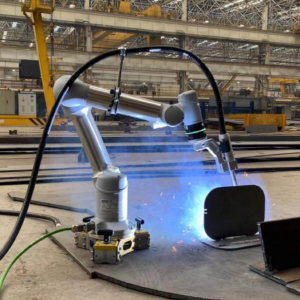
Industrial Application of Small Diameter Pipe Laser
From a data-driven perspective, local fabricators utilizing these systems report a payback period of 18 to 24 months based on double-shift operations. The integration of CAD/CAM Nesting Integration software allows for “common-line cutting,” where a single cut separates two parts, further reducing the time the laser is active and consuming power. In a region where energy stability is vital for industrial growth, the high wall-plug efficiency of fiber laser sources (often exceeding 30 percent) provides a sustainable path for scaling production without exceeding local grid capacities.
Sector-Specific Applications in the Bolivian Market
The versatility of small-diameter laser cutting finds immediate application in Santa Cruz’s dominant industries. In the agricultural sector, the production of grain handling systems and irrigation components requires precise apertures for sensors and fasteners. Laser technology ensures that every component is identical, facilitating easier field assembly and reducing the need for on-site modifications.
In the architectural and construction sectors, the trend toward modular steel frames is growing. Small diameter pipes are used extensively in these structures. The ability to perform complex “bird-mouth” joins and interlocking tabs via laser cutting ensures that structural integrity is maximized while assembly time is minimized. For a developer in Santa Cruz, this means faster project completion and reduced structural failure risks. The precision of the Small Diameter Pipe Laser allows for the implementation of lean manufacturing principles, which are becoming a prerequisite for companies looking to attract international investment or partnerships.
Supply Chain Resilience and Value-Added Exports
Global logistics challenges have highlighted the risks of over-reliance on imported finished components. By establishing localized high-precision cutting capabilities in Santa Cruz, the regional supply chain becomes more resilient. Local industrial parks can now transform raw steel coils and tubes into high-value components for the Mercosur and Andean Community markets. This shift from being a consumer of technology to a provider of precision-manufactured goods is essential for the long-term economic stability of the region.
The technical data suggests that facilities equipped with automated pipe lasers can pivot between different product lines with minimal downtime. The digital nature of the cutting files allows for rapid prototyping. If a manufacturer in Santa Cruz needs to adjust a part design for a client in Brazil or Chile, the change is implemented in the software and executed immediately on the machine. This agility is a significant competitive advantage in the B2B landscape, where speed-to-market often determines contract awards.
Conclusion: Industry Insight
The deployment of Small Diameter Pipe Laser technology in Santa Cruz, Bolivia, is not merely a localized upgrade; it is a micro-indicator of a larger global trend toward decentralized high-precision manufacturing. As industrial hubs in South America seek to decouple from low-value commodity cycles, the investment in specialized CNC (Computer Numerical Control) laser equipment becomes the baseline for entry into the global supply chain. The ROI is proven not just by the speed of the laser, but by the systemic elimination of waste, labor inefficiencies, and secondary processing costs. For the industrial parks of Santa Cruz, the transition to automated laser processing is the definitive step toward achieving Industry 4.0 standards, ensuring that the region remains the most productive and technologically advanced corridor in the heart of South America.
Industrial Expertise & Support
Are you looking for high-performance Small Diameter Pipe Laser tailored for the Global market? Our engineering team provides comprehensive solutions for modern manufacturing.