Introduction: The Industrial Evolution of Santa Cruz de la Sierra
Santa Cruz de la Sierra has solidified its position as the primary industrial engine of Bolivia, accounting for a significant portion of the nation’s GDP through agribusiness, construction, and metal-mechanical manufacturing. As the region transitions from traditional manual fabrication to automated precision, the demand for specialized CNC equipment has surged. Among these technologies, the Small Diameter Pipe Laser has emerged as a critical asset for manufacturers seeking to optimize material yield and production speed. Unlike general-purpose flatbed lasers, these specialized systems are engineered to handle the unique kinematics of thin-walled, narrow-gauge tubing. By integrating high-tier laser sources such as IPG and Raycus, regional enterprises are not only enhancing their immediate output but are also securing long-term capital stability through high residual asset value.
Technical Dynamics of Small Diameter Pipe Processing
Processing pipes with diameters ranging from 10mm to 120mm presents mechanical challenges distinct from heavy-duty structural steel. The primary challenge is maintaining structural integrity while achieving high-speed rotation. A Small Diameter Pipe Laser utilizes high-RPM chucking systems that must synchronize perfectly with the laser head’s longitudinal movement. Because the circumference of a small pipe is minimal, the laser spends less time on a single vector, requiring rapid acceleration and deceleration capabilities (often exceeding 1.2G) to maintain consistent Kerf Precision.
In the Santa Cruz manufacturing sector, where furniture production and light automotive components are prevalent, the ability to execute complex intersections and “fish-mouth” cuts without thermal deformation is paramount. The precision of the motion control system ensures that thin-walled stainless steel or aluminum pipes do not succumb to vibration, which is a common failure point in larger, slower machines attempting to downscale their operations.
Laser Source Selection: IPG vs. Raycus
The core of any fiber laser system is its resonator. In the Bolivian market, the choice typically fluctuates between IPG Photonics and Raycus. This decision impacts not only the initial procurement cost but the long-term Total Cost of Ownership (TCO) and the machine’s eventual resale price.

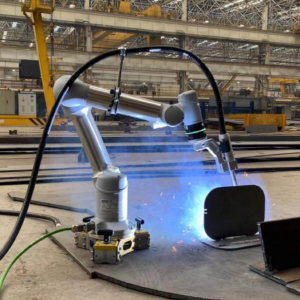
Industrial Application of Small Diameter Pipe Laser
IPG Photonics: The Global Standard
IPG sources are recognized for their superior wall-plug efficiency and beam stability. For a facility in Santa Cruz, where power grid fluctuations can occasionally occur, the robust internal circuitry of an IPG resonator provides a layer of protection against diode failure. Their Fiber Laser Resonator technology maintains a high beam quality (M2 < 1.1), which is essential for the ultra-fine cuts required in small-diameter applications. The global service network of IPG ensures that even in South American markets, technical support and replacement modules are accessible, preventing prolonged downtime.
Raycus: High Performance-to-Price Ratio
Raycus has become the leading alternative, offering high stability and comparable cutting speeds for most carbon steel and stainless steel applications. For many medium-sized enterprises in Bolivia, Raycus provides the necessary power density to handle high-volume production without the premium cost of Western-branded resonators. Modern Raycus sources have narrowed the gap in terms of reliability, making them a staple in the Small Diameter Pipe Laser market. Their modular design allows for relatively straightforward repairs, which is a significant advantage for local maintenance teams.
Residual Value: The Economic Logic of Premium Components
In B2B industrial investments, depreciation is a critical factor. Machinery equipped with “no-name” or generic laser sources often sees a value drop of 60-70% within the first three years. Conversely, machines utilizing IPG or Raycus sources retain a significantly higher residual value. This is due to several technical and market factors:
First, the longevity of the laser diodes. IPG sources are rated for 100,000 hours of operation. A secondary buyer in the global market will pay a premium for a used machine if the core component is a known quantity with verifiable service records. Second, the compatibility of parts. Because IPG and Raycus are industry standards, finding replacement cutting heads (such as Raytools or Precitec) that interface with these sources is simple. This makes the machine “future-proof” for the next owner.
For a business in Santa Cruz, this high residual value acts as an exit strategy or a trade-in lever. When the time comes to upgrade to a higher wattage or a multi-axis system, the initial investment in a Small Diameter Pipe Laser with a reputable source pays dividends by reducing the net capital expenditure of the new equipment.
Operational Efficiency in the Bolivian Context
The industrial environment in Santa Cruz requires equipment that can withstand high ambient temperatures and humidity. Fiber lasers are inherently more resilient than older CO2 technology because they lack the complex mirror arrays that require constant realignment. When paired with a high-efficiency industrial chiller, a Small Diameter Pipe Laser can operate at a 100% duty cycle even in tropical climates.
Furthermore, the integration of an Electromagnetic Chucking System in these machines allows for the rapid loading and unloading of pipes. In a market where labor costs are rising, reducing the “dead time” between cycles is the most effective way to increase margins. The software used in these systems (typically CypTube or similar) allows for nesting multiple parts on a single 6-meter pipe, reducing scrap rates to less than 3%—a vital metric given the fluctuating costs of imported raw materials in Bolivia.
Concluding Industry Insight: The Shift Toward Specialized Automation
The global manufacturing landscape is moving away from “all-in-one” machinery toward highly specialized cells. The adoption of the Small Diameter Pipe Laser in Santa Cruz reflects a broader South American trend: the professionalization of the supply chain. As local manufacturers begin to export components to neighboring Mercosur countries, they must adhere to international tolerances that manual fabrication simply cannot meet.
The strategic selection of IPG or Raycus sources is no longer just a technical preference; it is a financial strategy. In an era of rapid technological turnover, the “residual value” of an asset is its most important specification. Industry leaders in Bolivia are recognizing that the cheapest machine at the point of sale is often the most expensive over a five-year horizon. By investing in standardized, high-quality fiber sources, Santa Cruz is positioning itself as a high-tech hub capable of competing on a global scale, ensuring that its industrial assets remain liquid and productive for their entire operational life cycle.
Industrial Expertise & Support
Are you looking for high-performance Small Diameter Pipe Laser tailored for the Global market? Our engineering team provides comprehensive solutions for modern manufacturing.