Precision Engineering in the Santa Fe Industrial Corridor: The Rise of Small Diameter Pipe Laser Processing
The agricultural machinery sector is currently undergoing a significant transition toward high-strength, lightweight structural components. In Rosario, Argentina—a primary hub for South American industrial manufacturing—this transition is being driven by the adoption of advanced laser processing for tubular components. Specifically, the integration of Small Diameter Pipe Laser technology has become a critical factor for manufacturers aiming to meet global standards for durability and structural integrity. This technical analysis examines the relationship between thermal processing, the Heat Affected Zone (HAZ), and the operational longevity of agricultural equipment produced in this region.
Rosario’s strategic position within the “Pampa” region has fostered an ecosystem of OEMs (Original Equipment Manufacturers) that specialize in seeders, sprayers, and harvesting headers. These machines are subjected to extreme cyclic loading and high-vibration environments. To withstand these stresses, the metallurgical integrity of the frame and fluid-conveyance systems is paramount. Traditional mechanical cutting and plasma-based thermal processing often introduce excessive heat, leading to localized structural weaknesses. The shift toward fiber laser oscillation in small-diameter applications addresses these vulnerabilities at the molecular level.
The Physics of the Heat Affected Zone (HAZ) in Tubular Components
The Heat Affected Zone (HAZ) refers to the area of the base metal that has not been melted but has had its microstructure and mechanical properties altered by the heat of the cutting or welding process. In small-diameter pipes—typically those with an outer diameter (OD) between 12mm and 100mm—the ratio of surface area to wall thickness makes the material highly susceptible to thermal saturation. Excessive heat input during the cutting phase can lead to grain coarsening, reduced yield strength, and increased susceptibility to stress corrosion cracking.
Advanced fiber laser systems utilized in Rosario’s manufacturing facilities operate at wavelengths near 1.06 microns. This allows for a highly concentrated energy density. Because the beam can be focused to a microscopic spot size, the Kerf Width is significantly reduced. A narrower kerf translates directly to a smaller volume of material being heated. By maintaining a high feed rate and utilizing nitrogen as an assist gas, the thermal energy is dissipated rapidly, ensuring that the HAZ remains negligible. This precision is vital for maintaining the original tempering and hardness of the alloy steels commonly used in agricultural chassis construction.
Material Integrity and Fatigue Resistance in Agri-Machinery
Agricultural machinery operates in non-linear environments where dynamic loads are the norm. When a pipe is cut using conventional methods, the resulting HAZ can create a “soft spot” or a localized area of high brittleness. Under the repeated stress of field operations, these zones become the primary sites for fatigue crack initiation. In the context of Rosario’s export-grade machinery, the use of Small Diameter Pipe Laser technology ensures that the structural tubes retain their design-specified tensile strength across the entire length of the component, including the connection points.
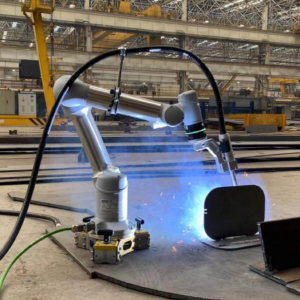
Furthermore, the precision of laser cutting allows for complex geometries, such as saddle cuts and interlocking tabs, with tolerances within +/- 0.1mm. This high level of dimensional accuracy ensures a “perfect fit” during the subsequent robotic welding stages. When gaps between components are minimized, the amount of filler metal required is reduced, and the welding heat input can be further controlled. This cascading effect of precision significantly extends the mean time between failures (MTBF) for critical equipment like sprayer booms and high-capacity grain carts.

Industrial Application of Small Diameter Pipe Laser
Optimizing Production Through Fiber Laser Oscillation
The implementation of Fiber Laser Oscillation techniques in Rosario’s technical centers has revolutionized the throughput of small-diameter components. Unlike CO2 lasers, fiber lasers are more efficient at cutting reflective materials such as aluminum and high-strength stainless steel, which are increasingly used in specialized agricultural sensors and fluid delivery systems. The oscillation technology allows the beam to move in specific patterns (circular, zig-zag, or figure-eight) within the cut path, which optimizes the melt pool dynamics and further reduces the thermal footprint on the pipe wall.
This technical capability allows manufacturers to process thin-walled tubing (1mm to 4mm) without deforming the circularity of the pipe. In fluid-power applications, maintaining the internal diameter (ID) integrity is essential for preventing turbulent flow and pressure drops. By eliminating the need for secondary deburring or finishing processes—which are often required after mechanical sawing—manufacturers in the Rosario region are achieving a more streamlined “Just-In-Time” (JIT) production flow, reducing overhead while increasing the quality of the final export product.
Global Competitiveness and the Rosario Industrial Standard
From a B2B perspective, the adoption of small-diameter laser technology in Argentina is not merely an incremental upgrade; it is a strategic alignment with international quality standards such as ISO 9001 and specialized agricultural standards like ISO 4254. Global distributors and large-scale farming enterprises now demand documentation regarding the manufacturing processes used in their equipment. The ability to certify that structural components have been processed with minimal thermal distortion provides a tangible competitive advantage in the European and North American markets.
Rosario’s industrial sector has invested heavily in CNC-integrated laser systems that allow for rapid prototyping and seamless transitions between different pipe profiles (round, square, or elliptical). This flexibility is crucial for the modern “Smart Farming” era, where machinery must be frequently adapted to carry new sensor arrays, GPS hardware, and automated steering components without compromising the underlying structural frame.
Industry Insight: The Future of Metallurgical Preservation
The future of agricultural machinery longevity lies in the synergy between material science and thermal management. As we look toward the next decade, the industry in Rosario is expected to move beyond simple cutting toward “intelligent thermal processing.” This involves real-time monitoring of the melt pool and feedback loops that adjust laser power instantaneously to maintain a constant HAZ, regardless of the pipe’s geometry or material thickness.
The move toward high-strength-low-alloy (HSLA) steels will continue to shrink the margin for error in thermal processing. In this environment, the Small Diameter Pipe Laser is no longer an optional luxury but a fundamental requirement for structural viability. For global stakeholders, the message is clear: the longevity of heavy-duty machinery is determined in the first few milliseconds of the manufacturing process. By prioritizing low-HAZ technologies, the Rosario industrial corridor is setting a new benchmark for the durability and reliability of the global food production supply chain. The transition from mass production to precision-engineered reliability is the definitive path for the survival and growth of the agri-machinery sector in a competitive global landscape.
Industrial Expertise & Support
Are you looking for high-performance Small Diameter Pipe Laser tailored for the Global market? Our engineering team provides comprehensive solutions for modern manufacturing.