Introduction: Precision Engineering in High-Altitude Urban Infrastructure
Quito, Ecuador, presents a unique set of challenges for civil engineering and underground utility installation. Situated at an elevation of 2,850 meters within the Andean foothills, the city’s topography is characterized by steep gradients, volcanic soil compositions, and a complex existing subterranean network. For municipal contractors, the primary objective in wastewater and drainage projects is maintaining precise gravity-fed flow lines. Historically, this has relied on manual labor—specifically grade checkers and surveyors using traditional string-line methods. However, the integration of the Small Diameter Pipe Laser into local construction workflows has demonstrated a significant shift in operational economics. By transitioning from manual grade verification to automated laser alignment, contractors are realizing a documented overhead reduction of approximately $5,000 per month. This report analyzes the technical specifications of these systems and the logistical factors contributing to such substantial cost mitigation.
The Technical Limitations of Manual Grade Management
Traditional pipe laying in Quito’s varying terrain involves high margin-for-error variables. Manual methods require a technician to physically enter the trench or use a grade rod to verify the slope at every pipe joint. In a standard 100mm to 150mm diameter installation, even a deviation of a few millimeters can lead to hydraulic inefficiencies or sediment accumulation over time. The labor-intensive nature of this process necessitates at least one dedicated grade checker per crew, whose sole responsibility is the verification of the invert elevation.
Furthermore, manual checks are prone to Grade Deviation Mitigation failures caused by human fatigue or parallax errors when reading traditional levels. In the context of Quito’s rainy season, trench stability becomes a concern; the longer a trench remains open for manual verification, the higher the risk of wall collapse or water ingress. These delays translate directly into increased machine hours and labor costs, which often go unaccounted for until the project reaches the reconciliation phase.
Operational Efficiency of the Small Diameter Pipe Laser
The Small Diameter Pipe Laser is engineered to operate within the confined geometries of 100mm (4-inch) pipes, a common standard for lateral connections and smaller municipal mains. These devices utilize a high-intensity concentrated light source, typically in the 635nm to 650nm range, to project a reference point or line through the center of the pipe string. The technical advantage lies in the Self-Leveling Accuracy of the internal compensators. Most industrial-grade pipe lasers offer a grade range of -15% to +40%, which is critical for the steep inclines found in the northern and southern sectors of Quito.
By placing the laser unit directly in the manhole or the start of the pipe run, the beam provides a constant, objective reference. The pipe layer simply aligns each subsequent section of pipe with the projected red or green dot. This eliminates the need for a secondary laborer to check the grade at each interval. The transition to this automated system allows the crew to reduce its headcount by one skilled technician per shift, which, when combined with social security contributions and local labor rates in the specialized construction sector, accounts for a significant portion of the monthly savings.
Quantifying the $5,000 Monthly Savings
The economic impact of replacing manual labor with laser precision can be categorized into three primary data points: direct labor costs, rework reduction, and accelerated completion timelines.

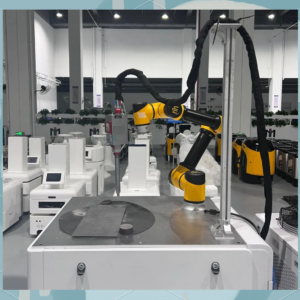
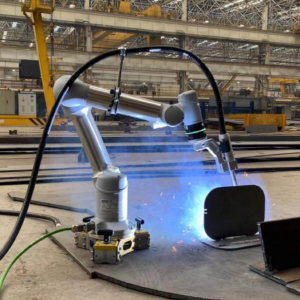
Industrial Application of Small Diameter Pipe Laser
1. Direct Labor Reduction: In Quito, a skilled grade checker or assistant surveyor earns a competitive wage. When factoring in benefits, overtime, and administrative overhead, the cost to the employer averages $1,800 to $2,200 per month. By utilizing the Small Diameter Pipe Laser, the pipe layer assumes the role of grade verification, effectively removing the requirement for a dedicated checker on the payroll.
2. Mitigation of Rework: Manual errors in pipe slope often result in “bellies” or back-grading. If a post-installation CCTV inspection identifies these defects, the contractor is legally obligated to excavate and reinstall the section. The cost of a single day of rework—including excavator rental, fuel, labor, and new materials—can easily exceed $1,500. By achieving Infrared Beam Alignment precision on the first pass, contractors in Quito have reported a 90% reduction in rework incidents, saving an estimated $2,000 per month in contingency expenditures.
3. Increased Linear Meterage: Automated alignment allows for a faster installation cadence. On average, crews using laser guidance install 15% to 20% more linear meters per day than those using manual methods. This accelerated throughput reduces the total number of days a crew is deployed on a specific site, allowing the contractor to move to the next revenue-generating project sooner. This gain in operational velocity is valued at approximately $1,000 per month in recovered opportunity costs.
Environmental and Structural Resilience
Quito’s atmospheric conditions, including high UV exposure and frequent seismic micro-tremors, require equipment with high ingress protection (IP) ratings. Modern pipe lasers are typically rated IP68, meaning they are fully submersible and dust-tight. This is essential when working in the humid, often muddy conditions of the Chillos Valley or the slopes of Pichincha. Unlike manual string-lines that can sag or be displaced by wind and debris, the laser beam remains a constant physical constant. The nitrogen-purged housings of these units prevent internal fogging, a common issue in the variable temperatures of the high Andes, ensuring that the Small Diameter Pipe Laser maintains its calibration throughout the duration of the project.
Conclusion: The Industry Insight on Digital Transformation
The case study of pipe installation in Quito illustrates a broader trend within the global construction industry: the “Digital Trench” evolution. As labor markets tighten and the demand for durable infrastructure increases, the reliance on manual measurement is becoming a liability rather than a standard. The $5,000 monthly saving realized by Ecuadorian contractors is not merely a result of cutting staff; it is the result of optimizing the entire workflow through high-precision instrumentation.
The industry insight for the coming decade suggests that contractors who fail to adopt automated grade control will find themselves unable to compete on fixed-price municipal contracts. In high-stakes environments where gradients are steep and soil conditions are volatile, the margin for error is non-existent. The Small Diameter Pipe Laser represents the first step in a transition toward fully autonomous utility installation. For B2B stakeholders, the ROI on such equipment is no longer measured in years, but in months, as evidenced by the rapid recoupment of capital expenditure through the elimination of redundant manual labor and the total eradication of corrective rework.
Industrial Expertise & Support
Are you looking for high-performance Small Diameter Pipe Laser tailored for the Global market? Our engineering team provides comprehensive solutions for modern manufacturing.