Integration of Small Diameter Pipe Laser Systems in Quito’s Industrial Infrastructure
The industrial landscape of Quito, Ecuador, specifically within the concentrated zones of Itulcachi, Pifo, and Sangolquí, is undergoing a transition toward high-precision automated fabrication. As the Andean region seeks to reduce its dependence on imported finished metal goods, local manufacturers are investing in advanced CNC technologies. Among these, the Small Diameter Pipe Laser has emerged as a critical asset for sectors requiring high-frequency processing of tubes ranging from 10mm to 120mm in diameter. This article examines the technical application, operational efficiency, and measurable Return on Investment (ROI) of these systems within the specific environmental and economic context of Quito.
Technical Specifications and Precision Requirements
The processing of small-diameter tubing presents unique mechanical challenges that standard large-format pipe lasers cannot address with the same level of efficiency. In Quito’s manufacturing hubs, the demand is often for high-speed cutting of thin-walled stainless steel and aluminum pipes used in automotive exhaust systems, medical furniture, and food processing equipment. A dedicated Small Diameter Pipe Laser utilizes a high-speed chuck system capable of reaching rotational speeds exceeding 120 RPM, which is essential for maintaining consistent linear cutting speeds on smaller circumferences.
From a technical standpoint, these machines are typically equipped with a Fiber Laser Source ranging from 1kW to 3kW. Because the material thickness in small-diameter applications rarely exceeds 4mm, higher wattage is unnecessary and can actually be detrimental to the Kerf Width and edge quality. The focus is instead on acceleration rates. High-end systems in local industrial parks are now utilizing linear motors that allow for 1.5G to 2.0G acceleration, ensuring that the laser maintains its duty cycle even when navigating complex geometries or tight-radius holes.
Environmental Considerations for High-Altitude Operation
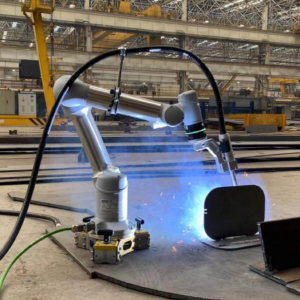
Operating sensitive laser equipment in Quito requires specific technical adjustments due to the city’s elevation (2,850 meters). The lower atmospheric pressure affects the cooling efficiency of standard air-cooled chillers. Local industrial parks have addressed this by implementing oversized dual-circuit water cooling systems. Furthermore, the Fiber Laser Source is sealed to prevent dust ingress and atmospheric interference, ensuring that the beam quality (M2 factor) remains stable despite the thinner air. This stability is vital for maintaining the precision required for secondary assembly processes, such as robotic TIG welding.
Quantifying ROI in Quito’s Industrial Parks
The transition from traditional mechanical cutting (cold saws, band saws, and manual drilling) to laser processing involves a significant capital expenditure. However, the ROI is realized through three primary channels: material utilization, labor reduction, and the elimination of secondary processes.
1. Material Utilization through Nesting Optimization
In the Itulcachi Industrial Park, material costs represent approximately 60-70% of the total production cost for metal furniture and automotive components. Traditional cutting methods often result in significant “drop” or scrap. Advanced Small Diameter Pipe Laser systems utilize Nesting Optimization software that reduces the distance between parts to as little as 2mm. By implementing common-line cutting, where one laser pass completes the end of one part and the beginning of the next, manufacturers in Quito have reported a 15% reduction in raw material waste. In a high-volume production environment, this saving alone can offset the monthly financing costs of the machinery.

Industrial Application of Small Diameter Pipe Laser
2. Elimination of Secondary Operations
Conventional tube processing requires multiple stages: cutting to length, deburring, and drilling or punching. Each stage introduces dimensional variance and increases labor costs. A fiber laser system performs all these functions in a single setup. The precision of the laser ensures that holes and notches are cut with a tolerance of +/- 0.1mm. For Quito-based companies exporting to North American or European markets, this level of repeatability is mandatory. The elimination of manual deburring and the reduction in jig setup time contribute to a 40% increase in total throughput per shift.
Sector-Specific Impact: Automotive and HVAC
The automotive component sector in Ecuador is a primary beneficiary of small-diameter laser technology. Components such as fuel lines, seat frames, and structural supports require complex notches for interlocking joins. By using a Small Diameter Pipe Laser, manufacturers can implement “tab-and-slot” designs. This allows parts to self-fixture during the welding process, removing the need for expensive, high-precision welding jigs. The reduction in “work-in-progress” (WIP) inventory allows local firms to operate with leaner manufacturing cycles.
In the HVAC and refrigeration sector, which has a strong presence in the Pifo area, the laser’s ability to cut copper and brass tubing with high precision is critical. High-reflectivity materials previously posed a challenge for CO2 lasers, but modern fiber laser wavelengths are efficiently absorbed by these metals. This has opened new production lines for local heat exchanger manufacturing, reducing the reliance on imported components from Brazil or China.
Operational Costs and Maintenance in the Andean Region
The cost of electricity in Ecuador is relatively competitive compared to neighboring countries, which favors the adoption of fiber laser technology. Fiber lasers are approximately 300% more energy-efficient than older CO2 technology. For an industrial park facility running two shifts, the energy savings are substantial. Furthermore, the lack of moving parts in the laser generator (no turbines or blowers) reduces the maintenance overhead. Local distributors in Quito have also improved their technical support, providing the necessary preventive maintenance programs to ensure 95% uptime, which is a prerequisite for calculating a reliable ROI.
Technical Challenges and Mitigation
While the benefits are clear, the implementation is not without challenges. The primary technical hurdle in Quito is power grid stability. Voltage fluctuations can damage sensitive laser diodes. Consequently, the ROI calculation must include the cost of high-capacity industrial voltage stabilizers and Uninterruptible Power Supplies (UPS). Most successful installations in Quito’s industrial zones include these as standard components to protect the investment from the local grid’s inconsistencies.
Concluding Industry Insight
The deployment of Small Diameter Pipe Laser technology in Quito marks a shift from labor-intensive manufacturing to capital-intensive, high-precision production. As the Andean Community (CAN) continues to integrate its trade policies, the ability for Ecuadorian manufacturers to produce high-spec, low-tolerance components will be the deciding factor in regional competitiveness. The data suggests that for facilities processing more than 500 meters of tubing daily, the transition to laser technology provides a full return on investment within 18 to 24 months. Moving forward, the integration of automated loading and unloading systems will be the next logical step, further reducing the human-error factor and cementing Quito’s position as a high-tech manufacturing hub in South America. The future of Andean fabrication lies not in mass-producing low-value items, but in the precision-engineered components that these advanced laser systems enable.
Industrial Expertise & Support
Are you looking for high-performance Small Diameter Pipe Laser tailored for the Global market? Our engineering team provides comprehensive solutions for modern manufacturing.