Precision Engineering in the Andean Corridor: The Rise of Small Diameter Pipe Laser Processing
The industrial landscape of Quito, Ecuador, has undergone a significant transition toward high-precision manufacturing. As a primary hub for the oil and gas, food processing, and structural engineering sectors in the Andean region, the demand for high-tolerance components has necessitated the adoption of advanced thermal cutting technologies. Central to this evolution is the implementation of the Small Diameter Pipe Laser, a specialized tool designed to handle the intricate geometries of tubing that traditional mechanical cutting methods often compromise. By integrating fiber laser technology with multi-axis motion control, manufacturers in Quito are now achieving levels of accuracy that were previously reserved for aerospace-grade facilities in North America or Europe.
Small diameter pipes, typically defined as those with an outside diameter (OD) between 12mm and 150mm, present unique challenges in thermal processing. The ratio of wall thickness to diameter requires precise heat management to prevent structural deformation. In Quito’s high-altitude environment, where atmospheric pressure affects cooling rates and gas dynamics, the calibration of fiber laser sources must be meticulously managed to ensure consistent beam quality. This technical shift from manual plasma or mechanical saw cutting to automated laser processing represents a critical step in reducing the total cost of ownership for complex piping assemblies.
The Technical Necessity of 45-Degree Beveling
In the context of high-pressure fluid transport and structural frameworks, the quality of the weld joint is the primary determinant of system longevity. 45-degree beveling is the industry standard for creating a V-groove preparation, which allows for full-depth weld penetration. When dealing with small diameter pipes, achieving a consistent 45-degree angle manually is statistically improbable and labor-intensive. The introduction of 5-axis laser head movement allows for the simultaneous rotation of the pipe and the tilting of the laser nozzle, ensuring that the bevel remains uniform across the entire circumference of the workpiece.
This uniformity is essential for automated welding processes. If the bevel angle fluctuates by even a few degrees, the weld pool dynamics change, leading to defects such as porosity, incomplete fusion, or excessive root reinforcement. By utilizing a Small Diameter Pipe Laser equipped with 3D cutting heads, Quito-based facilities can produce parts that fit together with zero-gap tolerances. This precision eliminates the need for manual tacking and excessive filler material, directly impacting the mechanical integrity of the final assembly.
Managing the Heat-Affected Zone (HAZ) in Thin-Walled Tubing
One of the most significant advantages of using fiber laser technology over traditional thermal methods is the minimization of the Heat-Affected Zone (HAZ). When a pipe is subjected to high heat, the metallurgical properties of the steel or aluminum near the cut can change, often resulting in increased brittleness or reduced corrosion resistance. In small diameter pipes, the heat dissipates more slowly due to the limited surface area, making them highly susceptible to thermal distortion.

Industrial Application of Small Diameter Pipe Laser
The fiber laser systems deployed in Quito utilize a high power density beam that vaporizes the material almost instantaneously. This localized energy input ensures that the surrounding material remains relatively cool, preserving the grain structure of the metal. For industries such as pharmaceutical manufacturing or dairy processing—both prevalent in the Pichincha province—maintaining the metallurgical integrity of stainless steel tubing is a regulatory requirement. The reduction of the HAZ ensures that the 45-degree bevel remains ductile and ready for high-specification TIG or orbital welding.
Kinematic Accuracy and Kerf Width Control
The efficiency of a Small Diameter Pipe Laser is governed by its kinematic repeatability and the control of the kerf width. The kerf, or the width of the material removed during the cutting process, must be factored into the CNC programming to ensure dimensional accuracy. In small diameter applications, even a 0.1mm deviation in kerf compensation can result in a significant misalignment during the assembly of complex manifolds or truss structures.
Modern systems in Quito utilize advanced linear motors and high-resolution encoders to maintain positioning accuracy within +/- 0.05mm. When performing a 45-degree bevel, the software must calculate the varying thickness the laser must penetrate as the angle changes. A vertical cut through a 3mm wall is 3mm, but a 45-degree cut through the same wall requires the laser to penetrate approximately 4.24mm of material. The laser’s power modulation and gas pressure must adjust dynamically to this change in effective thickness to maintain a clean, dross-free edge.
Operational Efficiency and Material Utilization
Beyond the technical precision of the cut, the economic argument for laser processing in Quito centers on material utilization and the reduction of secondary operations. Traditional pipe processing involves multiple stages: cutting to length, deburring, and manual beveling on a lathe or with a hand grinder. Each of these steps introduces the potential for human error and increases the lead time. A laser system combines these steps into a single automated cycle.
Furthermore, the nesting software used in these systems allows for “common line cutting” and minimal “remnant” lengths. In a global market where raw material costs fluctuate, the ability to extract the maximum number of parts from a single length of pipe provides a competitive edge. For Quito’s exporters of structural components, this means lower bid prices without sacrificing profit margins. The 45-degree bevel produced by the laser is “weld-ready” immediately upon exiting the machine, removing the need for costly post-processing cleaning or grinding.
Integration with Seamless Welding Workflows
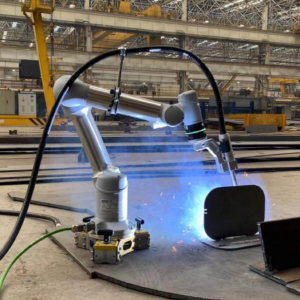
The ultimate goal of high-precision beveling is the facilitation of seamless welding. In high-pressure applications, such as those found in Ecuador’s hydroelectric or petrochemical plants, the interior surface of a pipe joint must be as smooth as the exterior to prevent turbulence and erosion. A laser-cut 45-degree bevel provides a consistent root face and gap, which is the foundation for a high-quality root pass. This consistency is particularly vital for orbital welding systems, which rely on predictable joint geometry to execute pre-programmed weld parameters. When the fit-up is perfect, the rejection rate of welds during X-ray or ultrasonic testing drops significantly, ensuring that projects remain on schedule and within budget.
Concluding Industry Insight: The Future of Andean Manufacturing
The adoption of Small Diameter Pipe Laser technology in Quito is not merely a localized trend but a reflection of a broader shift in the global manufacturing hierarchy. As supply chains become more decentralized, regional hubs must adopt “Industry 4.0” standards to remain relevant. The move toward automated beveling and high-precision pipe processing indicates that Ecuadorian manufacturers are moving away from basic fabrication and toward complex, high-value engineering services.
In the coming years, we expect to see the integration of Artificial Intelligence (AI) in these laser systems to further optimize gas consumption and real-time error correction. For the global B2B market, the availability of such high-tier technical capabilities in Quito offers a strategic advantage for projects requiring sophisticated piping assemblies in South America. The convergence of 45-degree beveling precision and seamless welding techniques is setting a new benchmark for quality, ensuring that the infrastructure of tomorrow is built on a foundation of mathematical accuracy and metallurgical excellence.
Industrial Expertise & Support
Are you looking for high-performance Small Diameter Pipe Laser tailored for the Global market? Our engineering team provides comprehensive solutions for modern manufacturing.