Optimizing Industrial Throughput: Small Diameter Pipe Laser Implementation in Mendoza
The industrial landscape of Mendoza, Argentina, historically recognized for its viticulture and energy-related metalworking, is currently undergoing a significant shift toward high-precision automation. As global supply chains demand faster turnaround times and tighter tolerances, local manufacturers are replacing conventional mechanical processing with advanced fiber laser systems. A primary example of this transition is the adoption of the Small Diameter Pipe Laser, a technology that has demonstrated the capacity to reduce production cycle times from 72 hours to just 3 hours for standardized batches of complex tubular components.
This reduction in cycle time is not merely a result of increased cutting speeds; it represents a fundamental overhaul of the fabrication workflow. By consolidating multiple machining steps—such as sawing, drilling, milling, and deburring—into a single automated process, facilities in the region are achieving unprecedented levels of operational efficiency. This article examines the technical parameters, metallurgical benefits, and economic implications of this technological integration within the Mendoza industrial corridor.
The Limitations of Conventional Tubular Fabrication
Prior to the integration of specialized laser systems, the production of small-diameter tubular components (typically ranging from 10mm to 100mm in diameter) relied on a fragmented workflow. In a standard 72-hour cycle, the process began with manual measurement and mechanical sawing. This stage often introduced cumulative errors in length and perpendicularity, requiring secondary squaring operations.
Following the initial cut, pipes were moved to manual or semi-automated drilling stations. For components requiring complex geometries or interlocking slots, multiple setups on traditional milling machines were necessary. Each transition between workstations introduced “queue time,” where material sat idle awaiting the next available machine or operator. Furthermore, mechanical contact tools often resulted in significant deformation of thin-walled pipes, necessitating internal reinforcement or post-process straightening. The final stage involved manual deburring to remove secondary burrs and slag, a labor-intensive process that accounted for nearly 20 percent of the total production time.
Technical Specifications of the Small Diameter Pipe Laser
The transition to a 3-hour cycle is centered on the deployment of a high-speed Fiber Laser Resonator. Unlike CO2 lasers, fiber lasers operate at a wavelength of approximately 1.06 microns, which is more readily absorbed by metallic surfaces, particularly reflective materials like aluminum and copper alloys often used in Mendoza’s specialized heat exchanger production.

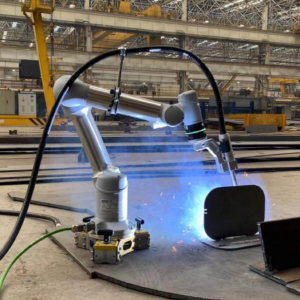
Industrial Application of Small Diameter Pipe Laser
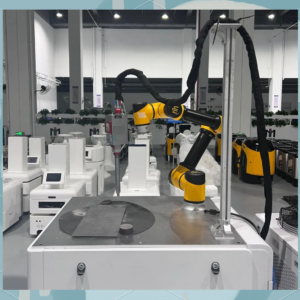
The systems implemented in this region typically feature a power output ranging from 1.5kW to 3kW, optimized for high-acceleration cutting. The mechanical architecture of the Small Diameter Pipe Laser includes high-speed pneumatic chucks capable of rotating at speeds exceeding 150 RPM while maintaining concentricity within a 0.05mm margin. This allows for rapid transitions between cutting planes and ensures that complex 3D profiles, such as saddle cuts or miter joints, are executed with extreme precision.
Key technical components include:
- Automated Bundle Loading: Systems that feed raw stock into the machine without operator intervention, reducing idle time between individual pipe segments.
- Active Seam Detection: Optical sensors that identify weld seams on the pipe surface, allowing the CNC software to rotate the pipe and ensure the seam does not interfere with critical hole placements or structural bends.
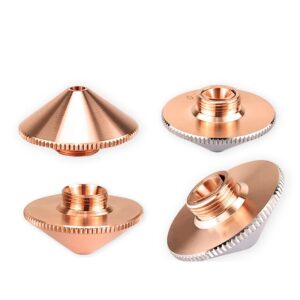
- Capacitive Height Sensing: A non-contact system that maintains a constant distance between the nozzle and the pipe surface, compensating for any material bowing or irregularities.
Metallurgical Integrity and the Heat-Affected Zone
One of the critical technical advantages of the fiber laser process is the minimization of the Heat-Affected Zone (HAZ). In traditional thermal cutting or high-friction mechanical drilling, the edges of the cut often undergo microstructural changes due to excessive heat. This can lead to localized hardening, making the component brittle or complicating subsequent welding processes.
The high power density of the fiber laser allows for extremely high cutting speeds, which limits the duration of heat exposure to the surrounding material. The resulting Kerf Width is typically less than 0.1mm, ensuring that the structural integrity of the small-diameter pipe remains intact. This is particularly vital for industries in Mendoza that manufacture components for high-pressure hydraulic systems or structural frames for the mining sector, where material fatigue resistance is a primary safety requirement.
Data-Driven Efficiency: From 72 Hours to 3 Hours
The compression of the production timeline is achieved through the elimination of non-value-added activities. In a documented case study within a Mendoza-based facility, a batch of 500 stainless steel tubes required 12 distinct holes and a 45-degree miter cut on each end. Under the 72-hour model, the workflow was distributed as follows:
- Sawing and Squaring: 12 hours
- Drilling and Deburring: 36 hours
- Milling of Miter Ends: 18 hours
- Material Handling and Logistics: 6 hours
By implementing the Small Diameter Pipe Laser, the entire sequence was consolidated into a single CNC program. The automated loader provided continuous material feed, while the laser head performed the cuts and holes simultaneously. The 3-hour cycle includes the initial software nesting (15 minutes), machine setup (15 minutes), and the continuous automated cutting run (150 minutes). The precision of the laser eliminates the need for deburring, as the high-pressure nitrogen assist gas clears the molten material instantly, leaving a clean, weld-ready edge.
Software Integration and Nesting Optimization
The efficiency gains are further amplified by sophisticated CAD/CAM integration. Modern pipe laser systems utilize nesting algorithms that maximize material utilization. In the Mendoza case, the software calculates the optimal arrangement of parts on a standard 6-meter raw pipe, significantly reducing scrap rates compared to manual sawing. Furthermore, the ability to import 3D models directly into the machine interface ensures that the “digital twin” of the part is replicated with 100 percent accuracy, eliminating the human error inherent in manual layout marking.
Concluding Industry Insight: The Decentralization of Precision Manufacturing
The success of the Small Diameter Pipe Laser in Mendoza highlights a broader trend in the global B2B manufacturing sector: the decentralization of high-tech production. Historically, such drastic reductions in cycle time were only achievable in massive, centralized manufacturing hubs. However, the decreasing footprint and increasing user-friendliness of fiber laser technology allow regional industrial centers to compete on a global scale.
For procurement officers and industrial engineers, the takeaway is clear: the ROI of laser automation is no longer calculated solely on “speed per cut,” but on the total elimination of secondary processes and the reduction of work-in-progress (WIP) inventory. As Mendoza continues to integrate these systems, the region is positioning itself as a high-efficiency node in the South American supply chain, proving that technical optimization can bridge the gap between traditional craftsmanship and the demands of Industry 4.0. The shift from a 72-hour to a 3-hour cycle is not just an incremental improvement; it is a structural change in how the world’s industrial components are conceived and delivered.
Industrial Expertise & Support
Are you looking for high-performance Small Diameter Pipe Laser tailored for the Global market? Our engineering team provides comprehensive solutions for modern manufacturing.