Precision Engineering in Mendoza: Advancing EHS Compliance through Small Diameter Pipe Laser Technology
The industrial landscape of Mendoza, Argentina, is undergoing a significant transition toward high-precision manufacturing and infrastructure development. Known globally for its viticulture and mineral extraction sectors, the region now demands rigorous technical standards for fluid transport and structural frameworks. Central to this evolution is the implementation of Small Diameter Pipe Laser systems. These systems are designed to address the complexities of processing pipes with diameters ranging from 10mm to 150mm, ensuring geometric accuracy while maintaining a sterile, dust-free environment. As global Environment, Health, and Safety (EHS) standards become more stringent, the shift from traditional mechanical abrasive cutting to laser-based processing is no longer optional for firms seeking international Tier-1 status.
Technical Specifications of Laser Integration in Pipe Processing
The application of fiber laser technology in Mendoza’s industrial corridor focuses on the utilization of 1.06µm wavelength beams. These lasers provide high absorption rates across a variety of alloys, including stainless steel, carbon steel, and aluminum. Unlike mechanical sawing or plasma cutting, the laser process utilizes a non-contact thermal energy source. This precision allows for the creation of complex geometries, such as interlocking joints and micro-perforations, without the risk of mechanical deformation.
For small diameter applications, the stability of the pipe during rotation is critical. Advanced CNC (Computer Numerical Control) systems in modern laser equipment utilize synchronized chucks that maintain concentricity at high rotational speeds. This synchronization ensures that the focal point of the laser remains consistent throughout the 360-degree cutting cycle. The result is a kerf width often measuring less than 0.1mm, which significantly reduces material waste and eliminates the need for secondary deburring processes.

Industrial Application of Small Diameter Pipe Laser
The Mechanics of Dust-Free Operation
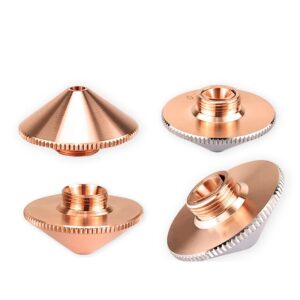
A primary concern in traditional metalworking is the generation of airborne particulate matter (PM). In Mendoza’s dry climate, the suspension of metallic dust poses a significant risk to both respiratory health and the longevity of sensitive industrial electronics. Laser processing mitigates this through Coaxial Extraction Systems. During the cutting process, high-pressure assist gases—typically Nitrogen or Oxygen—are delivered through the laser nozzle. These gases serve a dual purpose: they expel molten material from the kerf and act as a carrier for the vaporized metal.
Modern laser installations in Mendoza are equipped with high-efficiency particulate air (HEPA) filtration units integrated directly into the machine’s bed. These units capture 99.97% of particles as small as 0.3 microns. By containing the thermal byproduct within a closed-loop vacuum system, the facility maintains a clean-room standard environment. This dust-free operation is essential for the wine production industry, where piping systems must be fabricated in environments that prevent cross-contamination with organic products.
Material Integrity and the Heat Affected Zone
One of the critical technical advantages of using a laser for small diameter pipes is the minimization of the Heat Affected Zone (HAZ). When pipes are subjected to prolonged thermal exposure, the metallurgical properties of the material can change, leading to embrittlement or reduced corrosion resistance. Fiber lasers operate with high power density and high speed, which concentrates the energy in a localized area. This rapid cooling prevents significant grain growth in the metal’s microstructure.
In the context of Mendoza’s mining and irrigation sectors, the structural integrity of thin-walled pipes is paramount. The reduction of the HAZ ensures that the mechanical properties of the base metal remain intact. This is particularly vital for stainless steel 316L, commonly used in food processing, where maintaining the chromium oxide layer is necessary for corrosion prevention. Laser cutting preserves this layer more effectively than abrasive or high-heat plasma methods.
EHS Standards and ISO Compliance in Argentina
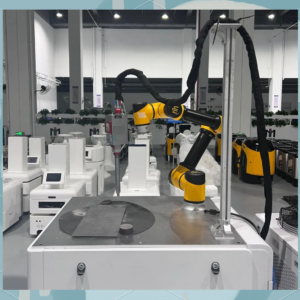
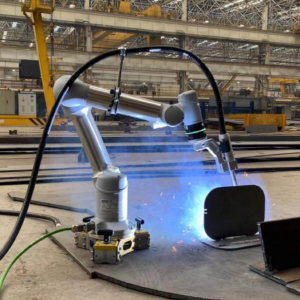
The adoption of laser technology directly supports ISO 45001 Compliance within the Argentinian industrial sector. This international standard for Occupational Health and Safety requires organizations to proactively reduce workplace hazards. Traditional pipe cutting involves high-decibel noise, vibration-related injuries (Hand-Arm Vibration Syndrome), and the risk of blade shattering. Laser systems automate the cutting process, removing the operator from the immediate vicinity of the cutting head.
Furthermore, the elimination of coolant fluids and grinding dust aligns with ISO 14001 environmental management standards. In Mendoza, where water conservation is a critical provincial priority, the dry-cutting nature of fiber lasers eliminates the production of hazardous sludge and contaminated wastewater. The automated collection of scrap metal also facilitates more efficient recycling streams, reducing the overall carbon footprint of the fabrication facility.
Operational Efficiency and ROI for Global Stakeholders
From a B2B perspective, the transition to laser technology in Mendoza offers a quantifiable Return on Investment (ROI). While the initial capital expenditure for a laser system is higher than for mechanical equipment, the operational costs are significantly lower. The absence of consumable blades, the reduction in energy consumption per cut, and the elimination of manual finishing labor contribute to a lower total cost of ownership. For global companies sourcing components from Argentinian suppliers, this technological adoption translates to higher quality consistency and shorter lead times.
The integration of CAD/CAM software allows for rapid prototyping and seamless transitions between different pipe specifications. This flexibility is essential for the bespoke requirements of the hydroelectric and geothermal projects currently expanding in the Andean region. The ability to produce complex assemblies with high repeatability ensures that Mendoza-based manufacturers remain competitive in the global supply chain.
Industry Insight: The Future of Automated Fabrication
The implementation of small diameter pipe laser technology in Mendoza represents a broader trend in South American industrialization: the shift toward “Industry 4.0” and the prioritization of EHS as a core business driver. As the global market moves toward zero-emission and zero-waste manufacturing, the reliance on traditional, high-pollution fabrication methods will become a liability. The future of the industry lies in the convergence of high-energy physics and automated filtration systems. By adopting dust-free laser operations, Mendoza is not only protecting its workforce and environment but is also establishing a technical benchmark for precision engineering in the Southern Hemisphere. This transition ensures that local infrastructure can meet the demands of the next century while adhering to the highest global safety and environmental standards.
Industrial Expertise & Support
Are you looking for high-performance Small Diameter Pipe Laser tailored for the Global market? Our engineering team provides comprehensive solutions for modern manufacturing.