Introduction: The Industrial Evolution of Precision Tube Processing in Lima
The manufacturing landscape in Lima, Peru, has transitioned from traditional mechanical fabrication to high-precision automated systems. As the primary industrial hub for the Andean region, Lima serves sectors ranging from medical device components to specialized automotive exhaust systems. Central to this evolution is the implementation of the Small Diameter Pipe Laser, a technology designed to handle profiles typically ranging from 10mm to 120mm in diameter. The integration of these machines into the local manufacturing framework is not merely a hardware upgrade; it represents a systemic shift toward digital connectivity, where Nesting Software and Enterprise Resource Planning (ERP) systems dictate the efficiency of the shop floor.
Technical Specifications of Small Diameter Pipe Laser Systems
Processing small-diameter tubes requires a different mechanical approach than large-scale structural steel. In Lima’s high-precision facilities, fiber laser sources—ranging from 1kW to 3kW—are the standard. These systems utilize high-speed rotary chucks capable of maintaining concentricity at high RPMs. Unlike larger pipes, small-diameter tubes are susceptible to vibration and deformation under clamping pressure. Consequently, these machines utilize pneumatic or electric servo-controlled chucks that provide precise pressure modulation to prevent wall thinning or surface marking.
The optical configuration often involves a 3D cutting head capable of +/- 45-degree tilting. This allows for complex beveling and weld preparation on intricate parts. In the context of Lima’s growing export market, meeting international tolerances (ISO 2768) is mandatory. The Fiber Laser Technology employed ensures a heat-affected zone (HAZ) that is significantly smaller than CO2 or plasma alternatives, preserving the metallurgical integrity of thin-walled stainless steel and aluminum alloys.
Nesting Software: Optimizing Material Utilization
The economic viability of laser cutting in Peru is heavily influenced by material costs, many of which are tied to global commodity prices and import logistics. Advanced Nesting Software serves as the mathematical engine that minimizes scrap. For small diameter pipes, nesting is not limited to simple linear arrangements. It involves complex algorithms that account for the “dead zone” of the chuck, the rotation speed of the workpiece, and the path optimization of the laser head.

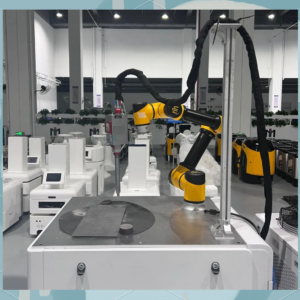
Industrial Application of Small Diameter Pipe Laser
Key features of modern nesting for pipe lasers include:
- Common Line Cutting: Sharing a single cut path between two adjacent parts to reduce cycle time and gas consumption.
- Automatic Micro-Jointing: Strategically placing small tabs to keep parts from falling into the machine bed, preventing damage to small, delicate components.
- Remnant Management: Tracking off-cuts within the software database to ensure that even short lengths of tube are utilized in future production runs.
ERP Integration and the Digital Thread
The true competitive advantage for a facility in Lima lies in ERP Integration. When the laser cutting machine is no longer an island of automation but a node in a connected network, the “Digital Thread” is established. This connectivity allows for real-time data exchange between the machine controller and the administrative office. When a sales order is entered into the ERP, the system can automatically query the nesting software for material requirements and machine availability.
In a technical environment, this integration utilizes protocols such as OPC-UA or MQTT to transmit machine states. Production managers can monitor “Time on Beam,” gas pressure levels, and power consumption remotely. This data-driven approach allows for accurate job costing, which is essential for B2B contract manufacturing. By eliminating manual data entry, the risk of human error in part specifications or material grades is virtually eradicated.
Challenges and Solutions in the Lima Manufacturing Sector
Implementing high-end Small Diameter Pipe Laser technology in Peru presents specific logistical challenges. Power stability and technical support are primary concerns. To mitigate these, modern installations include voltage stabilizers and dedicated fiber-optic connections for remote diagnostics. Furthermore, the localized workforce in Lima is increasingly being trained in CAD/CAM proficiency, bridging the gap between traditional metalworking and software engineering.
Another critical factor is the variety of materials processed. Lima’s industry often demands shifts between galvanized steel for construction components and high-grade stainless steel for the food processing industry. The software must be capable of storing distinct “cutting libraries” that automatically adjust feed rates, gas types (Nitrogen vs. Oxygen), and focal positions based on the material code provided by the ERP system.
The Role of Industry 4.0 in South American Logistics
As Lima positions itself as a gateway for Pacific trade, the adoption of Industry 4.0 principles becomes a necessity rather than an option. The connectivity between the shop floor and the supply chain ensures that lead times are predictable. For a global buyer sourcing parts from Peru, the ability to receive an automated report on production progress—generated directly from the laser’s CNC controller—provides a level of transparency that was previously unattainable.
The synchronization of nesting algorithms with inventory levels ensures that “Just-In-Time” (JIT) manufacturing is possible. This reduces the capital tied up in raw material storage, a significant factor for medium-sized enterprises in the Lima metropolitan area. The digital connectivity also enables predictive maintenance; the system can alert operators to replace nozzles or protective windows before a failure occurs, based on the actual hours of operation recorded by the software.
Concluding Industry Insight: The Future of Integrated Fabrication
The convergence of Small Diameter Pipe Laser hardware with sophisticated ERP and nesting ecosystems marks a point of no return for the Peruvian manufacturing sector. The future of the industry in Lima will not be defined by the raw power of the machines, but by the intelligence of the software governing them. As fiber laser efficiency continues to increase, the marginal gains will be found in the “soft” side of production: reducing the time from order to delivery through seamless digital workflows. For global partners, this means that Lima is evolving into a high-reliability hub capable of meeting the most stringent technical requirements of the aerospace, medical, and high-tech sectors. The digital connectivity currently being established will serve as the foundation for autonomous production cycles, where AI-driven nesting and real-time ERP adjustments become the standard operating procedure for the next generation of South American industry.
Industrial Expertise & Support
Are you looking for high-performance Small Diameter Pipe Laser tailored for the Global market? Our engineering team provides comprehensive solutions for modern manufacturing.