Precision Infrastructure Management: The Role of Small Diameter Pipe Laser Systems in Caracas
The modernization of subterranean infrastructure in Caracas, Venezuela, presents a unique set of engineering challenges. Characterized by a combination of high-density urban corridors and varying topographical elevations, the city’s utility networks require high-fidelity diagnostic tools for maintenance and expansion. The integration of the Small Diameter Pipe Laser into local municipal workflows marks a transition from reactive maintenance to proactive, data-driven management. These systems, designed for conduits ranging from 100mm to 300mm, provide the necessary spatial accuracy to ensure structural integrity in environments where manual inspection is physically impossible or economically unfeasible.
As Caracas seeks to stabilize its water and sewage distribution networks, the deployment of laser-based alignment and profiling tools has become a critical requirement. These devices utilize high-intensity diode technology to project a reference point or a circular profile onto the interior walls of a pipe. This allows for the detection of minute deformations, sediment accumulation, and joint misalignments. The technical shift currently underway involves the synchronization of these field-level hardware tools with remote cloud diagnostic platforms, enabling engineers located across the globe to analyze Caracas’s infrastructure in real-time.
Technical Specifications and Hardware Architecture
The hardware utilized in the Caracas metropolitan region must adhere to stringent IP68 ingress protection standards due to the high humidity and potential for total submersion in drainage systems. A standard Small Diameter Pipe Laser employed in these operations typically features a nitrogen-purged aluminum housing to prevent internal condensation, which can refract the laser beam and lead to data inaccuracies. The optical assembly usually consists of aspheric collimating lenses designed to maintain beam coherence over distances exceeding 150 meters, even in the presence of airborne particulates common in aging concrete pipes.
Grade stability is maintained through electronic self-leveling mechanisms that utilize dual-axis encoders. In the context of Caracas’s steep terrain, the ability of the laser to compensate for a grade range of -15% to +40% is essential. The precision of these units is often measured in arc-seconds, ensuring that over a long-distance run, the cumulative error remains within the sub-millimeter range. This level of accuracy is the baseline requirement for the subsequent phase of the diagnostic process: data digitization and cloud uplink.

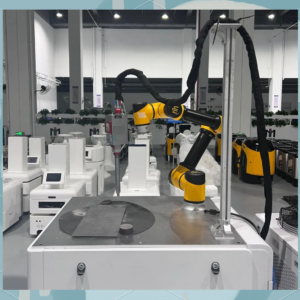
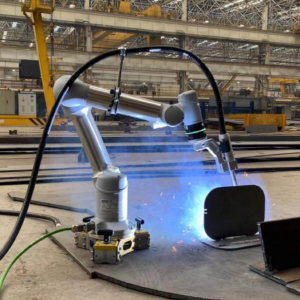
Industrial Application of Small Diameter Pipe Laser
Remote Cloud Diagnostics and Data Transmission Protocols
The transition from a simple visual reference to a diagnostic data point is facilitated by the integration of the MQTT protocol for lightweight data transmission. In regions where bandwidth may be inconsistent, such as certain industrial zones in the Miranda state, MQTT allows for the efficient transfer of telemetry data from the pipe laser’s control unit to a centralized cloud server. This data includes real-time grade readings, battery thermal cycles, and tilt-sensor feedback.
Remote cloud diagnostics involve the processing of these telemetry streams through algorithmic models that compare field data against the original “as-built” CAD specifications of the city’s network. When a Small Diameter Pipe Laser identifies a deviation in the pipe’s slope or a structural eccentricity, the cloud platform triggers an automated diagnostic report. This report is accessible to stakeholders via a secure web interface, allowing international consultancy firms to provide technical oversight without the need for on-site presence. This remote capability is particularly valuable for Caracas, as it bridges the gap between local field execution and global engineering expertise.
Scaling Diagnostics Across Vast Regions
The application of these technologies extends beyond the urban center of Caracas into the vast industrial and residential outskirts. Managing infrastructure across these distances requires a decentralized hardware deployment coupled with a centralized data repository. By utilizing a network of laser units equipped with cellular or satellite gateways, the diagnostic reach is expanded to cover the entire Guaire River basin and its associated tributaries.
The scalability of this system relies on Lidar-integrated photogrammetry, where the laser serves as the primary spatial reference for high-resolution cameras. As the laser defines the center line and grade, the camera captures the interior surface of the pipe. The resulting data is fused in the cloud to create a digital twin of the subterranean asset. For vast regions, this digital twin approach allows for “virtual walk-throughs” by maintenance teams, significantly reducing the time required for damage assessment and resource allocation.
Operational Efficiency and Risk Mitigation
Implementing laser-guided diagnostics in Caracas provides a quantifiable reduction in operational risk. Traditional methods often involved significant excavation to locate blockages or structural failures. With the precision of a Small Diameter Pipe Laser, the exact coordinate of a fault can be identified from within the pipe. This allows for “trenchless” repair techniques or targeted excavation, minimizing the disruption to the city’s surface-level traffic and economic activity.
Furthermore, the cloud-based nature of the diagnostics ensures a permanent historical record of the infrastructure’s condition. This longitudinal data is critical for predicting the remaining useful life (RUL) of the pipes. By analyzing the rate of structural shift or sediment buildup over several years, municipal planners can optimize their capital expenditure, prioritizing the most critical sections of the network for replacement before a catastrophic failure occurs.
Concluding Industry Insight: The Future of Distributed Infrastructure Intelligence
The deployment of small-diameter laser systems in Caracas is a microcosm of a larger global trend: the move toward distributed infrastructure intelligence. In the coming decade, the value of hardware will not be measured solely by its mechanical precision, but by its ability to function as an edge-computing node within a wider diagnostic ecosystem. For South American urban centers, the adoption of these technologies represents a leapfrog opportunity. By bypassing the incremental steps of traditional surveying and moving directly to cloud-integrated laser diagnostics, cities can manage vast, complex regions with a level of efficiency previously reserved for the world’s most advanced smart cities.
The integration of the Small Diameter Pipe Laser with remote cloud diagnostics demonstrates that geographical and economic barriers to infrastructure maintenance can be overcome through high-precision instrumentation and robust data protocols. As these systems become more autonomous, we expect to see the emergence of self-diagnosing pipe networks where the hardware remains permanently stationed within the conduit, providing a continuous pulse of the city’s subterranean health. This evolution will fundamentally redefine the role of the municipal engineer from a field surveyor to a data analyst, ensuring the long-term sustainability of urban environments in challenging geopolitical landscapes.
Industrial Expertise & Support
Are you looking for high-performance Small Diameter Pipe Laser tailored for the Global market? Our engineering team provides comprehensive solutions for modern manufacturing.