Precision Engineering and Safety Integration: Small Diameter Pipe Laser Systems in Caracas
The industrial landscape in Caracas, Venezuela, is currently undergoing a technical transition as manufacturers seek to modernize fabrication capabilities within the automotive, medical, and specialized furniture sectors. Central to this evolution is the deployment of the Small Diameter Pipe Laser, a high-precision fiber laser system designed specifically for the processing of tubes ranging from 10mm to 120mm in diameter. As these systems are integrated into Venezuelan production lines, the emphasis on international safety benchmarks—specifically CE (Conformité Européenne) and NR-12 (Norma Regulamentadora 12)—has become a non-negotiable requirement for operational viability and risk mitigation.
The adoption of fiber laser technology for small-bore piping represents a shift from traditional mechanical sawing and plasma cutting toward high-speed, non-contact thermal processing. In the context of the Caracas industrial corridor, where material costs and energy efficiency are critical variables, the ability to achieve micron-level accuracy without the need for secondary finishing processes is a significant technical advantage. However, the high power density of these lasers necessitates a rigorous adherence to safety protocols to protect operators and maintain structural integrity under continuous duty cycles.
Technical Specifications of Small Diameter Laser Processing
Processing small diameter pipes requires specialized motion control and beam delivery systems that differ significantly from standard tube lasers. The Fiber Laser Resonator utilized in these machines typically operates at a wavelength of 1.06 microns, allowing for high absorption rates in reflective materials such as stainless steel, aluminum, and brass. Because small diameter tubes have lower structural rigidity, the machine’s chucking system must exert precise pneumatic pressure to prevent deformation while maintaining high rotational speeds.
In Caracas, where manufacturing facilities often deal with variable power grid stability, these laser systems are frequently equipped with voltage stabilizers and industrial chillers to maintain the thermal equilibrium of the laser source. The integration of high-speed linear motors allows for accelerations exceeding 1.2G, which is essential for maintaining throughput when cutting complex geometries or micro-perforations in thin-walled tubing. The technical challenge lies in balancing these high-speed dynamics with the safety constraints mandated by international regulatory bodies.
CE Compliance: The European Standard in the Venezuelan Market
For a Small Diameter Pipe Laser to be considered compliant for global trade and safe operation in Venezuela, it must adhere to the CE Machinery Directive 2006/42/EC. This certification ensures that the equipment meets essential health and safety requirements regarding design and construction. Key components of CE compliance for laser machinery include electromagnetic compatibility (EMC) and low voltage directives, which prevent the machine from interfering with other electronic infrastructure within the facility.

Industrial Application of Small Diameter Pipe Laser
Furthermore, CE standards dictate the implementation of Class 1 laser housing. This means the cutting area must be fully enclosed with laser-safe viewing glass (certified to EN 207/EN 208) to prevent the escape of scattered radiation. For manufacturers in Caracas, procuring CE-certified machinery is a strategy to ensure that the equipment possesses a documented safety file, including comprehensive risk assessments and technical construction files that facilitate long-term maintenance and insurance compliance.
NR-12 Safety Standards: Rigorous Operator Protection
While CE is a broad international benchmark, the NR-12 standard—originally a Brazilian regulatory framework—has become a significant influence on machinery safety across South America, including Venezuela. NR-12 focuses heavily on the physical and operational safety of the worker, requiring redundant safety circuits and fail-safe mechanisms. For a Small Diameter Pipe Laser, NR-12 compliance involves the installation of safety light curtains, emergency stop buttons at all operator stations, and interlocked access doors that immediately kill the power to the laser source and motion system if breached.
A critical aspect of NR-12 is the Safety Integrity Level (SIL) of the control system. The machinery must utilize safety-rated PLCs (Programmable Logic Controllers) that monitor the status of all sensors and actuators. In the event of a component failure, the system must default to a “safe state,” preventing unintended restarts. In the industrial zones of Caracas, implementing NR-12 compliant machinery reduces the incidence of workplace injuries and aligns local production standards with those of major regional trading partners, particularly in the MERCOSUR block.
Material Handling and Fume Extraction Challenges
The thermal process of laser cutting, particularly when involving Galvanized Steel Processing, releases hazardous particulate matter and gases. In an enclosed Caracas facility, the integration of a high-capacity fume extraction and filtration system is a technical necessity. To meet both CE and NR-12 standards, these extraction systems must be synchronized with the laser’s operation. If the airflow drops below a specific threshold, the laser must cease operation to prevent the accumulation of toxic fumes or combustible dust.
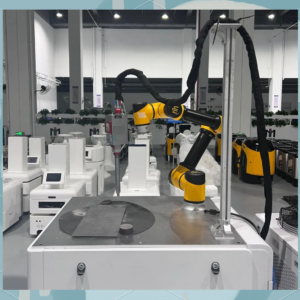
Furthermore, the automated loading systems used for small diameter pipes must be guarded to prevent crush hazards. Small pipes are often loaded in bundles; the mechanical arms and conveyors that move these pipes into the chuck must be equipped with pressure-sensitive mats or laser scanners that detect human presence within the motion envelope. This level of automation, when properly guarded, allows Venezuelan manufacturers to operate 24/7 cycles with minimal risk of mechanical interference or operator error.
Conclusion: Industry Insight on Safety-Driven Productivity
The convergence of advanced laser technology and stringent safety compliance is redefining the manufacturing potential in Caracas. While the initial capital expenditure for a CE and NR-12 compliant Small Diameter Pipe Laser may be higher than non-certified alternatives, the long-term ROI (Return on Investment) is realized through decreased downtime, lower insurance premiums, and the ability to compete in global supply chains. The technical trend in South America is moving toward “Safety-First Automation,” where the intelligence of the machine is judged not just by its cutting speed, but by its ability to self-diagnose safety risks and protect the human element of the production line.
As the Venezuelan industrial sector continues to stabilize and seek export opportunities, the reliance on standardized safety protocols will be the differentiator between localized workshops and world-class manufacturing hubs. The integration of high-precision fiber lasers, backed by rigorous safety engineering, provides the technical foundation necessary for Caracas to reclaim its position as a center for high-value metal fabrication in the Andean region. Future developments will likely see further integration of IoT (Internet of Things) monitoring, where safety compliance data is streamed in real-time to ensure that every cut made is both precise and performed within the highest parameters of industrial security.
Industrial Expertise & Support
Are you looking for high-performance Small Diameter Pipe Laser tailored for the Global market? Our engineering team provides comprehensive solutions for modern manufacturing.