Introduction to Precision Pipe Alignment in Volatile Power Environments
The rehabilitation and expansion of subterranean utility networks in Caracas, Venezuela, present a unique set of engineering challenges. As the city seeks to modernize its aging sewage and drainage systems, the demand for high-precision alignment tools has increased. Central to these operations is the Small Diameter Pipe Laser, a tool engineered to provide millimeter-accurate grade and line control within confined conduits. However, the operational efficacy of these sensitive optical instruments is frequently compromised by the local electrical infrastructure. In Caracas, power grid instability—characterized by frequent voltage fluctuations and harmonic distortions—necessitates a sophisticated approach to power management within the hardware itself.
For global contractors and engineering firms operating in South American urban centers, the integration of built-in voltage regulation is no longer an optional feature but a technical prerequisite. This article examines the mechanical and electronic architecture required to maintain laser diode consistency and microprocessor integrity when faced with an unreliable primary power source.
The Impact of Grid Instability on Laser Diode Performance
The core component of any pipe laser is the laser diode. These components are highly sensitive to thermal shifts and electrical transients. In Caracas, the municipal grid often experiences “brownouts” (under-voltage) and sudden “surges” (over-voltage) that can exceed the standard 110V/220V tolerances by significant margins. Without robust internal regulation, these fluctuations lead to direct variations in the laser’s output intensity and, more critically, its beam divergence.
When the input voltage drops, the internal circuitry of a standard laser may struggle to maintain the required forward current for the diode. This results in a “dimming” effect that reduces the visible range of the beam within the pipe, hindering the ability of the pipe-laying crew to verify alignment over long distances. Conversely, voltage spikes can cause catastrophic failure of the semiconductor material or lead to “mode hopping,” where the laser’s wavelength shifts slightly, affecting the accuracy of the receiver sensors at the target end.
Implementing Automatic Voltage Regulation (AVR) in Pipe Lasers
To mitigate the risks associated with the Caracas power grid, modern Small Diameter Pipe Laser units are now equipped with Automatic Voltage Regulation (AVR). This internal subsystem acts as a buffer between the raw input power (whether sourced from a portable generator or a direct grid connection) and the sensitive internal electronics. The technical objective of the AVR is to deliver a constant, ripple-free DC voltage to the control board.

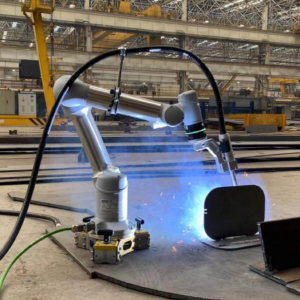
Industrial Application of Small Diameter Pipe Laser
The regulation process typically involves a multi-stage filtering architecture. First, an electromagnetic interference (EMI) filter removes high-frequency noise from the line. Following this, a wide-input switch-mode power supply (SMPS) converts the AC input to DC. High-end SMPS units used in these lasers are designed to accept a broad range of input voltages—often from 90V to 260V AC—without affecting the output. This wide-range capability is essential for Caracas, where the nominal voltage may sag significantly during peak demand hours.
Thermal Management and Microprocessor Stability
Voltage regulation is intrinsically linked to thermal management. In the tropical climate of Caracas, ambient temperatures often exceed 30 degrees Celsius. When an internal voltage regulator works to dissipate excess energy from a surge, it generates heat. If not managed, this heat can cause the laser’s internal chassis to expand, leading to a physical shift in the optical bench—a phenomenon known as thermal drift.
Engineers address this by utilizing high-efficiency DC-DC converters that minimize heat dissipation. Furthermore, the Microprocessor Control Systems within the laser are programmed to monitor both input voltage and internal temperature in real-time. If the grid instability exceeds the regulator’s ability to compensate, the system triggers a “safe-state” shutdown. This prevents the tool from projecting an inaccurate beam that could lead to costly errors in pipe grading, which are difficult to rectify once the trench is backfilled.
The Role of Integrated Battery Buffering
In addition to active regulation, the incorporation of high-density Lithium-Ion (Li-ion) battery buffers provides a secondary layer of protection against grid instability. In the Caracas context, the grid often suffers from momentary interruptions or “flickers.” A laser relying solely on a direct power feed would reset during these events, requiring a recalibration of the self-leveling mechanism and a loss of productive time.
By utilizing an “online” battery configuration, the Small Diameter Pipe Laser effectively operates off the battery at all times, while the grid connection serves only to trickle-charge the cells. This architecture ensures that the laser’s Laser Diode Stability is never compromised by external power events. The battery acts as a massive capacitor, smoothing out any remaining transients that the AVR might not fully suppress. This is particularly vital for microtunneling projects in the Libertador or Chacao districts, where continuous operation is required for structural integrity during the boring process.
Technical Specifications for Global Procurement
For procurement officers and project managers, identifying the correct technical specifications for equipment destined for Caracas is critical. The following parameters should be prioritized when selecting pipe laser hardware for regions with unstable grids:
1. Input Voltage Tolerance
Equipment must specify a wide-input range (e.g., 100-240V AC) rather than a fixed voltage. This ensures compatibility with both the standard grid and the varied outputs of onsite diesel generators.
2. Surge Suppression Rating
Internal components should include Metal Oxide Varistors (MOVs) rated for high-joule absorption to protect against the lightning strikes and transformer failures common in the Venezuelan rainy season.
3. IP68 Ingress Protection
While not directly related to voltage, the humidity and potential for flooding in Caracas trenches mean that the electronic housing must be hermetically sealed to prevent moisture from causing short circuits in the regulation board.
Concluding Industry Insight: The Future of Ruggedized Infrastructure Tools
The deployment of Small Diameter Pipe Laser technology in Caracas serves as a case study for the broader trend toward “ruggedized” precision electronics in developing markets. As global infrastructure demand shifts toward regions with less reliable utility frameworks, the burden of stability is moving from the grid to the device. We are seeing a convergence of aerospace-grade power management and heavy-duty construction equipment.
The industry is moving toward a standard where “precision” and “durability” are no longer viewed as competing interests. In the coming decade, we expect to see the integration of AI-driven power diagnostics within these tools, allowing them to predict grid failure and adjust power consumption profiles autonomously. For the engineering sector in Caracas, investing in hardware with built-in voltage regulation is not merely a safeguard against equipment damage; it is a fundamental strategy for ensuring the structural accuracy and longevity of the city’s critical water and waste management systems. The ability to maintain a sub-arc-second level of accuracy in an electrically “noisy” environment remains the ultimate benchmark for modern optical surveying instrumentation.
Industrial Expertise & Support
Are you looking for high-performance Small Diameter Pipe Laser tailored for the Global market? Our engineering team provides comprehensive solutions for modern manufacturing.