Strategic Integration of Small Diameter Pipe Laser Technology in Callao’s Industrial Sector
The industrial landscape of Callao, Peru, is undergoing a significant transition from traditional mechanical fabrication to high-precision automated systems. As the primary maritime gateway for the Andean region, Callao’s industrial parks—particularly those in the Oquendo and Gambetta zones—serve as critical hubs for logistics, maritime repair, and metal-mechanical manufacturing. Within these sectors, the demand for precision tubular components has surged, driven by the expansion of infrastructure and the modernization of fishing vessel fleets. The implementation of a Small Diameter Pipe Laser system represents a fundamental shift in how local enterprises manage throughput and material yield.
For global investors and local stakeholders, the decision to integrate laser tube cutting technology is no longer based on speculative advantages but on quantifiable Return on Investment (ROI). Traditional methods involving band saws, cold saws, and manual drilling frequently result in significant dimensional variances and high labor costs per unit. By contrast, fiber laser systems designed specifically for small diameters (typically ranging from 10mm to 120mm) offer a level of repeatability and speed that aligns with international ISO standards for precision engineering.
Technical Parameters and Operational Efficiency
The technical superiority of a Small Diameter Pipe Laser lies in its ability to consolidate multiple fabrication steps into a single automated process. In the context of Callao’s industrial parks, where space and energy costs are primary considerations, the compact footprint of these machines provides a high ratio of output per square meter. These systems utilize a Fiber Laser Resonator, which operates at a wavelength that is highly absorbed by common industrial metals such as carbon steel, stainless steel, and aluminum.

Industrial Application of Small Diameter Pipe Laser
One of the most critical technical advantages is the reduction of the Heat-Affected Zone (HAZ). Traditional thermal cutting methods, such as plasma, introduce excessive heat into the substrate, altering the metallurgical properties of the pipe. For small diameter applications—often used in high-pressure hydraulic lines or structural scaffolding—maintaining the integrity of the base metal is paramount. Fiber laser technology ensures a narrow kerf width and minimal heat dissipation, which eliminates the need for secondary grinding or edge preparation before welding.
Quantifying ROI: Material Utilization and Labor Reduction
In the competitive manufacturing environment of Callao, profit margins are often dictated by material waste management. Advanced laser systems utilize sophisticated nesting software that optimizes the layout of parts on a single length of pipe. This precision reduces “remnant” waste by up to 15% compared to manual sawing. When calculated over an annual production cycle involving thousands of tons of steel, the savings in raw material alone can facilitate a machine payback period of less than 24 months.
Furthermore, the integration of Automated Bundle Loading systems significantly reduces labor overhead. In a traditional fabrication shop, the process of measuring, marking, cutting, and deburring requires multiple skilled technicians. A laser system automates these variables. A single operator can oversee the production of complex geometries—including miters, saddles, and intricate slot-and-tab assemblies—that would be impossible or prohibitively expensive to produce manually. This transition allows local firms to reallocate human capital toward higher-value tasks such as design engineering and quality assurance.
Logistical Advantages of the Callao Location
Callao’s proximity to the Jorge Chávez International Airport and the Port of Callao provides a unique logistical advantage for firms operating Small Diameter Pipe Laser equipment. The ability to import specialized spare parts and high-purity assist gases (such as Nitrogen or Oxygen) with minimal lead times ensures high machine uptime. For global B2B partners, sourcing components from Callao-based fabricators becomes more attractive due to the reduced lead times enabled by high-speed laser processing.
Industrial parks in this region are increasingly adopting “Just-In-Time” (JIT) manufacturing protocols. The agility of fiber laser technology allows for rapid prototyping and short-run production without the need for expensive tooling changes. This flexibility is essential for the maritime repair sector in Callao, where bespoke tubular components for vessel piping systems must be produced with extreme accuracy to meet classification society requirements.
Energy Consumption and Sustainability Metrics
From a technical standpoint, fiber laser systems are significantly more energy-efficient than their CO2 predecessors. A 2kW fiber laser consumes approximately 70% less electricity than a CO2 laser of equivalent power. In Peru, where industrial electricity tariffs are a significant operational expense, this reduction in power consumption directly enhances the bottom line. Additionally, the lack of moving parts in the fiber resonator reduces maintenance intervals and the consumption of replacement optics, further lowering the Total Cost of Ownership (TCO).
Sustainability is also becoming a requirement for B2B contracts within the global supply chain. By reducing scrap metal and lowering the carbon footprint associated with high-energy manufacturing, Callao’s industrial parks can position themselves as environmentally responsible nodes within the global manufacturing network. This alignment with Environmental, Social, and Governance (ESG) criteria is increasingly influential in securing long-term contracts with multinational corporations.
Concluding Industry Insight: The Future of Andean Fabrication
The deployment of Small Diameter Pipe Laser technology in Callao is a microcosm of a broader trend toward “Industry 4.0” in Latin America. The data-driven nature of these machines—capable of providing real-time telemetry on cutting speeds, gas consumption, and part counts—allows management to move from reactive to predictive operational models. As the industrial parks of Callao continue to mature, the gap between traditional fabricators and those utilizing automated laser technology will widen.
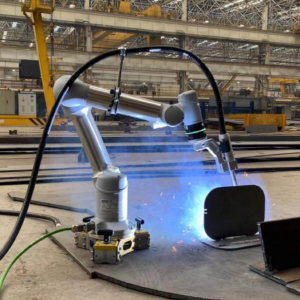
The primary insight for the global B2B market is that Callao is no longer merely a transit point for raw commodities. It is evolving into a sophisticated fabrication center capable of meeting stringent technical specifications for the automotive, aerospace, and energy sectors. The proven ROI of laser technology in this region suggests that future capital investments will likely focus on further automation, including robotic sorting and integrated welding cells. For organizations looking to localize production in South America, Callao’s tech-enabled industrial parks offer a robust, high-precision alternative to traditional manufacturing hubs.
Industrial Expertise & Support
Are you looking for high-performance Small Diameter Pipe Laser tailored for the Global market? Our engineering team provides comprehensive solutions for modern manufacturing.