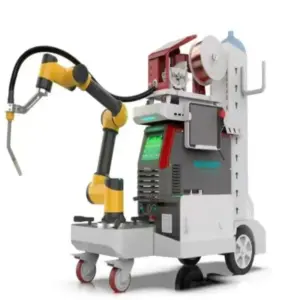
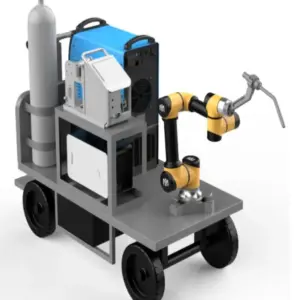
Introduction: The Industrial Evolution of Callao’s Infrastructure
Callao, serving as Peru’s primary maritime gateway and a critical industrial hub, is currently undergoing a significant shift in its mechanical and civil engineering protocols. As the port city expands its liquid bulk terminals and chemical processing facilities, the demand for high-precision piping systems has surged. Traditional methods of pipe fabrication and alignment, often involving mechanical sawing or manual abrasive cutting, are increasingly viewed as incompatible with modern Environment, Health, and Safety (EHS) standards. The introduction of the Small Diameter Pipe Laser into the Callao industrial corridor represents a pivot toward automated, high-precision, and, crucially, dust-free operations. This technical transition is not merely a matter of efficiency but a response to stringent international regulatory frameworks regarding air quality and worker exposure in confined industrial zones.
The Mechanics of Dust-Free Laser Operations
In the context of small diameter piping—typically ranging from 50mm to 300mm in nominal bore—the management of byproduct particulate is a primary technical challenge. Conventional mechanical cutting generates significant volumes of coarse and fine dust, including crystalline silica and metallic swarf, which can remain suspended in the air for extended periods. In contrast, modern laser systems utilized in Callao employ high-energy density beams to sublimate or melt the material at the kerf.
The “dust-free” designation of these operations is achieved through integrated HEPA-filtered extraction systems. These units are synchronized with the laser head, creating a high-velocity vacuum zone at the point of incision. By capturing 99.97% of particulates at the source, the system prevents the migration of particulate matter (PM2.5) into the broader workshop or job site environment. This is particularly critical in Callao’s high-humidity coastal climate, where airborne dust can quickly combine with moisture to form corrosive pastes on sensitive electronic equipment and infrastructure.
Precision Engineering for Small Diameter Specifications
Small diameter pipes require a higher degree of accuracy due to the tighter tolerances of the fittings and the often-complex geometries of the fluid transport systems they comprise. Traditional tools often struggle with “pipe walk” or thermal distortion during the cutting process. The Small Diameter Pipe Laser utilizes a non-contact process, which eliminates mechanical stress on the workpiece.
Technical parameters for these systems in Callao’s industrial sector typically involve fiber laser sources with power outputs ranging from 1kW to 3kW. This power range is optimized for wall thicknesses common in stainless steel and carbon steel piping used in maritime fuel lines. The laser’s ability to execute 3D profiling allows for complex saddle cuts and miters that require zero secondary grinding. By eliminating the grinding phase, the operation further reduces the EHS risk profile, as grinding is historically the highest contributor to noise pollution and fine metallic dust inhalation in pipe fabrication.
EHS Compliance and Worker Safety Standards
The adoption of laser technology in Callao is heavily driven by the need to meet ISO 45001 (Occupational Health and Safety) and ISO 14001 (Environmental Management) standards. In a port environment where multiple contractors operate in proximity, the containment of industrial byproducts is a legal and operational necessity.

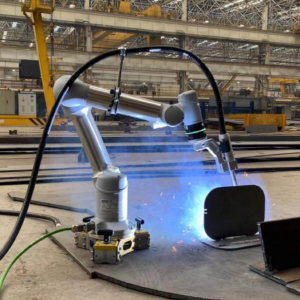
Industrial Application of Small Diameter Pipe Laser
Mitigation of Respiratory Hazards
The primary EHS benefit of the laser profiling process is the drastic reduction in Respirable Crystalline Silica (RCS) and metallic fumes. In enclosed or semi-enclosed spaces—common in Callao’s warehouse-style fabrication shops—traditional cutting methods require heavy-duty local exhaust ventilation (LEV) and high-level respiratory protective equipment (RPE). Laser systems with integrated extraction reduce the reliance on RPE, lowering the physiological strain on technicians and reducing the margin for human error in safety compliance.
Noise Reduction and Ergonomics
Mechanical cutting and grinding frequently exceed the 85dB(A) threshold, requiring rigorous hearing conservation programs. Laser cutting is significantly quieter, operating primarily through the hiss of assist gases (Oxygen or Nitrogen). Furthermore, the automation of the pipe rotation and cutting process reduces manual handling risks, such as musculoskeletal disorders (MSDs) associated with maneuvering heavy manual cutting tools around fixed pipework.
Operational Efficiency in the Callao Logistics Hub
From a B2B perspective, the deployment of laser technology offers a quantifiable Return on Investment (ROI) through the compression of project timelines. In Callao’s competitive bidding environment for maritime and petrochemical contracts, the ability to deliver “ready-to-weld” components is a significant advantage.
1. Reduced Secondary Processing: Because the laser produces a clean, dross-free edge, the time usually spent on deburring and cleaning is eliminated.
2. Material Optimization: Advanced nesting software used in laser systems minimizes scrap rates, a critical factor given the fluctuating costs of imported alloys in the Peruvian market.
3. Consistency: Automated Small Diameter Pipe Laser systems ensure that the first cut and the thousandth cut are identical, which is essential for large-scale infrastructure projects requiring modular assembly.
Integration with Local Regulatory Frameworks
The Peruvian Ministry of the Environment (MINAM) has been tightening regulations regarding industrial emissions in the Lima and Callao metropolitan areas. Companies utilizing dust-free laser technology find themselves at a regulatory advantage during environmental audits. The ability to provide data logs from extraction systems, proving the containment of particulates, simplifies the permitting process for new industrial installations. Furthermore, the reduction in hazardous waste—specifically the lack of “sludge” produced by wet-cutting systems—lowers the cost of industrial waste disposal and remediation.
Concluding Industry Insight: The Future of Precision Fabrication
The transition to dust-free, laser-based pipe fabrication in Callao is indicative of a broader global trend toward “Clean Manufacturing.” As industrial hubs become more integrated with urban environments, the “invisible” footprint of a project—its noise, air quality impact, and waste stream—becomes as important as its structural integrity.
In the coming decade, we expect the integration of AI-driven diagnostics within these laser systems to further refine the EHS landscape. Real-time air quality sensors will likely be linked directly to the laser’s duty cycle, ensuring that operation only occurs when extraction efficiency is at 100%. For contractors and stakeholders in Callao, investing in small diameter laser technology is no longer an optional upgrade for high-end projects; it is becoming the baseline requirement for participation in the modern global supply chain. The convergence of precision engineering and rigorous EHS standards is redefining the technical identity of Peru’s primary industrial port, moving it away from legacy mechanical methods toward a digitized, sustainable future.
Industrial Expertise & Support
Are you looking for high-performance Small Diameter Pipe Laser tailored for the Global market? Our engineering team provides comprehensive solutions for modern manufacturing.