Introduction: The Strategic Industrial Shift in Callao
Callao, Peru, serves as a primary maritime and industrial gateway, positioning itself as a critical node for South American manufacturing and logistics. As the region transitions toward high-value engineering sectors, the demand for precision processing of non-ferrous metals has intensified. Specifically, the integration of Small Diameter Pipe Laser systems has become a focal point for industries ranging from HVAC manufacturing to maritime heat exchanger production. The primary technical hurdle in these applications involves the high reflectivity of materials such as copper and aluminum. Standard laser systems often suffer from catastrophic failure due to back-reflection, necessitating the deployment of advanced anti-reflection technology. This article examines the technical architecture of these systems and their specific implementation within the industrial landscape of Callao.
The Physics of Reflectivity in Non-Ferrous Metal Processing
Copper and aluminum are characterized by high thermal conductivity and low absorption rates at the standard 1064nm wavelength of most fiber lasers. In its solid state, copper can reflect over 90% of incident infrared laser energy. This physical property presents two significant challenges: inefficient energy coupling and the risk of back-reflection. When a laser beam is directed at a highly reflective surface, the unabsorbed photons can travel back through the delivery fiber into the resonator, causing thermal damage to the optical components and sensitive diode modules.
In the industrial zones surrounding the Port of Callao, where precision piping is essential for marine and electrical infrastructure, the adoption of back-reflection protection mechanisms is mandatory. These systems utilize optical isolators and real-time monitoring sensors that detect reflected light within the beam delivery path. If the reflected energy exceeds a specific threshold, the system modulates the power or shuts down the beam within microseconds to prevent hardware degradation. This technical safeguard allows for the continuous processing of C10100 oxygen-free copper and 6061 aluminum alloys without compromising the longevity of the laser source.
Technical Specifications of Small Diameter Pipe Laser Systems
Processing small diameter pipes (typically ranging from 10mm to 50mm) requires a different kinematic approach than standard flat-sheet or large-scale tube cutting. The Small Diameter Pipe Laser systems deployed in Callao utilize high-speed rotary chucks capable of maintaining concentricity at high RPMs. Because the mass of the workpiece is relatively low, the system can achieve higher acceleration rates, which is critical for maintaining a consistent Heat Affected Zone (HAZ).

Industrial Application of Small Diameter Pipe Laser
Key technical parameters for these systems include:
1. Beam Quality (M2): A low M2 factor (typically < 1.1) is essential for focusing the beam to a spot size small enough to achieve high power density. This is particularly important for copper, where the initial "pierce" requires a rapid transition from solid to liquid state to increase the absorption rate.
2. Pulse Modulation: Advanced CNC controllers allow for precise pulse shaping. By delivering a high-peak power pulse followed by a lower-power sustain, the system can initiate the melt on reflective surfaces while minimizing the total heat input, preventing the deformation of thin-walled small diameter pipes.
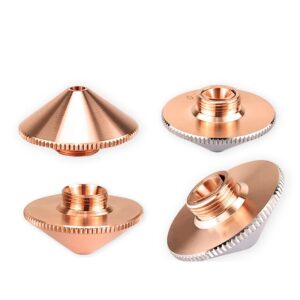
3. Gas Dynamics: The use of high-pressure oxygen or nitrogen as an assist gas is optimized through specialized nozzles. In copper cutting, oxygen can facilitate an exothermic reaction that assists the laser, while nitrogen is preferred for aluminum to ensure a dross-free, oxide-free edge finish.
Integration of Optical Isolation and Beam Shaping
The core of modern non-ferrous metal processing in Peru’s industrial sector is the implementation of beam-shaping technology. To mitigate the risks of reflection, manufacturers are utilizing “ring-mode” or “adjustable beam profile” lasers. These systems distribute energy across a central core and an outer ring. When cutting aluminum, the outer ring pre-heats the material, significantly reducing its reflectivity before the central core performs the actual kerf removal.
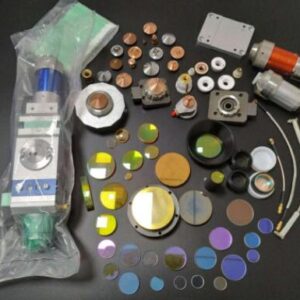
Furthermore, the optical isolation hardware integrated into these lasers functions as a one-way valve for photons. This is achieved through the Faraday effect, where a magneto-optical crystal rotates the polarization of the light. Any light reflected back from the copper pipe is shifted into a different polarization state and diverted into a water-cooled beam dump. This allows operators in Callao to maintain 24/7 production cycles on materials that were previously considered “un-cuttable” by standard fiber laser technology.
Operational Impact on Callao’s Manufacturing Sector
The implementation of these specialized laser systems has direct economic and technical implications for the Callao region. In the maritime industry, the ability to rapidly produce copper-nickel (CuNi) piping for desalination and cooling systems reduces the reliance on imported pre-fabricated components. The precision of laser cutting eliminates the need for secondary finishing processes such as deburring or grinding, which are common with mechanical sawing or plasma cutting.
In the electrical sector, small diameter aluminum conduits and copper busbar tubes require precise geometry for high-conductivity connections. The laser’s ability to execute complex notch, hole, and miter cuts on a single platform increases throughput. The data-driven nature of these machines also allows for seamless integration with ERP systems, providing local manufacturers with real-time metrics on material utilization and cycle times, thereby reducing scrap rates in high-cost materials like copper.
Concluding Industry Insight: The Future of Laser Processing in South America
The deployment of anti-reflection laser technology in Callao represents a broader trend in global manufacturing: the move toward material-specific optimization. As global supply chains prioritize localized production, hubs like Callao must adopt technologies that handle the specific challenges of non-ferrous metals. The evolution of fiber lasers from general-purpose tools to specialized instruments equipped with sophisticated optical isolation and beam-shaping capabilities is no longer an optional upgrade but a baseline requirement for competitiveness.
Looking forward, the integration of Artificial Intelligence (AI) in monitoring back-reflection patterns will likely allow for autonomous adjustment of cutting parameters in real-time. This will further reduce the barrier to entry for processing exotic alloys and highly reflective metals. For the industrial landscape in Peru, the continued investment in high-spec laser infrastructure will be the deciding factor in transitioning from a logistics-heavy economy to a high-precision manufacturing powerhouse. The synergy between robust hardware and advanced optical physics ensures that the challenges of reflectivity are effectively neutralized, paving the way for a new era of metallurgical precision.
Industrial Expertise & Support
Are you looking for high-performance Small Diameter Pipe Laser tailored for the Global market? Our engineering team provides comprehensive solutions for modern manufacturing.