Industrial Transformation in Buenos Aires: High-Precision Tube Fabrication
The manufacturing sector in Buenos Aires, Argentina, has historically served as a critical hub for automotive, aerospace, and medical device components within the Southern Cone. However, traditional fabrication methods for small-diameter tubing—defined as diameters ranging from 10mm to 50mm—have long been plagued by extensive lead times and high scrap rates. Until recently, a standard production cycle for a complex batch of processed tubes averaged 72 hours. This duration included manual cutting, secondary drilling operations, deburring, and internal logistics between workstations.
The introduction of specialized Small Diameter Pipe Laser technology has fundamentally restructured these operational workflows. By consolidating multiple mechanical processes into a single automated sequence, manufacturers in the region have successfully compressed the 72-hour cycle into a 3-hour window. This 95.8 percent reduction in cycle time is not merely a result of faster cutting speeds but is the outcome of eliminating secondary handling and achieving unprecedented geometric precision in a single pass.
Quantifying the 72-Hour Bottleneck in Legacy Production
To understand the magnitude of this shift, one must analyze the components of the legacy 72-hour cycle. In the traditional Buenos Aires workshop model, the process began with cold sawing. While effective for bulk cutting, cold sawing introduces mechanical stress and significant burr formation. Following the cut, tubes required manual deburring—a labor-intensive process where consistency is difficult to maintain across large batches.
The most significant delay occurred during secondary operations. If a tube required specific hole patterns, notches, or complex end-geometries for assembly, it was moved to a CNC machining center or a dedicated drilling rig. Each move required recalibration, jigging, and manual alignment, adding hours of setup time. Furthermore, the accumulation of tolerances across different machines often led to a 5 to 8 percent rejection rate during final quality control (QC). The 72-hour timeframe also accounted for “buffer time” between these disparate stations, where work-in-progress (WIP) inventory would sit idle, consuming floor space and complicating logistics.
Technical Parameters of the Small Diameter Pipe Laser
The transition to a 3-hour cycle is driven by the integration of a high-speed Fiber Laser Resonator optimized for thin-walled, small-diameter materials. Unlike CO2 lasers, fiber lasers operate at a wavelength of approximately 1.06 microns, which is more readily absorbed by metallic surfaces, particularly reflective materials like stainless steel and aluminum commonly used in high-precision Argentine exports.

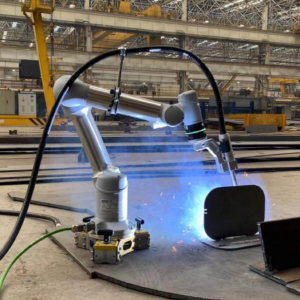
Industrial Application of Small Diameter Pipe Laser
Key technical specifications contributing to this efficiency include:
- High-Speed Linear Motors: These allow for rapid acceleration and deceleration of the cutting head, which is essential when navigating the tight radii of small-diameter pipes.
- Dynamic Profiling: The system adjusts the focal point in real-time to compensate for slight variations in tube wall thickness or eccentricity.
- Integrated Cooling Systems: To prevent thermal deformation in tubes with diameters under 20mm, specialized gas-assist configurations are utilized to manage the Heat Affected Zone (HAZ).
By maintaining a narrow Kerf Width (often less than 0.1mm), the laser minimizes material loss and ensures that the structural integrity of the pipe is not compromised by excessive heat input. This level of control is what allows for the immediate transition from cutting to assembly without the need for post-process cleaning.
Workflow Compression and Automated Bundle Loading
The reduction to a 3-hour cycle is largely attributed to the implementation of Automated Bundle Loading systems. In the previous model, an operator would manually feed individual tubes into a saw. The modern laser systems installed in Buenos Aires facilities utilize hydraulic lifters and singulation units that can process an entire bundle of raw material without human intervention.
Once the material is loaded, the software takes over. Advanced nesting algorithms calculate the most efficient use of the tube length, significantly reducing “drop” or waste material. Because the laser can perform cutting, hole-making, and marking in one continuous motion, the “part-to-part” time is reduced from minutes to seconds. A batch of 500 components that previously took three days to move through the factory is now completed, inspected, and ready for shipping in a single morning shift. This allows manufacturers to move toward a Just-In-Time (JIT) production model, reducing the capital tied up in raw material and finished goods inventory.
Precision Engineering and Tolerance Management
In the global B2B marketplace, speed is irrelevant without accuracy. The Small Diameter Pipe Laser systems in Argentina provide a repeatable tolerance of plus/minus 0.1mm. This is a significant upgrade over the plus/minus 0.5mm tolerance typical of manual secondary operations. For industries such as automotive exhaust manufacturing or medical furniture, this precision eliminates the need for “forcing” fits during assembly, which in turn reduces the failure rate of the final product.
Furthermore, the software integration allows for the creation of “tab and slot” designs. This means that tubes can be cut with interlocking geometries that simplify the subsequent welding process. By designing the parts to self-align, the need for complex welding fixtures is removed, further compressing the total manufacturing timeline beyond the initial fabrication stage.
Concluding Industry Insight: The Shift from Labor-Intensive to Tech-Centric Hubs
The case study of cycle time reduction in Buenos Aires highlights a broader shift in the global manufacturing landscape. For decades, emerging markets relied on lower labor costs to remain competitive. However, as global supply chains demand higher precision and faster turnaround times, labor-intensive processes have become a liability rather than an asset. The 72-hour to 3-hour reduction demonstrates that the path to global competitiveness for regional hubs lies in high-tier technological adoption.
For global procurement officers and engineers, this evolution in Argentina signifies a new reliability in the South American supply chain. The ability to produce high-precision, small-diameter components with a 95 percent reduction in lead time allows regional manufacturers to compete directly with European and Asian counterparts. As fiber laser technology continues to evolve, specifically in the realm of 3D cutting heads and AI-driven predictive maintenance, we can expect the “standard” cycle time to shrink even further. The future of tube fabrication is no longer about the speed of the blade, but the intelligence of the beam and the integration of the digital workflow.
Industrial Expertise & Support
Are you looking for high-performance Small Diameter Pipe Laser tailored for the Global market? Our engineering team provides comprehensive solutions for modern manufacturing.