Introduction: The Industrial Evolution of the Caribbean Basin
Barranquilla, Colombia, has emerged as a critical node in the global manufacturing and logistics supply chain, particularly within the metalworking and energy sectors. As industrial demands for precision components increase, the integration of advanced Small Diameter Pipe Laser systems has become a necessity for maintaining competitive throughput. This technological shift is driven by the need for high-speed processing of tubular geometries used in heat exchangers, automotive fluid lines, and precision structural frames. The adoption of energy-efficient fiber source technology in this region reflects a broader global trend toward sustainable manufacturing without compromising on the tight tolerances required by international engineering standards. By leveraging Barranquilla’s strategic port access and its growing network of specialized free trade zones, manufacturers are implementing high-brightness fiber resonators to optimize the fabrication of small-scale piping systems.
Technical Specifications of Fiber Laser Source Technology
The core of modern pipe processing lies in the fiber laser source, which utilizes rare-earth doped optical fibers as the active gain medium. Unlike traditional CO2 lasers that rely on gas mixtures and complex mirror arrays, fiber sources generate a laser beam within the fiber itself and deliver it via a flexible transport cable. This architecture results in a significantly higher Beam Parameter Product (BPP), which defines the focusability of the laser. For small diameter pipes, typically ranging from 10mm to 120mm, a low BPP is essential for achieving a narrow kerf width and a minimized heat-affected zone (HAZ).
The wavelength of a fiber laser, typically around 1.07 microns, is approximately ten times shorter than that of a CO2 laser. This shorter wavelength allows for much higher absorption rates in metallic materials, particularly in reflective alloys such as stainless steel, brass, and aluminum. In the context of Barranquilla’s industrial applications, this translates to faster cutting speeds on thin-walled tubing, often exceeding 30 meters per minute depending on the material thickness and the power rating of the resonator.
Energy Efficiency and Wall-Plug Efficiency (WPE)
One of the primary drivers for the adoption of fiber technology in the Colombian market is the radical improvement in energy consumption. The Wall-Plug Efficiency of a fiber laser source—the ratio of optical output power to electrical input power—typically ranges between 35% and 45%. In comparison, traditional CO2 systems operate at a WPE of approximately 8% to 10%. This disparity has profound implications for operational expenditures (OPEX).
For a facility operating in Barranquilla, where energy costs and thermal management are critical factors due to the tropical climate, fiber technology reduces the secondary load on cooling systems. Because less energy is wasted as heat, the chilling requirements are significantly lower. This efficiency not only reduces the carbon footprint of the manufacturing process but also extends the lifespan of the internal optical components, as thermal stress is minimized. The reduction in power consumption directly correlates to a lower cost per part, enabling local manufacturers to compete more effectively in the global export market.

Industrial Application of Small Diameter Pipe Laser
Precision Dynamics in Small Diameter Processing
Processing small diameter pipes introduces unique mechanical challenges that differ from large-scale structural steel cutting. The high rotational speeds required to maintain constant surface velocity on a 15mm tube necessitate advanced chucking systems and high-torque servo motors. Modern Small Diameter Pipe Laser machines in Barranquilla utilize lightweight, high-rigidity pneumatic chucks that can rotate at speeds exceeding 150 RPM. This allows the laser to maintain optimal feed rates even during complex profile cutting or hole piercing.
Furthermore, the integration of “Active Vibration Dampening” and “Real-time Sensing” ensures that the thin walls of the pipe do not deform under the centrifugal forces of high-speed rotation. The precision of the fiber source, combined with 4-axis or 5-axis cutting heads, allows for intricate beveling and interlocking joint geometries that eliminate the need for secondary milling or deburring processes. This “finished-part” output is essential for JIT (Just-In-Time) manufacturing workflows.
Integration with Automated Material Handling
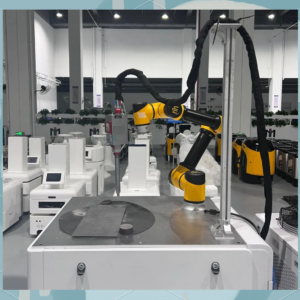
To fully realize the benefits of the high-speed fiber source, the mechanical infrastructure must support rapid loading and unloading cycles. In Barranquilla’s high-volume production environments, Automated Material Handling systems are integrated with the laser units to manage bundles of raw tubing. These systems utilize hydraulic lifts and singulation mechanisms to feed individual pipes into the laser chuck without manual intervention. For small diameter pipes, where the weight per meter is low but the quantity of pieces is high, automation is the only viable method to prevent the loading cycle from becoming a bottleneck. The synchronization between the fiber laser’s control software and the material loader ensures that the beam-on time is maximized, often reaching duty cycles of over 85%.
Regional Advantages: Why Barranquilla?
Barranquilla serves as a strategic gateway for the import of high-tech machinery and the export of finished metal products. The city’s proximity to major shipping lanes reduces the lead time for replacement parts and technical gases, although fiber lasers require minimal consumables compared to older technologies. The presence of specialized technical institutes in the region has also fostered a skilled workforce capable of operating and maintaining complex CNC (Computer Numerical Control) laser systems. The shift toward fiber-based Small Diameter Pipe Laser technology aligns with the regional government’s initiatives to modernize the industrial base and promote high-value-added manufacturing exports to North America and Europe.
Concluding Industry Insight
The transition to energy-efficient fiber source technology for small diameter pipe processing is not merely a localized trend in Barranquilla, but a benchmark for the future of global metallurgical fabrication. As global energy prices remain volatile and environmental regulations tighten, the high wall-plug efficiency of fiber systems provides a sustainable path for industrial growth. The precision afforded by low-BPP fiber sources enables the production of lighter, more complex tubular assemblies, which are critical for the next generation of electric vehicles and high-efficiency HVAC systems. Looking forward, the integration of Artificial Intelligence (AI) in laser monitoring and predictive maintenance will further enhance the reliability of these systems. For the B2B sector, the investment in fiber-based pipe processing represents a strategic move toward total cost of ownership (TCO) optimization, where the initial capital expenditure is rapidly offset by reduced energy consumption, higher throughput, and the elimination of secondary processing stages.
Industrial Expertise & Support
Are you looking for high-performance Small Diameter Pipe Laser tailored for the Global market? Our engineering team provides comprehensive solutions for modern manufacturing.