Precision Engineering: The Rise of Small Diameter Pipe Laser Technology in Asunción, Paraguay
The industrial landscape of South America is undergoing a significant transformation, with Asunción, Paraguay, emerging as a strategic hub for metal fabrication and precision engineering. As the region transitions from traditional manufacturing methods to automated, high-precision systems, the integration of energy-efficient fiber source technology has become a cornerstone of competitive advantage. Specifically, the deployment of the Small Diameter Pipe Laser is redefining the capabilities of local manufacturers in sectors ranging from automotive components to medical device housing and specialized furniture production.
For global stakeholders, the adoption of these technologies in Paraguay represents more than just local growth; it signifies a shift toward decentralized, high-tech manufacturing nodes that leverage lower operational costs with world-class technical output. The technical focus remains on the intersection of fiber laser physics and high-speed mechanical synchronization, ensuring that small-diameter profiles—often the most difficult to process without deformation—are handled with micron-level accuracy.
Technical Advantages of Energy-Efficient Fiber Sources
The core of modern pipe processing lies in the fiber laser source. Unlike legacy CO2 systems that rely on gas mixtures and complex mirror arrays, fiber lasers generate the beam through a solid-state medium. This transition has resulted in a radical improvement in Wall-Plug Efficiency (WPE). While CO2 lasers typically operate at a WPE of 8% to 10%, modern fiber sources used in Asunción’s industrial sectors achieve efficiencies exceeding 35% to 40%.
This efficiency translates directly to reduced thermal loading on the machine’s internal components and lower cooling requirements. For a manufacturing facility in Paraguay, where energy stability and cost-optimization are critical, the reduction in electricity consumption provides a measurable decrease in the total cost of ownership (TCO). Furthermore, the 1.06-micron wavelength of fiber lasers is absorbed more readily by metallic materials, particularly reflective metals like copper and brass, which are frequently used in small-diameter applications.
Beam Quality and the Heat-Affected Zone
When processing pipes with diameters as small as 10mm to 50mm, the management of the Heat-Affected Zone (HAZ) is paramount. Traditional cutting methods often introduce excessive thermal energy into the material, leading to structural warping or the need for secondary finishing processes. The fiber source technology employed in these systems features a superior M2 Beam Quality Factor, typically approaching 1.1 for single-mode sources.
A lower M2 factor indicates a beam that can be focused to a much smaller spot size. This high power density allows for extremely high cutting speeds, which minimizes the time the laser spends in contact with any single point on the pipe. Consequently, the thermal conduction into the surrounding material is limited, preserving the metallurgical integrity of the small-diameter workpiece and ensuring that tight tolerances are maintained across high-volume production runs.

Industrial Application of Small Diameter Pipe Laser
Mechanical Synchronization for Small Diameter Profiles
Processing small-diameter pipes introduces unique mechanical challenges that differ significantly from large-scale structural steel cutting. The rotational speed required to maintain the optimal linear cutting speed increases as the pipe diameter decreases. Therefore, the Small Diameter Pipe Laser systems installed in Asunción utilize high-inertia servo motors and lightweight, high-speed chucks.
These chucks must provide sufficient clamping force to prevent slippage during rapid acceleration and deceleration while remaining sensitive enough to avoid crushing thin-walled tubing. Modern systems utilize pneumatic or electric centering mechanisms that automatically adjust based on the programmed pipe dimensions. This synchronization between the CNC (Computer Numerical Control) system and the fiber laser pulse frequency ensures that even complex geometries, such as interlocking joints or micro-perforations, are executed without dross or burr formation.
Material Versatility and Application Scope
The versatility of the energy-efficient fiber source allows manufacturers in Paraguay to diversify their material portfolios. The technology is not limited to carbon steel; it excels in processing stainless steel, aluminum, and various alloys. In the context of Asunción’s growing role in the regional supply chain, this versatility is vital.
1. Automotive Fuel Lines: Requiring high precision and clean internal surfaces.
2. HVAC Components: Small diameter copper and aluminum tubing for heat exchangers.
3. Specialized Infrastructure: High-strength alloy components for telecommunications and power distribution.
The ability to switch between material types with minimal downtime is facilitated by automated gas selection systems and programmable focus heads. By adjusting the focal position and gas pressure (Nitrogen or Oxygen) through the software interface, operators can transition from cutting 1mm wall thickness stainless steel to 3mm carbon steel in seconds.
Operational Sustainability in the Paraguayan Market
Sustainability is becoming a mandatory metric for global B2B partnerships. The energy-efficient fiber source technology aligns with global “Green Manufacturing” initiatives. Beyond the direct reduction in kilowatt-hour consumption, these systems require no laser gas and have significantly longer maintenance intervals compared to traditional resonators. The diode-based pumping modules in fiber lasers have an estimated lifespan exceeding 100,000 hours.
In the industrial zones of Asunción, this reliability is a major factor in reducing logistical dependencies on imported spare parts. A system that requires fewer consumables and has fewer moving parts in the beam delivery path (due to fiber optic delivery rather than mirrors) naturally provides a more stable production environment. This stability is essential for Paraguayan firms looking to secure long-term contracts with international OEMs (Original Equipment Manufacturers).
Industry Insight: The Future of Fiber Integration
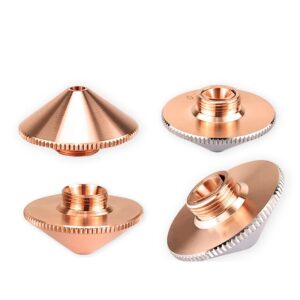
As we look toward the next decade of industrial evolution, the integration of the Small Diameter Pipe Laser with Industry 4.0 protocols will be the defining trend. In Asunción, we are seeing the early stages of this shift, where laser systems are equipped with sensors for real-time monitoring of beam stability, nozzle condition, and material feed rates. The data generated by these energy-efficient sources allows for predictive maintenance, further reducing unplanned downtime.
The global manufacturing community should view Asunción not merely as a regional market, but as a proving ground for the deployment of high-efficiency, compact laser systems. The convergence of high Wall-Plug Efficiency, superior beam dynamics, and specialized mechanical handling for small diameters is setting a new standard for throughput and precision. For B2B entities, investing in or partnering with facilities that utilize this specific technology stack is a strategic move toward ensuring supply chain resilience and technical excellence in an increasingly demanding global market.
Industrial Expertise & Support
Are you looking for high-performance Small Diameter Pipe Laser tailored for the Global market? Our engineering team provides comprehensive solutions for modern manufacturing.