Integration of Anti-Reflection Fiber Laser Systems in Asunción’s Industrial Sector
The industrial landscape of Asunción, Paraguay, is currently undergoing a significant transition toward high-precision manufacturing, particularly in the sectors of HVAC, automotive cooling systems, and electrical component fabrication. As global supply chains seek regional hubs for specialized production, the demand for processing non-ferrous metals—specifically copper and aluminum—has surged. Central to this evolution is the deployment of the Small Diameter Pipe Laser, a specialized class of fiber laser equipment designed to handle the unique thermal and optical challenges presented by highly reflective materials in small-bore configurations.
For decades, the primary obstacle in laser-cutting copper and aluminum was the high reflectivity of these materials at the standard 1.07-micron wavelength of fiber lasers. In a manufacturing environment like Asunción, where efficiency and equipment longevity are paramount for maintaining competitive export margins, the risk of back-reflection damaging the resonator is a critical technical concern. The implementation of advanced anti-reflection technology has effectively mitigated these risks, allowing for the precise processing of tubes with diameters as small as 5mm and wall thicknesses under 1mm.
The Physics of Reflectivity in Non-Ferrous Metal Processing
Copper and aluminum are categorized as highly reflective materials in the context of near-infrared laser radiation. At room temperature, copper can reflect upwards of 95 percent of the energy delivered by a standard fiber laser. This phenomenon is not merely an efficiency issue; the reflected photons can travel back through the delivery fiber into the laser source, causing catastrophic failure of the optical components. This is particularly problematic during the initial piercing phase of the cutting process, where the angle of incidence often results in direct back-reflection.

Industrial Application of Small Diameter Pipe Laser
In the specialized context of small-bore tubing, the geometry of the workpiece further complicates the process. The internal surface of a small diameter pipe can act as a concave mirror, focusing reflected energy back toward the cutting head. To counter this, the Small Diameter Pipe Laser systems utilized in Asunción incorporate Back-Reflection Mitigation hardware. These systems utilize optical isolators and real-time sensors that detect reflected power levels in the kilowatt range, automatically shutting down the beam or adjusting parameters within microseconds to protect the resonator.
Technical Specifications of Anti-Reflection Hardware
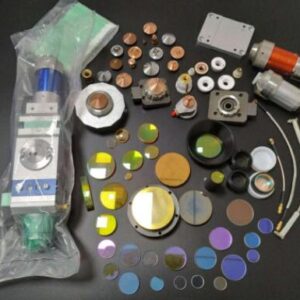
Modern laser systems in the Paraguayan market are increasingly adopting “back-reflection resistant” fiber sources. These units are engineered with multi-stage optical isolation. The primary mechanism involves a Faraday isolator, which allows light to pass in only one direction. For high-power applications required in industrial manufacturing, these isolators are integrated directly into the feeding fiber. Furthermore, the use of nLIGHT or IPG-style resonators provides a secondary layer of protection through hardware-based “back-reflection stripping” modules that dissipate reflected energy as heat into a liquid-cooled sink.
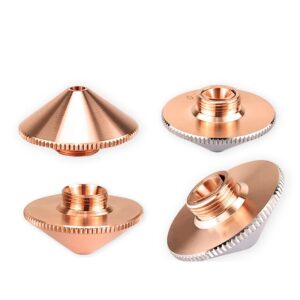
Another critical technical component is the beam delivery head. In Asunción’s production lines, cutting heads are often equipped with capacitive height sensing and specialized protective windows. The height sensor maintains a precise nozzle-to-workpiece distance, which is vital when working with small diameters to ensure the focal point remains consistent despite the curvature of the pipe. This prevents the beam from defocusing, which would otherwise increase the Heat-Affected Zone (HAZ) and compromise the structural integrity of the thin-walled copper or aluminum.
Optimizing the Cutting Process for Small Diameter Tubing
Processing pipes with diameters ranging from 6mm to 30mm requires a different mechanical approach than standard flat-sheet or large-pipe cutting. The rotational speed of the chuck must be synchronized with the laser pulse frequency to maintain a constant linear cutting speed. In Asunción, the integration of high-speed servo motors allows for rotational speeds exceeding 150 RPM, which is necessary to prevent excessive heat buildup in aluminum alloys that have high thermal conductivity.
The use of nitrogen as an assist gas is standard for these applications. Nitrogen provides a high-pressure mechanical force to eject molten material from the kerf without causing oxidation. This is essential for copper pipes used in refrigeration, where internal oxidation can lead to system contamination. The Optical Isolation technology ensures that even when the laser is operating at peak power to maintain high feed rates, the system remains stable. For instance, cutting 1mm thick C11000 copper tubing requires a different power modulation strategy than 2mm 6061-T6 aluminum to account for the difference in melting points and thermal diffusivity.
Strategic Advantages of Asunción as a Regional Manufacturing Hub
The adoption of these high-tier laser technologies in Asunción is driven by the Maquila regime and Paraguay’s favorable energy costs. Manufacturers are importing Small Diameter Pipe Laser systems to produce components for the Brazilian and Argentinian markets. By utilizing anti-reflection technology, local factories can guarantee a higher “Up-Time” and lower maintenance costs compared to older CO2 laser systems or mechanical sawing methods that produce burrs and require secondary finishing.
Furthermore, the precision afforded by fiber lasers allows for the nesting of complex geometries—such as interlocking joints or specialized fluid ports—directly into the tubing. This eliminates the need for separate stamping or drilling operations. In a global B2B context, the ability to produce “ready-to-assemble” non-ferrous components with zero dross and high dimensional accuracy positions Asunción-based firms as Tier 1 and Tier 2 suppliers for the global electronics and automotive industries.
Technical Challenges in Thin-Wall Aluminum Fabrication
Aluminum presents a unique challenge due to its low melting point and high fluidity when molten. When cutting small diameter aluminum pipes, the risk of “back-wall damage”—where the laser penetrates the top wall and inadvertently marks or cuts the bottom wall—is significant. To solve this, technical operators in Asunción utilize synchronized pulsing and power ramping. By modulating the laser power based on the instantaneous velocity of the cutting head, the energy density is kept just above the ablation threshold, minimizing the Heat-Affected Zone (HAZ).
Additionally, the clamping systems for small-diameter pipes must be non-marring yet rigid enough to prevent vibration. Many systems now use pneumatic “true-center” chucks that provide uniform pressure around the circumference of the tube. This is critical for maintaining the concentricity of the cut, especially when the pipes are destined for high-pressure fluid applications where a slight deviation in the cut angle could lead to weld failure during subsequent assembly stages.
Concluding Industry Insight
The convergence of anti-reflection fiber laser technology and the industrial growth of Asunción represents a broader shift in global manufacturing: the decentralization of high-tech processing. As the demand for thermal management systems increases—driven by the expansion of electric vehicle (EV) battery cooling and high-density data center heat exchangers—the ability to process copper and aluminum tubing with extreme precision becomes a foundational requirement. The industry is moving toward “smart” laser heads capable of real-time spectral analysis of the melt pool, which will further refine the cutting of reflective alloys. For B2B stakeholders, the investment in specialized Small Diameter Pipe Laser systems is no longer an optional upgrade but a technical necessity to meet the rigorous tolerances and material purity standards of the modern global market. Asunción’s strategic adoption of these tools ensures its relevance in the high-precision supply chain for the foreseeable future.
Industrial Expertise & Support
Are you looking for high-performance Small Diameter Pipe Laser tailored for the Global market? Our engineering team provides comprehensive solutions for modern manufacturing.