Precision Engineering in South American Metal Fabrication: The Adoption of Small Diameter Pipe Laser Systems
The industrial landscape of Asunción, Paraguay, is currently undergoing a significant transition toward high-precision automated manufacturing. As the region expands its infrastructure and energy sectors, the demand for high-integrity piping systems has necessitated a shift from traditional mechanical cutting to advanced laser processing. Specifically, the implementation of Small Diameter Pipe Laser technology has emerged as a critical factor in achieving the tight tolerances required for modern assembly and high-pressure fluid transport.
In the context of small-diameter pipes—typically defined as tubes with an outer diameter ranging from 12mm to 150mm—the challenges of maintaining structural integrity while performing complex geometries are substantial. Conventional methods such as cold sawing or plasma cutting often introduce mechanical stress or excessive heat zones that compromise the material’s metallurgical properties. The integration of fiber laser systems in Asunción’s fabrication facilities addresses these issues by providing a non-contact, high-velocity solution that ensures repeatable accuracy across large production volumes.
Technical Dynamics of 45-degree Beveling for Small Diameters
Beveling is a fundamental requirement for preparing pipe ends for welding, particularly when full-penetration V-butt welds are specified. Achieving a consistent 45-degree bevel on small-diameter workpieces requires a sophisticated motion control system. Unlike flat-sheet lasers, a pipe laser must synchronize the rotation of the chuck (the A-axis) with the tilt of the cutting head (the B or C axis) to maintain a constant focal point on the curved surface.
The 45-degree angle is strategically significant because it provides the optimal groove volume for the weld bead, ensuring that the filler material bonds deeply with the base metal. For pipes used in hydraulic systems or high-pressure gas lines in Paraguay’s growing industrial parks, any deviation in the bevel angle can lead to lack of fusion or structural weak points. The 5-axis fiber laser head allows for dynamic angle adjustments in real-time, compensating for the pipe’s inherent eccentricity and ensuring that the 45-degree slope remains uniform around the entire circumference.
Thermal Management and the Heat Affected Zone (HAZ)
One of the primary advantages of utilizing fiber laser technology for small-diameter pipes is the minimization of the Heat Affected Zone (HAZ). Small tubes have less mass to dissipate heat compared to large-format pipes. High-energy inputs from traditional thermal cutting can cause warping or micro-cracking in the crystalline structure of the steel or aluminum.
Modern laser resonators provide a highly concentrated beam with a small spot size, typically in the range of 0.1mm to 0.3mm. This concentration allows for extremely high power density, which vaporizes the metal almost instantaneously. By reducing the time the material is exposed to elevated temperatures, the laser preserves the mechanical properties of the pipe, which is vital for components destined for Asunción’s heavy machinery and agricultural equipment sectors. The resulting edge is clean, slag-free, and requires zero secondary grinding before the welding process begins.

Industrial Application of Small Diameter Pipe Laser
Optimizing the Welding Interface for Seamless Integration
The term “seamless welding” in a technical context refers to the achievement of a joint that is as strong as the parent material, with no visible or structural discontinuities. The precision of the 45-degree bevel produced by a Small Diameter Pipe Laser is the prerequisite for this outcome. When two pipes with perfectly matched bevels are brought together, the fit-up tolerance is minimized to microns.
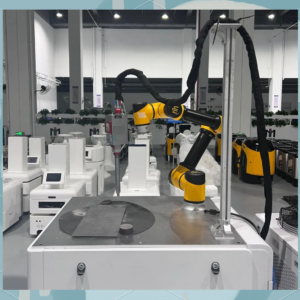
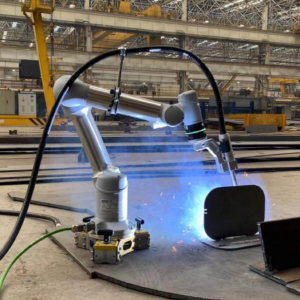
In Asunción’s fabrication shops, this precision enables the use of automated robotic welding cells. Automated welding requires highly predictable joint geometries; if the bevel varies by even a fraction of a degree, the welding robot may fail to fill the gap correctly, leading to porosity or burn-through. By standardizing the beveling process through laser automation, manufacturers can guarantee a V-groove preparation that facilitates consistent weld pool behavior and superior root penetration.
Operational Efficiency and Economic Impact in the Paraguayan Market
From an operational standpoint, the transition to laser-based pipe processing in Asunción significantly reduces the total cost of ownership. Traditional workflows involve multiple stages: cutting to length, manual beveling on a lathe or milling machine, and manual deburring. A laser system consolidates these steps into a single automated cycle. The software calculates the nesting of parts to minimize scrap, which is a critical consideration given the fluctuating costs of raw stainless steel and carbon steel in South America.
Furthermore, the high feed rates of fiber lasers—often exceeding 20 meters per minute for thin-walled small-diameter tubes—ensure that production throughput is maximized. This speed does not come at the expense of quality. The use of nitrogen as an assist gas during the laser process prevents oxidation on the cut edge, which is essential for stainless steel applications where corrosion resistance is a primary requirement. This “weld-ready” finish eliminates the need for chemical cleaning or mechanical abrasion, further streamlining the manufacturing timeline.
Integration of CAD/CAM Software for Complex Geometries
The capability of the Small Diameter Pipe Laser extends beyond simple 45-degree end cuts. The integration of specialized CAD/CAM software allows engineers in Asunción to design complex intersections, such as saddle cuts and miter joints, with built-in beveling. The software automatically compensates for the wall thickness of the pipe, ensuring that the internal and external diameters align perfectly during assembly. This level of digital integration reduces human error and allows for the fabrication of complex pipe manifolds and space-frame structures that were previously cost-prohibitive or technically impossible to produce with manual methods.
Concluding Industry Insight: The Future of Metal Fabrication
The industrial evolution in Asunción reflects a broader global trend where the distinction between “cutting” and “preparation” is disappearing. As we look toward the next decade, the role of the Small Diameter Pipe Laser will shift from being a specialized tool to becoming the baseline standard for any facility involved in high-specification metalwork. The convergence of 5-axis motion control, high-brightness fiber sources, and real-time sensor feedback is creating a manufacturing environment where the “first-time-right” ratio is approaching 100%.
For B2B stakeholders, the investment in this technology is not merely about speed; it is about the ability to participate in a global supply chain that demands documented precision and traceability. As Paraguay continues to integrate into the global economy, the adoption of these high-precision beveling techniques ensures that local manufacturers can meet international standards for structural integrity and safety, particularly in the demanding sectors of oil and gas, aerospace, and advanced civil engineering. The future of the industry lies in this synergy between light-based processing and automated assembly, where the laser-cut bevel serves as the foundation for the perfect weld.
Industrial Expertise & Support
Are you looking for high-performance Small Diameter Pipe Laser tailored for the Global market? Our engineering team provides comprehensive solutions for modern manufacturing.