Technical Integration of Small Diameter Pipe Laser Systems in Arequipa’s Industrial Sector
The industrial landscape of Arequipa, Peru, serves as a critical hub for the nation’s mining and metal-mechanic sectors. As global demand for precision-engineered components increases, local manufacturers are transitioning from traditional mechanical cutting and saw-based processing to advanced fiber laser technology. Specifically, the deployment of the Small Diameter Pipe Laser has become a focal point for operations requiring high-speed processing of tubes ranging from 10mm to 120mm in diameter. This transition is not merely a matter of throughput efficiency but a strategic alignment with international safety and quality benchmarks, specifically the CE and NR-12 standards.
Integrating these systems into the high-altitude industrial zones of Southern Peru requires a rigorous understanding of both the mechanical capabilities of the hardware and the regulatory frameworks that govern their operation. The convergence of European (CE) and South American (NR-12) safety protocols ensures that high-power laser equipment operates within a controlled environment, mitigating risks associated with high-frequency radiation and mechanical motion. For B2B stakeholders, understanding these compliance requirements is essential for maintaining operational licenses and ensuring the long-term viability of capital investments in the region.
Material Processing Capabilities and Fiber Laser Oscillators
The core of the Small Diameter Pipe Laser lies in its Fiber Laser Oscillation source, which typically ranges from 1kW to 3kW for small-diameter applications. Unlike CO2 lasers, fiber lasers utilize a solid-state gain medium, allowing for a shorter wavelength (typically 1.06μm). This wavelength is more readily absorbed by metallic surfaces, particularly reflective materials like copper and brass, which are prevalent in Arequipa’s mining-related manufacturing. The ability to maintain a tight focal spot enables the cutting of thin-walled tubing with minimal Heat Affected Zones (HAZ), preserving the structural integrity of the base metal.
Technical specifications for these machines often include acceleration rates of up to 1.5G and rotation speeds exceeding 120 RPM. In the context of Arequipa’s supply chain, this translates to the rapid production of hydraulic lines, structural frames for mining equipment, and intricate piping for fluid transport systems. The precision of the Galvanometric Scanning systems integrated into the cutting head allows for tolerances within ±0.05mm, a requirement for high-precision assembly lines that feed into larger international projects.

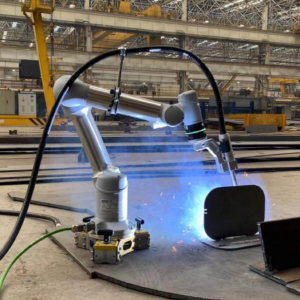
Industrial Application of Small Diameter Pipe Laser
CE Compliance: Ensuring European Safety and Quality Standards
For a laser system to be deployed in a global B2B context, CE (Conformité Européenne) certification is a non-negotiable prerequisite. This certification indicates that the machinery meets the health, safety, and environmental protection standards for the European Economic Area, which are often adopted as the baseline for high-end industrial equipment in Peru. The CE marking covers several critical directives, including the Machinery Directive (2006/42/EC), the Low Voltage Directive (2014/35/EU), and the Electromagnetic Compatibility (EMC) Directive (2014/30/EU).
In terms of laser safety, CE compliance necessitates the classification of the machine as a Class 1 laser system during normal operation. This means the Small Diameter Pipe Laser must be fully enclosed in a protective housing that prevents any leakage of scattered radiation. Viewing windows must be constructed from certified laser-protective glass specific to the 1064nm wavelength. Furthermore, the electrical architecture must include redundant safety circuits to prevent accidental activation, a feature that is cross-verified during the rigorous testing phases required for certification.
NR-12 Compliance: The Regulatory Framework in South American Markets
While CE provides a broad safety framework, the NR-12 (Norma Regulamentadora 12) standard is a specific Brazilian regulation that has gained significant traction across South American industrial sectors, including Peru. NR-12 is one of the most stringent safety standards for machinery and equipment in the world. It focuses on the complete lifecycle of the machine, including transport, installation, operation, maintenance, and final disposal. For operators in Arequipa, adhering to NR-12 principles is a proactive measure to ensure worker safety and avoid legal liabilities.
NR-12 mandates the use of Interlocking Safety Circuits on all access points. If a protective door is opened during the cutting process, the laser source and all mechanical motion must cease instantaneously via a dual-channel safety relay system. Additionally, the standard requires clear physical barriers to prevent operators from entering the “danger zone” of the machine’s moving parts. In the high-throughput environments of Arequipa’s metal-mechanic workshops, these safety measures are critical in preventing workplace accidents related to the high-speed chuck rotation and the rapid longitudinal movement of the pipe feeders.
Technical Requirements for Safety Control Systems
The integration of CE and NR-12 standards requires a sophisticated control architecture. Modern pipe laser systems utilize a Safety PLC (Programmable Logic Controller) that operates independently of the main motion control PLC. This separation ensures that even if the machine’s software encounters an error, the safety hardware remains functional. The following technical components are essential for compliance:
1. Emergency Stop Buttons: Placed at strategic locations around the machine, these must be mushroom-head type with positive break action.
2. Safety Light Curtains: Used at the loading and unloading zones to detect human presence and pause operations.
3. Reset Procedures: The system must require a manual reset at the control console after a safety violation, preventing automatic restarts.
4. Documentation: A comprehensive technical file, including risk assessment and circuit diagrams in Spanish, must be available for local regulatory inspections in Peru.
Operational Efficiency and ROI in the Arequipa Region
Investing in a Small Diameter Pipe Laser that meets both CE and NR-12 standards offers a clear return on investment (ROI) for Arequipa-based firms. Beyond the obvious reduction in workplace injuries, compliant machines often feature higher-quality components that lead to lower downtime. The precision of fiber laser cutting eliminates the need for secondary processes such as deburring or manual grinding, which are common in traditional pipe processing. This reduction in labor-intensive tasks allows local manufacturers to compete more effectively on a global scale.
Furthermore, the energy efficiency of fiber laser technology compared to CO2 or plasma cutting systems results in significant operational cost savings. Given the industrial electricity tariffs in Peru, the high wall-plug efficiency (typically around 30 percent) of fiber oscillators provides a sustainable path for scaling production. The ability to process a wide range of geometries—including round, square, oval, and complex profiles—on a single platform maximizes the utility of the floor space in dense industrial districts like Parque Industrial Arequipa.
Industry Insight: The Future of Laser Technology in Southern Peru
The industrial sector in Arequipa is at a crossroads where the adoption of Industry 4.0 principles is no longer optional. As mining operations in the region move toward more automated and remotely monitored systems, the supporting manufacturing base must follow suit. The Small Diameter Pipe Laser represents a critical component of this evolution. We anticipate that the next five years will see a surge in the integration of Artificial Intelligence (AI) within these laser systems, specifically for real-time monitoring of cutting quality and predictive maintenance of the laser source.
The emphasis on CE and NR-12 compliance is also indicative of a broader trend: the “globalization of safety.” Peruvian companies are increasingly looking to export their manufactured components to North American and European markets. To do so, their production equipment must meet the standards of those regions. Therefore, the procurement of compliant laser machinery is not just a local safety requirement but a strategic move to enter the global supply chain. For the Arequipa region, this means a shift from being a primary resource exporter to becoming a high-tech manufacturing hub capable of delivering precision-engineered solutions to the world’s most demanding industries.
Industrial Expertise & Support
Are you looking for high-performance Small Diameter Pipe Laser tailored for the Global market? Our engineering team provides comprehensive solutions for modern manufacturing.